"What kind of coffee do you want?" is four different questions wearing a trench coat: which drink, which roast, which bean, and which brew method. Answer them in that order and the entire menu board stops being intimidating.
Types of coffee drinks: espresso, latte, cappuccino, cold brew & more
The table below is our types of coffee chart — all the kinds of coffee drinks on a menu board: each drink, its size, its build, what you need to make it, and the honest notes.
For the purposes of this guide, it helps to group coffee preparations into three broad families by how the coffee is brewed: espresso-based drinks (a concentrated shot, sometimes with milk or water), filtered and immersion brews (ground coffee dripped through a filter or steeped and separated), and unfiltered preparations where the grounds stay in the cup. French press sits in the immersion group and Turkish coffee in the unfiltered one, which is why a simple "espresso or filter" split does not survive contact with the table below. Sizes here are conventional rather than legally defined — cafés vary, and American servings tend to run larger than European ones.
| Drink | Typical size | What's in it | What you need | Notes |
|---|
| Espresso | 1–1.5 oz | Coffee only | Espresso machine + burr grinder | The base of everything below. A common modern specialty starting recipe is around 18 g of coffee in and 36 g of liquid out, but dose, yield and shot time vary widely by machine, basket, coffee and intended style — it is a recipe, not a definition. |
| Ristretto | Short shot | Coffee only, short | Espresso machine + burr grinder | A "restricted" shot — less water through the same coffee. Often around 0.75–1 oz, though it depends on the recipe. Typically sweeter, denser and less bitter. |
| Lungo | 2–3 oz | Coffee only, long | Espresso machine + burr grinder | The opposite of a ristretto: more water through the same coffee. Often lighter-bodied and more bitter or astringent than a shorter shot, depending on the recipe. |
| Americano | 6–12 oz | Espresso + hot water | Espresso machine + hot water | Espresso diluted with hot water into a longer, less concentrated drink. Tastes like espresso, drinks like filter coffee. |
| Macchiato | 2–3 oz | Espresso + a spoon of foam | Espresso machine with a steam wand | "Stained" espresso. The traditional version is tiny — not the caramel-syrup drink of the same name. |
| Cortado | 4 oz | Espresso + equal warm milk | Espresso machine with a steam wand | A small espresso-and-milk drink associated with Spain; modern café versions commonly use roughly equal parts espresso and warm milk, with barely any foam. The 4 oz size is more an American specialty convention than a Spanish specification. |
| Flat white | 5–6 oz | Double espresso + steamed milk, thin microfoam | Espresso machine with a steam wand | An Australian/New Zealand café tradition — the two countries dispute which invented it. Stronger than a latte, silkier than a cappuccino. |
| Cappuccino | 5–6 oz | Espresso + textured milk, with a distinct foam layer | Espresso machine with a steam wand | The SCA/WBC definition is a 5–6 oz drink balancing sweet milk and espresso, with at least 1 cm of foam. The familiar "one-third each" formula is a traditional shorthand rather than a technical requirement. |
| Latte | 8–12 oz | Espresso + lots of steamed milk, thin foam | Espresso machine with a steam wand | The mildest common espresso drink — roughly one part espresso to several parts steamed milk. |
| Mocha | 8–12 oz | Espresso + chocolate + steamed milk | Espresso machine with a steam wand (plus chocolate) | Named after Mokha, a major Yemeni port through which coffee was exported to Europe. The chocolate sense of the word came later and is not documented as caused by the beans' flavor. |
| Drip / filter | 8–12 oz | Ground coffee + hot water through a filter | Any drip machine — a category we don't review — and fresh beans below | The everyday American cup. Coffee-to-water ratio is one of the biggest variables — see our calculator. |
| Pour-over | 8–12 oz | Hand-poured filter brew | Hario V60 + gooseneck kettle below | Same principle as drip, done by hand. Clean, bright, highly controllable. |
| French press | 8–16 oz | Full immersion, metal filter | Bodum Chambord below | With no paper filter, more of the coffee's oils and fine particles stay in the cup: heavier body, more texture. |
| Cold brew | Varies | Coarse grounds steeped cold for many hours | Cold brew jar below + coarse-ground beans below | Often perceived as smoother and less acidic than a comparable hot brew. Commonly steeped around 12–18 hours, and often brewed as a concentrate and diluted — though recipes vary widely. |
| Vietnamese coffee (cà phê sữa đá) | 6–8 oz | Phin filter drip + sweetened condensed milk | Phin filter below + sweetened condensed milk | Brewed slowly through a small metal phin filter directly over the cup, typically with sweetened condensed milk and, as cà phê sữa đá, served over ice. Robusta is the usual bean. |
| Turkish coffee | 2–3 oz | Ultra-fine grounds boiled in a cezve | Copper cezve below | Unfiltered — the grounds settle in the cup. Greek coffee uses essentially the same fine-ground unfiltered technique, traditionally prepared in a briki. |
The milk-drink cheat sheet
Three drinks account for most of the confusion at the counter, and the difference between them is entirely about milk and foam — not about the coffee.
| Cappuccino | Flat white | Latte |
|---|
| Size | 5–6 oz | 5–6 oz | 8–12 oz |
| Foam | Thick and airy — the signature | Thin velvety microfoam | Thin cap |
| Milk volume | Moderate | Moderate | High |
| Coffee intensity | Medium-high | Highest of the three | Mildest |
| Order it if… | You want texture and a foam layer | You want espresso to lead, silky not fluffy | You want a mild, milky, comforting cup |
The cappuccino figures follow the definition consistently attributed to the SCA and the World Barista Championship in specialty-coffee trade reporting — a 5–6 oz drink giving "a harmonious balance of rich, sweet milk and espresso", with a minimum foam depth of 1 cm. We have not opened the SCA standard itself, so we describe that as a widely reported definition rather than a document we checked. The flat white is a convention rather than a standard: a 5–6 oz Australian/New Zealand drink built on a double shot with microfoam. Cafés vary enormously, and American servings run larger than European ones; treat all of these as reference points, not rules.
Making these at home is a milk-steaming skill as much as a coffee one. Our
Best Overall Espresso Machine award covers the evidence-led pick, and the winner's automatic steam wand exists precisely because texturing milk by hand is the hardest part to learn.
Roast levels and what they change
Roasting is a trade: the longer beans roast, the more roast-derived flavor you gain and the less of the coffee's origin character stays audible. Neither end is "better" — they are different products. One caveat before the table: roast labels are not standardized. One roaster's "medium" is another's "medium-dark", and the descriptions below are consumer reference points rather than technical specifications.
Light
Bright, acidic, floral and fruity. Origin character at its clearest. No oil on the bean.
Medium
Balanced sweetness, caramel and nuts, moderate acidity. A familiar middle ground between lighter acidity and darker roast character.
Medium-dark
Chocolate and spice, fuller body, acidity receding. Some beans may begin to show surface oil.
Dark
Smoke, bittersweet chocolate, heavy body. Often visibly oily, especially at or beyond second crack. Roast character dominates, with less of the origin apparent.
The caffeine question, honestly: "dark = strong" describes flavor intensity, not caffeine — but the rest of this is less settled than most articles admit. A 2024 study in Scientific Reports opens by noting that research on roast and caffeine has been "extensively researched, but conflicting methodologies and results have muddled development of a general conclusion". Its own result cuts both ways: under identical brewing conditions caffeine was generally lower in dark roasts than in light and medium, yet at identical extraction yields dark roasts were generally higher, because mass loss and increased bean porosity pull in opposite directions.
The part that actually affects your cup: how you measure. Darker beans are less dense, so a scoop of dark roast holds less coffee by mass than the same scoop of light roast — which is one obvious source of the folklore. So weigh your dose rather than measuring by volume. Once dose is controlled by weight, roast degree is only one of several variables affecting what ends up in the cup, alongside grind, extraction and brew method.
Roast-and-caffeine findings from Cotter et al., "Caffeine content in filter coffee brews as a function of degree of roast and extraction yield", Scientific Reports 14:29126 (2024). An earlier version of this page stated flatly that light roasts hold more caffeine by weight; that is more definite than the evidence supports, and the paper's own framing is that the question has resisted a general conclusion.
Types of coffee beans: arabica vs robusta
Arabica and robusta (Coffea canephora) dominate commercial coffee production between them. In USDA's production data, arabica is about 56% of world output for 2026/27 — 105.9 million bags against robusta's 83.8 million — and arabica dominates specialty coffee. That share moves more than most articles admit: across the last several marketing years it has ranged from roughly 53% to 58%, so treat any single figure as a snapshot rather than a constant. Robusta is hardier, cheaper to grow, more bitter, and typically carries about twice the caffeine — conventionally reported as roughly 1.7–4.0% against arabica's 0.8–1.4%, measured in the green bean by dry weight.
Production split calculated from the USDA Foreign Agricultural Service PSD dataset (Coffee, Green — Arabica and Robusta production, world totals). For 2026/27 that is 105,867 against 83,800 thousand 60 kg bags. The four most recent marketing years run 57.4%, 57.8%, 52.8% and 55.8% arabica, which is why we give a current figure plus the range rather than a single timeless number.
The important nuance: robusta is not simply the inferior option. Its body and crema are exactly why traditional Italian espresso blends include it deliberately. We wrote a full explainer on this — what "100% Arabica" actually means — because that label is the most misread phrase in the coffee aisle.
Processing: washed, natural, honey
A coffee "bean" is the seed of a fruit. How that fruit is removed shapes flavor as much as roast level does, and it is printed on most specialty bags. Three of the four below are the classic processing routes; anaerobic is better understood as a fermentation approach that can be applied within them than as a fourth parallel category.
| Method | What happens | Cup character |
|---|
| Washed (wet) | Fruit removed before drying, seeds fermented and rinsed | Clean, bright, higher acidity, origin character front and centre |
| Natural (dry) | Whole cherries dried intact; fruit ferments around the seed | Heavy body, berry and dried-fruit sweetness, sometimes winey. A long-established method in Yemen and Ethiopia |
| Honey / pulped natural | Skin removed, sticky mucilage left on during drying | Often described as between the two: syrupy sweetness with more clarity than a natural |
| Anaerobic / experimental | Fermented under controlled low-oxygen conditions, often in sealed tanks | Can produce intense, unusual or strongly fermentative flavors — the competition-lot frontier |
Natural processing is one reason many Yemeni coffees show the dried-fruit, cocoa and winey character often associated with the origin — though variety, altitude, drying, roast and brewing all contribute, so processing is one factor rather than the explanation.
Coffee flavors and the flavor wheel
When a bag promises "notes of blueberry," nothing has been added to it. Those descriptors come from a widely used specialty-coffee vocabulary: the Coffee Taster's Flavor Wheel, relaunched in 2016 by the Specialty Coffee Association with World Coffee Research.
What makes it credible is the work underneath it. The wheel is built on the WCR Sensory Lexicon, created at Kansas State University's Sensory Analysis Center over roughly three years of development, which identifies 110 flavor, aroma and texture attributes. The lexicon pairs attributes with reference materials — actual physical samples — so that trained tasters share a common reference point for what a descriptor means, rather than each inventing their own. That calibration is a large part of the point: it turns tasting notes from poetry into something two people can disagree about precisely. It does not make perception identical, and the reference set has evolved — Lexicon 2.0 added globally available references for 24 attributes.
One thing worth being clear about: when an ordinary unflavored coffee lists a "blueberry" note, that does not mean blueberry was added. It means trained tasters perceive an aroma or flavor reminiscent of blueberry, produced by the coffee itself. (Deliberately flavored and infused coffees are a separate category, and they say so on the bag.)
The wheel's major flavor families — our summary of it, not its formal hierarchy — look like this:
🍋 FruityBerry, citrus, dried fruit, stone fruit
🌸 FloralJasmine, rose, chamomile, black tea
🍫 Sweet / CocoaChocolate, caramel, vanilla, brown sugar
🥜 NuttyAlmond, hazelnut, peanut
🌶️ SpicesCinnamon, clove, cardamom, pepper
🌿 Green / VegetativeFresh grass, peapod, herb-like
🔥 RoastedSmoke, tobacco, burnt, cereal
🧪 Sour / FermentedWiney, acetic, overripe
📦 OtherPapery, musty, chemical — the catch-all category, and where many faults show up
Attribute count, institution and edition history from World Coffee Research's own Sensory Lexicon page, which states that the lexicon "identifies 110 flavor, aroma, and texture attributes present in coffee", was "Created at the Sensory Analysis Center at Kansas State University", and that "Lexicon 2.0 was published October 2017" adding "globally available references for 24 attributes". The three-year development period and the 2016 relaunch are from Daily Coffee News' launch reporting. An earlier version of this page carried additional precise-sounding figures about the size of the tasting panel and the number of coffees it evaluated. We removed them: they appear in neither source above, and unsourced numbers that merely sound rigorous are exactly what a page about calibrated vocabulary has no business printing.
How to actually taste these: nobody detects "cardamom" on their first attempt, and that is normal. Start with a broad inner-ring category — fruity, floral, sweet, nutty, spiced, roasted? — then work outward as your palate calibrates. Brewing the same coffee two ways (pour-over vs French press) teaches you more in one morning than months of reading.
Putting it together
| If you like… | Try this bean | Brewed this way |
|---|
| Bright, tea-like, complex | Light-roast washed African | Pour-over, 1:16 |
| Chocolate, comforting, everyday | Medium blend | Drip machine, 1:17 |
| Big, jammy, dried fruit | Natural-processed | French press or drip |
| Strong espresso with milk | Medium-dark blend, robusta welcome | Espresso machine, 1:2 |
| Smooth, low-acid, iced | Medium-dark, coarse ground | Cold brew concentrate, 1:6 |
Whichever row you land on, two variables can change the cup dramatically and are unusually easy to control: freshness (buy roast-dated coffee) and grind consistency. Our 10 best coffee beans covers the first; the Best Overall Burr Grinder award covers the second.
Ready to try it? The quickest way to act on the table above is to match the flavor profile you already like to the brewer that produces it — bright and fruity to a pour-over cone, full-bodied to a French press, smooth and iced to a cold-brew jar, strong and unfiltered to a cezve. Each one is below, and none of them is expensive.
A bean for each type: taste what the words mean
ℹ️
Affiliate disclosure: CoffeeLabAdvisor is an Amazon Associate and may earn a commission from these links, at no extra cost to you. Commissions play no part in what appears here — each item below matches a concept documented on this page, and every product fact is paraphrased from the listing we verified.
Reading about natural processing tells you what it is; tasting a natural-processed coffee next to a washed one tells you why anyone bothers. Each bag below demonstrates one concept from this page — one variable each, so a side-by-side actually teaches something. We have not cupped these coffees ourselves: four of the six carry documented standing on our 10 Best Coffee Beans roster, and every product fact on the cards comes from the Amazon listing, not from our palate.
| The concept | The bag that demonstrates it | Taught in |
|---|
| Light roast | Intelligentsia House Blend | Roast levels |
| Medium roast | Stumptown Coffee Roasters Hair Bender | Roast levels |
| Dark roast | Peet's Coffee Major Dickason's Blend | Roast levels |
| Robusta in the blend | Lavazza Super Crema | Arabica vs robusta |
| Natural process | Fresh Roasted Coffee Organic Ethiopian Natural | Processing |
| Cold brew grind | Bizzy Organic Cold Brew, Smooth & Sweet | Types of drinks |
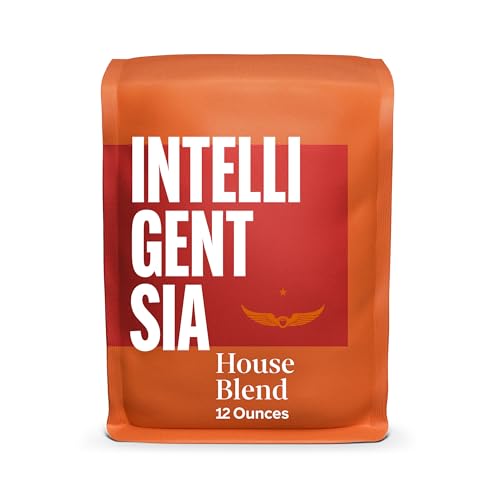
Light roastIntelligentsia
House Blend
Check price →
The light-roast demonstration: the brightness and origin clarity the roast section describes, from the bag with the strongest tested cup record on our roster. Listing states light roast, 12 oz whole bean, with caramel and red apple named in its own roast description.
Check price on Amazon → 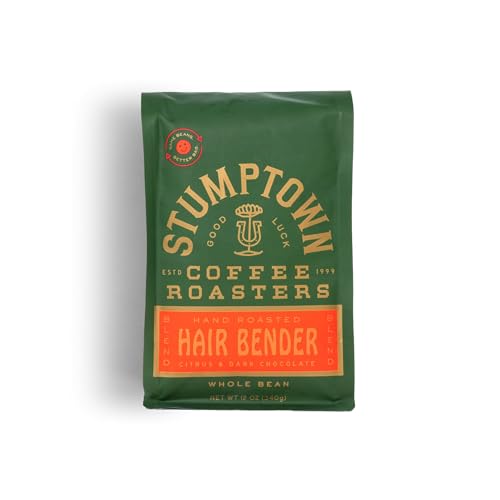
Medium roastStumptown Coffee Roasters
Hair Bender
Check price →
The medium middle ground: balance over brightness, from the blend that helped take specialty coffee mainstream - also on our 10-best roster. Listing states medium roast, 100% arabica, 12 oz whole bean, blending Latin American, Indonesian and African coffees.
Check price on Amazon → 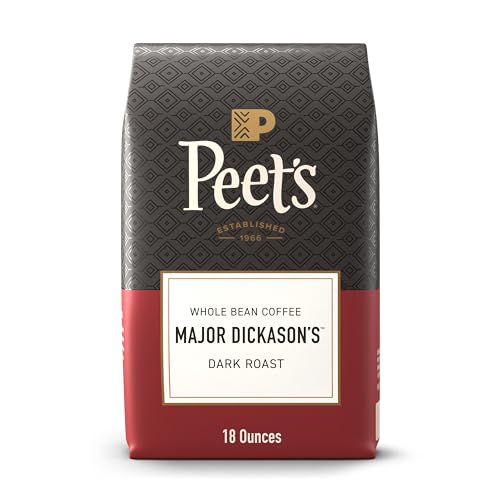
Dark roastPeet's Coffee
Major Dickason's Blend
Check price →
The dark-roast icon: roast-derived body and low acidity in place of origin character - also on our 10-best roster, where its standing is documented. Listing states dark roast, 100% arabica, 18 oz whole bean.
Check price on Amazon → 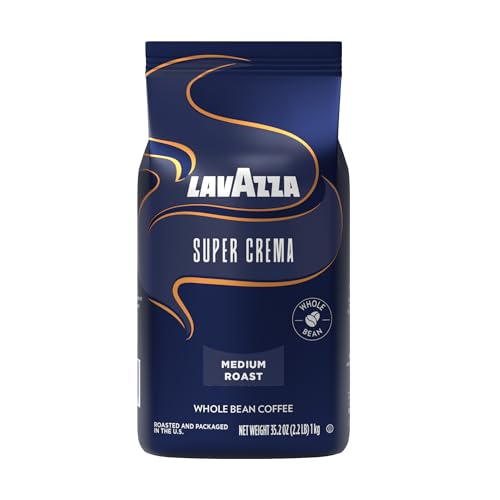
Robusta in the blendLavazza
Super Crema
Check price →
Taste what the species section says robusta contributes - body and crema in a traditional Italian-style espresso blend. Also on our 10-best roster. Listing states a medium espresso roast blend of arabica and robusta beans from 15 coffee-growing countries, 2.2 lb whole bean.
Check price on Amazon → 
Natural processFresh Roasted Coffee
Organic Ethiopian Natural
Check price →
The processing table in a cup: a naturally processed Ethiopian to hold against any washed coffee you already drink, one variable at a time. Listing states organic Ethiopian natural, light roast, 100% single-origin arabica, 12 oz whole bean.
Check price on Amazon → 
Cold brew grindBizzy
Organic Cold Brew, Smooth & Sweet
Check price →
The cold-brew row of the drinks table, pre-ground at the coarse setting the method needs - grind is the one variable this bag removes for you. Listing states coarse ground optimized for cold brew, medium roast, USDA Organic 100% arabica from Central and South America.
Check price on Amazon →
What the labels say, side by side
— means the label doesn’t say. Everything here is what each listing states; we have not tasted these coffees and nothing is scored. Why region, process and roast matter →
These are concept-matched illustrations, not winners of a tasting we ran. Where a bag has documented standing — an award evaluation or tested-panel result — that standing lives on the 10 Best Coffee Beans page, and four of the six above appear there. One caveat that applies to every marketplace coffee: roast dates are not guaranteed on Amazon. If peak freshness matters most to you, a roaster’s own store with a roast-date selector beats any marketplace; the bags here are the ones with credible national retail behind them. Prices update live from Amazon; the price on Amazon at purchase applies.
One brewer per method
Each of these makes one of the brewing methods listed earlier, and each produces a genuinely different cup from the same bag of beans — which is the cheapest way there is to learn what the flavor wheel is describing.
| If you want… | Method | Below |
|---|
| Bright, clean, fruity — the flavors easiest to pick apart | Pour-over | Hario V60 + Buono kettle |
| Body and texture, minimal fuss | Immersion | Bodum Brazil |
| Smooth iced coffee brewed in batches | Cold brew | Cold brew jar |
| Traditional unfiltered coffee | Cezve | DEMMEX copper cezve |
| Slow-drip Vietnamese coffee, no paper filters | Phin | BIMYJ stainless phin |
These are method-matched suggestions, not winners of a separate equipment test. Where we have applied our full evaluation standard, the result is published as an award — see the Best Overall Espresso Machine and Best Overall Burr Grinder awards. Nothing in this grid has been through that process.

Pour-overHario
V60 Ceramic Dripper
Check price →
The clean, bright, highly controllable cup in the table above. Its conical shape and single large opening give you unusually direct control over flow rate; you supply the kettle and the patience.
Check price on Amazon → 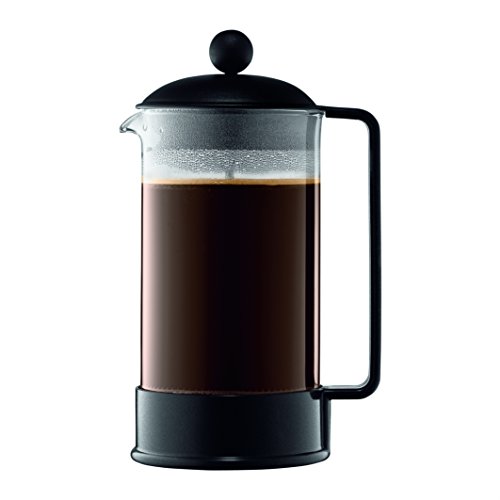
French pressBodum
Brazil French Press
Check price →
Full immersion through a metal filter, so more of the oils and fines stay in the cup: heavier body, more texture. A common starting recipe is around four minutes before plunging.
Check price on Amazon → 
Cold brewQHH
Cold Brew Maker, 64 oz
Check price →
A jar and a stainless filter is genuinely all cold brew needs. Coarse grounds and a long steep in the fridge; for concentrate-style recipes, dilute after straining.
Check price on Amazon → 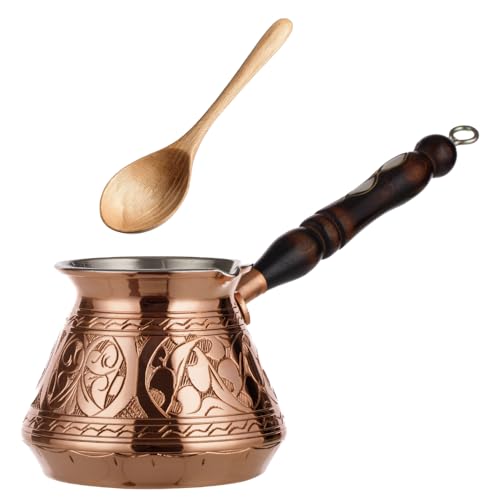
TurkishDEMMEX
Copper Cezve (Turkish Pot)
Check price →
For the unfiltered method in the table: ultra-fine grounds boiled in the pot, the grounds left to settle in the cup rather than filtered out.
Check price on Amazon → 
Vietnamese phinBIMYJ
Stainless Phin Filter, 8 oz
Check price →
The slow-drip brewer from the Vietnamese row of the table: listing states stainless steel, 8 oz, with a gravity insert rather than a screw-down press. Grounds in, hot water on top, and it drips directly over the cup — traditionally onto sweetened condensed milk.
Check price on Amazon → 
Pour-over companionHario
Buono Gooseneck Kettle
Check price →
The V60 card above says you supply the kettle — this is the one it means. Listing states a slender gooseneck spout for a slow, controlled pour, stainless, 1.2 L, for gas, electric and induction stovetops.
Check price on Amazon →
Espresso drinks need a machine rather than a brewer — that decision has its own evidence-led page, the Best Overall Espresso Machine award. Prices update live from Amazon and are accurate as of the time shown; the price on Amazon at purchase applies.
Frequently asked questions
What are the main types of coffee?
There are several useful ways to classify coffee, and most confusion comes from mixing them up. By drink: espresso and its milk drinks (cappuccino, latte, flat white, cortado, macchiato, americano, mocha). By brewing method: drip, pour-over, French press, cold brew, and unfiltered styles like Turkish and Vietnamese phin. By roast level: light through dark. By processing: washed, natural, honey. And by species: arabica and robusta dominate commercial production between them. Arabica is a little over half of world output by volume — about 56% in USDA's 2026/27 data — and is the specialty default; robusta is hardier, more bitter, and typically carries about twice the caffeine.
What is the difference between a latte, cappuccino, and flat white?
Milk and foam proportions. A cappuccino is a 5–6 oz drink balancing espresso with sweet milk and a distinct foam layer — the familiar "equal thirds" description is a traditional shorthand rather than a technical requirement. A flat white is a similar 5–6 oz size but uses a double shot with a thin layer of velvety microfoam, so it tastes stronger and silkier. A latte is larger (8–12 oz) with much more steamed milk and only a thin foam cap, making it the mildest of the three.
What do roast levels actually change?
Light roasts preserve more of the bean's origin character — acidity, floral and fruit notes — and the light-versus-dark caffeine question is less settled than it is usually presented — see the note above. Dark roasts push origin character aside in favour of roast-derived flavors: chocolate, caramelised sugar, smoke, and more body, with lower perceived acidity. Medium sits between and is where most crowd-pleasing blends live.
What is the coffee flavor wheel?
The Coffee Taster's Flavor Wheel is the specialty industry's shared vocabulary for describing coffee, relaunched in 2016 by the Specialty Coffee Association with World Coffee Research. It is built on the WCR Sensory Lexicon, created at Kansas State University's Sensory Analysis Center, which identifies 110 flavor, aroma and texture attributes — each tied to a specific physical reference product, so that "blueberry" means the same thing to every trained taster rather than being a matter of opinion.
Which type of coffee has the most caffeine?
Per serving, a large drip coffee usually wins, because you are drinking far more liquid brewed from far more grounds than a single espresso. Per ounce, espresso is much more concentrated. Bean species matters too: robusta carries roughly twice the caffeine of arabica. If you want maximum caffeine, a large filter coffee made from robusta-containing beans generally contains more than a single espresso shot — though a triple ristretto or an unusually large dose can close that gap.
What does washed vs natural processing mean?
It describes how the fruit is removed from the coffee seed. Washed coffees have the fruit stripped before drying, producing a cleaner, brighter, more acidic cup where origin character shows clearly. Natural (dry) processed coffees dry inside the whole fruit, which ferments around the seed and produces heavier body and pronounced berry, dried-fruit, and sometimes winey notes. Honey processing is often described as sitting between the two, in both method and typical cup character.
Where do coffee beans come from?
A coffee bean is the seed of a fruit grown on trees in the tropical belt. The two commercial species dominate production: arabica (about 56% of world output in USDA 2026/27 data, mostly grown at higher altitudes in Latin America and East Africa) and robusta (hardier, lower-grown, led by Vietnam and Brazil). How the fruit is removed from the seed is the processing story covered in the table above.
Which coffee should I buy to taste these differences?
Pick two bags that differ in exactly one variable and brew them the same way - that is the fastest palate education there is. The bean section on this page matches a verified, nationally available bag to each concept: light, medium and dark roasts, an arabica-robusta espresso blend, a natural-processed Ethiopian, and a coarse grind for cold brew. For a ranked list with documented standing rather than concept matches, see our 10 Best Coffee Beans guide.
Keep going