Home › Brew Methods › French press ratio
☕ Brew Methods · 2026
French Press Ratio: How Much Coffee Per Cup, and the Method
How much coffee for a French press: benchmark roasters brew between 1:15 and 1:18 - about 56 g per 34 oz press at the strong end.
6 facts, each with a source below
5 questions answered
3 verified products
The working French press ratio is between 1:15 and 1:18 coffee to water by weight - the two benchmark recipes this page reads land on each end. Stumptown brews 56 g of coffee to 850 g of water (about 1:15, the stronger cup); Counter Culture states a “1:18 coffee-to-water ratio” outright - 45 g to 800 g. Both use water at 205°F, a coarse grind, and a stirred steep pressed at four to six minutes. The table below turns that into how much coffee per press size, in grams and scoops.
The ratio range1:15 (stronger) to 1:18 (milder), by weight
A 34 oz pressAbout 56-67 g of coffee - roughly 8-9 tablespoons
A 50 oz pressAbout 83-100 g of coffee
Water205°F - just off the boil, both sources agree
GrindCoarse - breadcrumbs to coarse kosher salt
SteepStir early; press at 4:00 (Stumptown) to 6:00 (Counter Culture)
How much coffee, by press size
Both source recipes are weight-based, so the honest answer is a small table rather than one number. At the two published ratios:
| Press size | Water | Coffee at 1:15 (strong) | Coffee at 1:18 (mild) |
|---|
| 12 oz mug's worth | ~350 g | ~23 g (3 tbsp) | ~19 g (2.5 tbsp) |
| 34 oz press (the standard) | ~850 g | ~56 g (8 tbsp) | ~47 g (6.5 tbsp) |
| 50 oz press | ~1,250 g | ~83 g | ~69 g |
Tablespoon counts are approximations - coarse-ground coffee varies in density, which is exactly why both roasters publish grams. A kitchen scale removes the argument; our ratio calculator scales any of these to any vessel.
The method, from the two source recipes
The recipes differ only in strength and patience:
- Grind coarse. Stumptown says “coarse like breadcrumbs”; Counter Culture grinds “medium-coarse, like kosher salt”. Finer than that slips through the mesh and muddies the cup - the French press row on our grind chart sits near the top of the scale.
- Pour water just off the boil - about 205°F in both guides - over the grounds, saturating them fully.
- Stir once, early. Counter Culture stirs at 30 seconds; Stumptown at the one-minute mark. The stir breaks the floating crust so the steep is even.
- Lid on, wait. Four minutes in the Stumptown recipe, six in Counter Culture's milder brew. Longer steep plus more water is their trade for the gentler ratio.
- Press slowly, serve immediately - and Stumptown's guide adds the step most people skip: decant whatever you are not drinking, because coffee left on the grounds keeps extracting toward bitterness.
The French press as a cold brewer
The same vessel makes genuine cold brew, and the search traffic suggests half of press owners suspect as much. The method changes in two ways: the grind goes to the extra-coarse extreme, and time replaces temperature - room-temperature or fridge water, with the long steep our cold brew guide documents (commonly twelve hours and up), then a slow press and a strain into a clean vessel. Ratios run stronger for cold brew because it is usually diluted to serve; the cold brew guide's grind section covers the why. A second screen - the insulated Secura below ships with one - earns its keep here, since long steeps find every gap in a worn mesh.
The presses themselves, verified
French presses are gloriously simple objects, which keeps the buying question small. The glass Bodums - the $20 Brazil and the steel-framed Chambord icon, both made in Portugal per their listings - brew identically; the Chambord premium is aesthetics, not extraction. The insulated stainless Secura changes two real things: a 50 oz batch size and heat retention through the steep, plus a spare screen in the box. All three were verified against their live listings today, and every one of them brews the recipe above without modification.
Verified products for this page
ℹ️
Affiliate disclosure: CoffeeLabAdvisor is an Amazon Associate and may earn a commission from these links, at no extra cost to you. Commissions play no part in what appears here — every product traces to a verified catalog entry or a published review.
Three verified presses: the budget glass workhorse, the design icon, and the insulated big-batch steel - same method across all three.
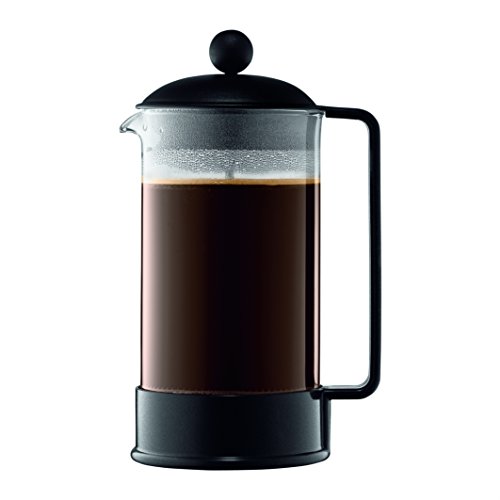
French pressBodum
Brazil French Press, 34 oz
Check price →
The $20 workhorse - same brewing as presses at three times the price. Listing states the Bodum 34 oz Brazil French press in high-heat borosilicate glass, made in Portugal.
Check price on Amazon → 
French pressBodum
Chambord French Press, 34 oz
Check price →
The design icon of the category - the same glass brewing in the classic steel frame. Listing states the Bodum 34 oz Chambord French press in high-heat borosilicate glass with polished stainless steel, made in Portugal.
Check price on Amazon → 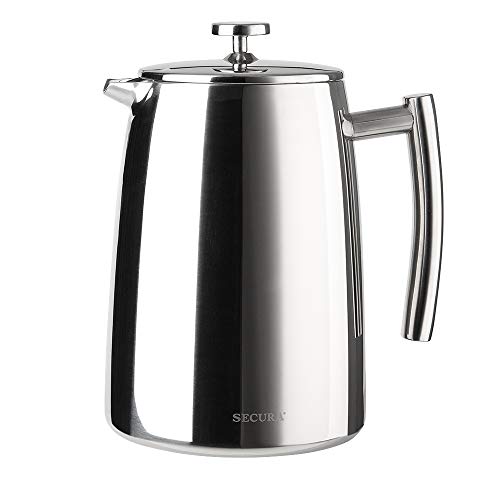
French pressSecura
Stainless French Press, 50 oz
$42.99Live Amazon price · as of 10/26/2026 9:49 PM
The big-batch, keep-it-hot option - insulated steel instead of glass, half a liter more capacity. Listing states a 50-ounce 304 stainless steel insulated coffee press with an extra screen.
Check price on Amazon →
Frequently asked questions
How much coffee do I put in a French press?
By weight, 1 gram of coffee per 15-18 grams of water: about 56-67 g for a standard 34 oz press at the stronger end, or 45-47 g at the milder end - roughly 7-9 tablespoons. The benchmark recipes this page reads are Stumptown's 56 g to 850 g and Counter Culture's 45 g to 800 g.
What is the ratio of coffee to water in a French press?
Between 1:15 and 1:18 by weight. Stumptown's published recipe works out to about 1:15 for a stronger cup; Counter Culture states 1:18 for a milder, longer-steeped brew. Start at 1:16-1:17 and adjust one step at a time toward the cup you like.
How long should French press coffee steep?
Four to six minutes, per the source recipes - Stumptown presses at 4:00, Counter Culture at 6:00 with its gentler ratio. Both stir early to break the crust. Past the press, decant what you are not drinking; coffee sitting on grounds keeps extracting toward bitterness.
What grind should I use for a French press?
Coarse - breadcrumbs to coarse kosher salt in the roasters' own descriptions, near the top of our grind chart. Finer grinds slip through the metal mesh and over-extract during the long steep, which is where muddy, bitter press coffee comes from.
What water temperature is best for a French press?
About 205°F - just off the boil - in both source recipes. Boil the kettle, wait roughly thirty seconds, pour. The long steep makes the press forgiving of small temperature drift, which is part of why it is such a reliable beginner method.
Sources for this page:
Recipe figures (56 g / 850 g ≈ 1:15, ~205°F, coarse-like-breadcrumbs grind, stir at 1:00, press at 4:00, the decanting step): Stumptown Coffee Roasters' published French press guide, read 2026-09-02 · Recipe figures (45 g / 800 g, the stated 1:18 ratio, 205°F, medium-coarse kosher-salt grind, stir at 0:30, press at 6:00): Counter Culture Coffee's published quick French press recipe, read 2026-09-02 · Press facts (materials, sizes, made-in-Portugal, extra screen): the verified listings, read on Amazon 2026-09-02 We have not lab-tested brewers; where a figure is a manufacturer's, the page names the manufacturer, and machine capabilities come from our own published review records.
Keep going