

🏆 2026 Best Bean-to-Cup Machine winner
Jura Z10
Bean-to-Cup · Automatic milk · Plant milk 5/5
$3,999.00Live Amazon price · as of 10/26/2026 8:35 PM
Buy on Amazon →Home › Coffee Drinks › Cappuccino vs latte
☕ Coffee Drinks · 2026Cappuccino vs latte: a small espresso-forward cup under deep foam, or a bigger cup of mostly steamed milk. Ratio, size, foam, caffeine and which to order.
The difference between a cappuccino and a latte is milk and foam, not coffee. Both start from the same espresso. A cappuccino is a small drink — the certified Italian version is 25 ml of espresso with 100 ml of milk steamed to 55°C, about 125 ml in the cup — finished with a deep cap of foam. A latte stretches a similar shot with far more steamed milk, at published ratios from 1:2 to 1:4, in a cup that is often 8–12 oz, under a thin layer of foam. Same shot, so the same caffeine; the cappuccino simply dilutes it less, which is why it tastes stronger.


Most explanations of cappuccino versus latte stop at one has more foam. That is true, and it is not enough to order well or to make either one at home, because the foam is a consequence of two other decisions: how much milk goes in, and how that milk is steamed. The table puts the documented figures side by side. Where a figure is a range, it is a range because the sources genuinely differ, and the page says which authority is behind each number rather than averaging them into a false precision.
| Cappuccino | Latte | |
|---|---|---|
| Espresso | One shot — the certified Italian standard uses 25 ml | One or two shots, commonly a double at cafés |
| Milk | 100 ml steamed to 55°C (INEI); home versions vary around that | Two to four parts milk per part espresso, by source |
| Foam | A deep cap — the café shorthand calls the drink thirds: espresso, milk, foam | A thin surface layer, commonly described at 3–12 mm |
| Cup | About 125 ml in a 150–160 ml cup (certified); larger in American cafés | Often 8–12 oz; tall glass or wide bowl |
| Ratio, roughly | 1 part espresso to 4 parts milk-and-foam | 1 part espresso to 2–4 parts milk |
| Tastes | Espresso-forward, with air before coffee on the first sip | Milk-forward, sweet from the milk, mild |
| Caffeine | The shot's caffeine | The shot's caffeine — the same if the shot is the same |
Two things fall out of the table that are worth saying plainly. First, a cappuccino built on 25 ml of espresso and 100 ml of milk is a smaller drink than almost any latte, so the reason it tastes stronger is dilution, not dose. Second, the drinks overlap: a latte at 1:2 with a thin foam layer and a cappuccino at 1:4 with a loose cap are closer to each other than either is to the textbook version of itself. The names describe intent — a small foamed drink, a long milky one — and cafés vary around that intent.
Steaming milk has two phases. In the first seconds the steam tip sits just under the surface and pulls air into the milk — baristas call it stretching — and the longer that phase lasts, the more foam the jug ends up with. Then the tip goes deeper and the milk spins and heats, breaking the bubbles down until they are too small to see. A cappuccino is milk with a long stretch: enough air that a distinct, spoonable cap forms and can be held back with a spoon while the steamed milk pours, then laid on top. A latte is milk with a brief stretch: a little air, then a long spin, so the result is glossy microfoam that pours as one liquid and leaves only a thin layer on the surface.
That is why the same barista, the same shot and the same jug of milk can make either drink. Nothing about the coffee changes. What changes is roughly the first three seconds at the steam wand, and then what the pour does with the result. It is also why the flat white sits between them rather than beside them: it is latte-style microfoam — even finer, with a surface layer commonly put at about 5 mm — poured into a cup closer to cappuccino size. Once you can hear the difference between a long stretch and a short one, the three drinks stop being a menu and start being a single technique with three settings.
Temperature belongs in this section too. The certified cappuccino steams its milk to 55°C, cooler than most home instinct, and the reason carries over to lattes: past roughly 65°C the milk loses sweetness and the foam coarsens. A latte that tastes flat and a cappuccino whose cap collapses often share one cause, which is that the milk was steamed too hot. Automatic milk systems stop earlier than a hand on the jug would, and that is deliberate.
A cappuccino tastes stronger than a latte, and it is worth being exact about why, because the usual phrasing gets it wrong. It does not contain more coffee. In its certified form it is built on a single 25 ml shot, and a café latte is frequently built on a double. What the cappuccino has is less milk around whatever shot it carries, so more of what reaches your palate is espresso. Strength, in the sense people mean when they ask this question, is a ratio.
Caffeine follows the shot, not the drink. If the café puts the same shot in both, both carry the same caffeine, and if it puts a double in the latte and a single in the cappuccino, the latte carries more — the milk contributes nothing either way. How much caffeine a shot actually holds, by number of shots and against brewed coffee, is on our espresso caffeine guide, which is the one place on this site that publishes milligram figures; this page keeps to the structural point, which is that switching from latte to cappuccino to feel more awake changes the taste more than the dose.
If you want a latte that leads with coffee rather than milk, the honest fix is not to order a cappuccino but to change the ratio: ask for a double shot in a smaller cup, or order a flat white, which is exactly that adjustment with a name. If you want a cappuccino that is gentler, ask for it wet — more steamed milk, less foam — which is a step toward the latte without the size.
The certified cappuccino is about 125 ml in a 150–160 ml cup, which is smaller than most people picture. In Italy that is the drink. In the United States and much of the English-speaking world, cappuccinos are routinely poured at 8, 12 or even 16 oz, sizes that the certified definition never contemplated, and at those volumes a cappuccino is structurally a latte with more foam on top. The name survives the scaling; the proportions do not.
The honest test when a menu offers both in the same sizes is the foam. If the cappuccino arrives with a thick cap that sits above the rim and holds a spoon, the café is steaming it differently from its latte and the distinction is real. If both arrive with a thin glossy surface and the only difference is the price, they are the same drink twice. Our cappuccino guide records the certified figures with their source, and the latte guide records the ratio range honestly as a range, because on the latte side no single authority has certified a number.
The vocabulary at the counter mostly describes foam. A dry cappuccino has more foam and less steamed milk than standard, so the cup is lighter and the coffee shows through more; bone-dry takes that to the limit — espresso under foam alone, no liquid milk poured. A wet cappuccino goes the other way, more steamed milk and a thinner cap, and at some point it becomes a latte in a smaller cup. Lattes rarely get the dry-wet modifiers because there is not enough foam for them to mean anything; a latte's modifiers are about the milk itself — skinny for skim, oat or almond for the plant-based versions — and about syrup, which is where vanilla, caramel and the seasonal drinks live.
Iced changes the two drinks unequally. An iced latte is a standard menu item: espresso and cold milk over ice, no steaming, so no foam at all. An iced cappuccino is a harder thing to make honestly, because the foam is a product of steam; cafés that offer one usually froth cold milk with a jug frother and float it on iced espresso and milk, which is closer to a cold-foam latte than to the hot drink it is named after. If the foam is the reason you order cappuccinos, order the hot one.
One ordering rule of thumb from our flat white page covers all three milk drinks: same espresso, three milk decisions. Most milk, thin foam, biggest cup — latte. Thick foam, small cup — cappuccino. Least milk, glossy surface, small cup — flat white. If you want the espresso to lead with barely any milk, that is a cortado or a macchiato, and those pages take over.
Any espresso machine with a steam system makes both drinks; the machine decides how much of the foam decision is yours. With a manual steam wand, you control the stretch, so the same jug becomes a cappuccino cap or latte microfoam depending on how long the tip sits near the surface — the most flexible option and the one with a learning curve. With an automatic wand of the kind the Bambino Plus carries, the machine steams to a set temperature and foam level; the default produces latte-style microfoam, and a cappuccino comes from selecting the higher foam setting or switching to manual, which that machine allows. Bean-to-cup machines have both drinks as presets and build the foam in a milk carafe system, and the cappuccino preset is usually the one with more air.
On a single-boiler machine — which includes the Breville all-in-ones and both Bambinos — the shot is pulled first and the milk steamed second, because the machine cannot do both at once; our reviews record that wait as a documented limitation of the architecture, not of your technique, and the faster ThermoJet machines shorten it without removing it. Dual-boiler and bean-to-cup machines steam and brew together. The order for a cappuccino at home is therefore: pull the shot into the small cup, steam with a long stretch, hold the foam back with a spoon while the milk pours, then cap it. For a latte: pull the shot into the larger cup, steam with a short stretch, pour from low and close so the milk integrates.
Plant milks foam differently from dairy and differently from each other; barista-formulation oat milks hold a cappuccino cap far better than standard cartons, and they steam well for lattes. Every machine we review carries a plant-milk suitability rating from 1 to 5, scored per machine and shown on the cards below, so if oat cappuccinos are the goal the rating is the thing to look at before the price.
Order a cappuccino when you want the coffee to lead, you like the texture of foam, and a small cup is a feature rather than a disappointment. It is the drink for tasting an espresso through milk rather than under it. Order a latte when you want a longer, gentler, warmer drink, when the milk is part of the pleasure, or when you want a flavoured drink — syrups belong in the volume a latte provides. Order a flat white when you want the cappuccino's strength with the latte's silky milk in a small cup. Order a cortado when even the flat white is too much milk. And if the café pours everything at 12 oz, ask for a double shot in whatever you choose, because at that volume the foam is the only difference left and the ratio is what you are actually missing.
At home the decision is simpler still, because it is the same machine, the same shot and the same jug. Steam it long for a cappuccino, short for a latte, and the drink is whichever you decided in the first three seconds at the wand.
Both drinks need espresso plus steamed milk, so every machine below carries a steam system — manual, automatic or a bean-to-cup milk carafe — and each has a published review; the steam type and plant-milk rating are on the card.
Bean-to-Cup · Automatic milk · Plant milk 5/5

Semi-Automatic · Automatic milk · Plant milk 5/5

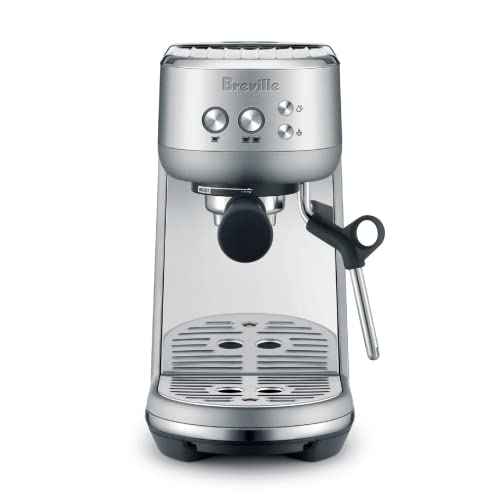
Semi-Automatic · Manual milk · Plant milk 4/5
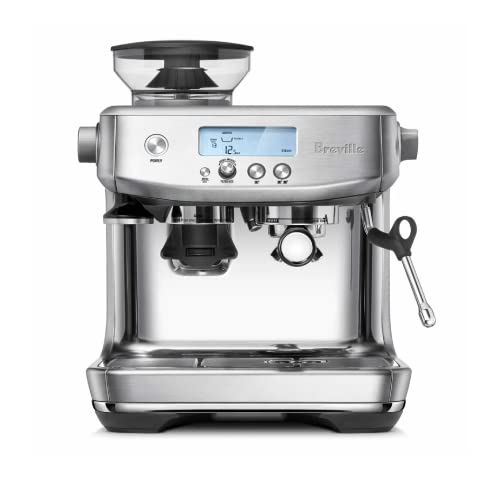
Semi-Automatic · Manual milk · Plant milk 4/5

Bean-to-Cup · Automatic milk · Plant milk 4/5
Milk and foam, not coffee. A cappuccino is a small drink — the certified Italian version is 25 ml of espresso with 100 ml of milk steamed to 55°C — under a deep cap of foam. A latte adds far more steamed milk, at published ratios of 1:2 to 1:4, in a bigger cup under a thin foam layer. The espresso underneath can be identical.
Whichever has more espresso in it. Milk carries no caffeine, so two drinks built on the same shot carry the same caffeine regardless of size. Cafés often put a double shot in a latte and a single in a cappuccino, in which case the latte has more. Our espresso caffeine guide publishes the figures by number of shots.
It tastes stronger, because there is less milk around the same shot — strength here is ratio, not extra coffee. A certified cappuccino is about 125 ml in total; a latte is often 8–12 oz. If you want a latte that leads with coffee, ask for a double shot in a smaller cup, or order a flat white.
Yes, by a wide margin in the certified version: 100 ml of milk against a latte's two to four parts milk per part espresso in an 8–12 oz cup. The cappuccino's milk is also treated differently — stretched longer at the wand, so a larger share of it becomes foam rather than liquid.
A cappuccino with more foam and less steamed milk than standard, so the cup is lighter and the espresso shows through more. Bone-dry takes it to the limit: espresso under foam only, with no liquid milk poured. A wet cappuccino goes the other way, with more steamed milk and a thinner cap, and shades toward a latte in a smaller cup.
Yes — any espresso machine with a steam system makes both, and the difference is made at the wand: a long stretch of air for a cappuccino cap, a brief one for latte microfoam. Automatic wands default to latte-style microfoam and reach a cappuccino through a higher foam setting or manual mode; bean-to-cup machines carry both as presets.
Latte: most milk, thinnest foam, biggest cup. Cappuccino: small cup, deep foam cap, espresso-forward. Flat white: latte-family microfoam, finer still, in a cup close to cappuccino size with less milk than a latte. Same espresso in all three; cup size and milk treatment define the drink.
Sources for this page: Certified cappuccino (25 ml espresso + 100 ml milk at 55°C, ~125 ml in a 150–160 ml cup): the Italian Espresso National Institute's published certification (iei.coffee and INEI institutional documentation), read 2026-09-01 for our cappuccino guide and corroborated by Wikipedia's Cappuccino entry · Latte structure and foam layer (espresso + steamed milk with a thin foam cap; ~12 mm foam figure) and the 1:2 to 1:4 ratio range: Wikipedia's Latte entry, Trade Coffee's and Whole Latte Love's latte explainers, MasterClass's cappuccino-vs-latte comparison and 1Zpresso's latte-ratio guide, read 2026-09-02 for our latte guide — presented as a range because the sources genuinely differ · Flat white microfoam (~5 mm surface layer, 1:2–1:3 ratio) and the 130–135°F steaming range: Wikipedia's Flat white entry and Trade Coffee's flat white page, read 2026-09-02 for our flat white guide · Steam-wand types, single-boiler brew/steam sequencing and plant-milk ratings: our own published review records We have not measured drinks in a lab; where volumes differ between authorities, the page names each authority rather than averaging them, and machine capabilities come from our own published review records.
Feedback on this page: Cappuccino vs Latte: The Difference and Ratio (2026)
Thank you. Your note is filed against this page and will be read.