

🏆 2026 Best Bean-to-Cup Machine winner
Jura Z10
Bean-to-Cup · Automatic milk · Plant milk 5/5
$3,999.00Live Amazon price · as of 10/26/2026 8:35 PM
Buy on Amazon →Home › Coffee Drinks › Flat white
☕ Coffee Drinks · 2026A flat white is espresso with steamed milk textured into a thin, glossy microfoam — a stronger espresso-to-milk ratio than a latte.
A flat white is espresso with steamed milk textured into microfoam — milk with bubbles so fine it pours glossy and integrates with the shot instead of sitting on it. The name describes the surface: a thin layer of microfoam, commonly put at about 5 mm, where a cappuccino carries a thick cap of stiffer foam. It runs more espresso per millilitre than a latte, which is why it tastes more of the coffee in a smaller cup.
The defining ingredient is the milk texture. Microfoam is steamed milk with small, fine bubbles and a glossy finish — closer to wet paint than to the dry, spoonable foam a cappuccino wears. Poured well, it does not form a separate layer at all: the milk and its foam stay integrated through the drink, leaving only that thin sheen on the surface. That integration is the whole difference between a flat white and its neighbours. A cappuccino is built in distinct layers with stiff foam on top; a latte uses similar milk but much more of it.
Getting there is a steaming problem, not a recipe problem: air is stretched into the milk only in the first seconds, then the wand spins the jug until the bubbles are too small to see. Milk steamed to roughly 130–135 °F keeps its sweetness — one reason the drink is served warm rather than scalding.
All three are espresso plus steamed milk; the proportions and the foam do the separating.
A flat white runs about 1 part espresso to 2–3 parts milk in a small cup, with the thin microfoam surface. A latte stretches a similar shot with far more milk — it is the mildest of the three, and the larger cup is the giveaway. A cappuccino is closer to the flat white in size but wears a thick cap of stiffer foam, so the first sip is air before it is coffee.
Ordering rule of thumb: same espresso, three milk decisions. Most milk → latte. Thick foam → cappuccino. Least milk, thin gloss → flat white.
There is no single certified volume, so the honest answer names its authorities. Wikipedia's flat white entry puts the drink at about 200 ml in Australia (a small ceramic cup with a handle) and more commonly 175 ml in New Zealand, built on a double espresso of roughly 50 ml with about 130 ml of steamed milk. Specialty cafés outside Australasia often serve it smaller still — anywhere from 5 to 6 oz. What stays constant is the proportion: whatever the cup, a flat white keeps milk close to the 1:2–1:3 range rather than the latte's long pour.
Who invented the flat white is contested, and this page will not settle it. The documented claims: Sydney café menus attest the name in the mid-1980s, and Australia widely claims the drink from that decade. New Zealand counters with its own 1980s claims from Auckland and Wellington, and serves the drink at least as devoutly. And coffee historian Ian Bersten argues the drink probably originated in England in the 1950s — the phrase itself is attested in print as far back as 1971.
None of these is proven to the others' satisfaction. We flag origin stories as stories; what is verifiable is the drink as served today, and that is what the rest of this page describes.
Pull a double shot — our shot size guide covers what that means in millilitres — into a cup around 5–7 oz. Steam milk with only a brief stretch of air at the start, then keep it spinning until the surface is glossy with no visible bubbles. Pour from low and close, letting the milk integrate with the crema rather than sitting on top; the goal is a surface sheen, not a foam cap.
This is a steam-wand drink. Machines with automatic milk systems can approximate it if they offer a low-foam setting, but the classic texture comes from a wand and a jug — which is why every machine below lists its steam system on the card.
A flat white needs espresso plus milk textured to a fine microfoam, so the machines below all carry a steam system — each has a published review, and the steam type is named on its card.
Bean-to-Cup · Automatic milk · Plant milk 5/5

Semi-Automatic · Automatic milk · Plant milk 5/5


Semi-Automatic · Manual milk · Plant milk 4/5
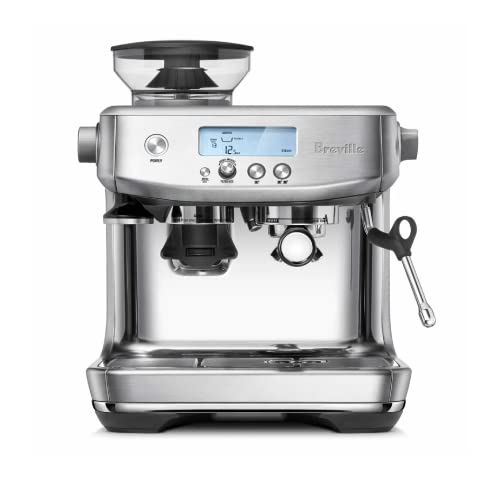
Semi-Automatic · Manual milk · Plant milk 4/5

Bean-to-Cup · Automatic milk · Plant milk 4/5
Espresso and steamed milk, nothing else. The milk is textured into microfoam — fine, glossy bubbles that integrate with the shot — leaving only a thin surface layer instead of a foam cap. No syrup, no separate foam layer, no dusting.
Commonly around 175–200 ml: Wikipedia's entry records about 200 ml in Australia and 175 ml in New Zealand, built on a roughly 50 ml double espresso. Specialty cafés elsewhere often pour 5–6 oz. The proportion — far less milk than a latte — matters more than the exact cup.
Milk quantity and foam. A flat white keeps roughly 1 part espresso to 2–3 parts milk with a thin microfoam surface; a latte adds much more milk in a bigger cup. The espresso underneath can be identical — the flat white simply dilutes it less.
It tastes stronger, because there is less milk around the same espresso. Strength here is ratio, not extra coffee: order a flat white when you want the shot to lead, a latte when you want the milk to.
The cappuccino, by design. It is built with a thick cap of stiff foam, often in distinct layers; the flat white integrates its microfoam through the milk and shows only a thin glossy surface. Similar cup sizes, opposite textures.
Sources for this page: Definition, microfoam layer (~5 mm), country sizes (200 ml AU / 175 ml NZ, ~50 ml double + ~130 ml milk) and the three-way origin dispute incl. Ian Bersten's England claim: Wikipedia's Flat white entry, read 2026-09-02 · Microfoam texture (small fine bubbles, glossy, integrated), 1:2–1:3 espresso-to-milk ratio, 130–135 °F steaming, 1980s Sydney menu claim: Trade Coffee's flat white education page, read 2026-09-02 We have not measured drinks in a lab; where volumes differ between authorities, the page names each authority rather than averaging them, and machine capabilities come from our own published review records.
Feedback on this page: What Is a Flat White? Size and Ratio (2026)
Thank you. Your note is filed against this page and will be read.