"100% Arabica" means one thing: every bean in the bag belongs to the species Coffea arabica. That is the whole claim. It is not a grade, not an origin, not a freshness promise, and emphatically not a guarantee that the coffee is good — a bag of stale, low-grade, over-roasted arabica qualifies for the label exactly as much as a world-class one does.
What the label guarantees — and what it doesn't
The reason "100% Arabica" became ubiquitous is straightforward marketing history: robusta earned a reputation in mid-century instant coffee as the cheap, harsh, rubbery species, so declaring the absence of robusta became shorthand for "we did not cut corners." That shorthand stuck long after it stopped being informative.
✅ What it does tell you
- The species is Coffea arabica, not robusta or a blend of the two.
- Robusta is excluded as an ingredient, so you should not expect the particular sensory contribution a robusta component brings. Note what that is not: it is not a promise the coffee avoids harshness, since arabica can be woody, phenolic, baked or stale on its own account.
❌ What it does not tell you
- Grade. Arabica spans world-class microlots and the lowest commodity grades alike.
- Freshness. No roast date, no information — and in our experience staleness spoils more home-brewed cups than species choice ever does.
- Origin or altitude. High-grown arabica and low-grown arabica are very different coffees.
- Processing or roast quality. A scorched roast is a scorched roast regardless of species.
The practical takeaway: treat "100% Arabica" as a floor, not a ceiling. It rules out one specific failure mode. Everything that actually separates a good bag from a mediocre one — freshness, grade, origin, roast craft — is printed elsewhere, if it is printed at all.
Arabica vs robusta: the real differences
Scope note: arabica and canephora dominate commercial coffee between them. Other Coffea species exist — Liberica most notably — but they are a rounding error in what reaches Western shelves, and they are outside this guide.
These are two different species with genuinely different botany, not premium and budget versions of the same plant.
| Arabica (Coffea arabica) | Robusta (Coffea canephora) |
|---|
| Share of global production, by volume | About 56% (USDA, 2026/27); 53–58% across recent years | About 44% (USDA, 2026/27); its share has generally increased over recent decades |
| Preferred growing conditions | Generally cooler highland environments, commonly around 900–2,000 m | Generally warmer lowland environments, commonly below about 800 m |
| Climate tolerance | Narrower temperature band; susceptible to several major diseases | Generally more tolerant of heat and of several major diseases |
| Caffeine, green bean (% dry weight) | ~0.8–1.4% | ~1.7–4.0% |
| Total chlorogenic acids, green bean (% dry weight) | ~4.0–8.4% | ~7.0–14.4% |
| Typical flavour | Typically sweeter and more acidic, with floral/fruity aromatics | Typically heavier and more bitter, with woody/nutty/grainy notes |
| Espresso crema | Typically less crema volume, but measurably more stable | Typically more crema volume, but less stable |
| Main producers | Brazil, Colombia, Ethiopia, Central America | Vietnam, Brazil, Indonesia, Uganda, India |
Production shares calculated directly from the USDA Foreign Agricultural Service PSD dataset (Coffee, Green — Arabica and Robusta production, world totals): 105,867 against 83,800 thousand 60 kg bags for 2026/27, with the four most recent marketing years running 57.4%, 57.8%, 52.8% and 55.8% arabica. An earlier version of this page gave a flat 56–58% range attributed to ICO and USDA-derived analyses; the underlying data swings more than that, so we now give a current figure with the range around it. These are shares of production by volume, which is not the same as share of exports, of consumption, or of market value — arabica's share of specialty revenue is higher than its share of tonnage. We give a range rather than a single number because the two families of estimate do not agree precisely and neither is a census. On the trend: robusta's share has generally increased over recent decades, which is a stronger and more defensible statement than "is rising" — single-year movements go both ways, and robusta volumes can fall in a year in which its share still grows.
On the composition figures, and where they come from. These are green-bean figures on a dry-weight basis — roasting substantially transforms chlorogenic acids in particular, so these are not the levels in the coffee you drink. The ranges are conventionally attributed in the literature to Farah & Donangelo, "Phenolic compounds in coffee", Brazilian Journal of Plant Physiology 18(1):23–36 (2006), which is the citation later papers point to for exactly these numbers. We give you that lineage so you can follow it, while noting plainly that we have not been able to open that text ourselves — so we are passing on a well-established attribution, not reporting a measurement we checked. What the studies we could examine establish is the direction and reality of the species difference: Anh-Dao et al., Analytical Letters (2024) measured caffeine and chlorogenic acid in arabica and robusta — though in Vietnamese samples, so it describes those coffees rather than a world range — and Badmos, Lee & Kuhnert, Food Research International (2019) profiled chlorogenic acids across 54 samples from diverse origins and found the species differences large and consistent enough to tell the two apart. On caffeine specifically, Jeszka-Skowron et al., European Food Research and Technology (2016) report that "Robusta coffee extracts contain twice as much caffeine as Arabica" — which is the "roughly twice" claim this page makes, measured in extracts. Figures vary by origin, variety and processing, which is why they are ranges. The espresso-crema row comes from Wang et al., Food Research International 116 (2019), which tested brewing variables directly and found that "a larger crema volume was generated from Robusta than Arabica beans", but that "Arabica beans resulted in brews with a more stable crema than Robusta, attributable to the higher lipids content in the former". An earlier version of this page had that backwards, calling robusta's crema more persistent; the same study found freshness and basket size matter a great deal too, so treat crema as a property of the whole shot rather than of the species alone.
Caffeine, acids, and why robusta tastes harsher
Robusta's reputation is not snobbery — it has a chemical basis. Two compound groups explain most of the difference in the cup.
Caffeine is itself bitter, and robusta typically carries roughly twice as much. Caffeine is one of several chemical defences coffee plants deploy against herbivores and pests — though the ecology is messier than the tidy version implies, and some pests, notably the coffee berry borer, cope with it perfectly well. What matters for the cup is simpler: more caffeine means more bitterness before anything else happens. We have deliberately not claimed that robusta evolved more caffeine because it grows lower and hotter; that is a plausible-sounding causal chain we cannot evidence, and the higher caffeine level is fundamentally a species trait.
Chlorogenic acids are the second half of the story. Green robusta starts with substantially higher levels than green arabica. Roasting then transforms them: they isomerise, degrade, and convert into lactones and other products, some of which are significant contributors to coffee bitterness and roast character. That chemistry is part of why robusta often tastes more bitter and more intense — but it is a contributing mechanism, not a one-compound explanation, and it is worth resisting the neat story that "more chlorogenic acid equals more harshness". Chlorogenic acids are also antioxidants, one of several reasons robusta is not simply "worse", just different.
A caffeine caveat worth knowing: species affects caffeine less than your brewing does. A large drip coffee will out-caffeinate a single espresso comfortably, because you are drinking far more liquid brewed from far more coffee. Species matters at the margins; dose and volume dominate.
When robusta is the better bean
Modern specialty coffee has begun rehabilitating robusta, and there is a real case for it in three situations.
- Traditional Italian espresso. Robusta typically produces more crema volume and a heavier body that stands up to milk instead of vanishing into it. (Volume is not the same as durability: in controlled testing arabica's crema was the more stable of the two, so "more crema" and "longer-lasting crema" are different claims and only the first belongs to robusta.) Many traditional Italian espresso blends use roughly 10–30% robusta, though real products range considerably wider in both directions depending on the roaster and the regional style — 70/30 is common, and 50/50 exists. Lavazza's Super Crema — which Lavazza itself lists as an arabica-and-robusta composition — is built this way on purpose, which is why it appears on our best coffee beans list.
- Milk drinks generally. Add eight ounces of milk to a delicate, floral arabica and the delicacy simply disappears. Robusta's weight survives the dilution.
- Climate reality. Arabica is the fussier species in a warming world — narrow temperature tolerance and high disease susceptibility, compounded by unusually narrow genetic diversity, which makes breeding for resilience harder than it is in many crops. Fine robusta is an active research area precisely because the world may need it, and well-grown, well-processed robusta bears little resemblance to the instant-coffee filler that built the species' reputation.
What to read on the bag instead
If "100% Arabica" is a floor, these are the signals worth looking for instead — roughly in the order we would check them. That ordering is our buying methodology, not a measured ranking. One more label claim has grown common enough to be worth its own look: mould-free and mycotoxin-tested coffee, and what the testing behind it does and does not show.
| Look for | Why it matters |
|---|
| A roast date | The first thing we look for. For many freshly roasted coffees a few days to several weeks off roast is a useful starting window, though the ideal varies by coffee, roast level and brew method. A "best by" date a year out tells you the manufacturer's shelf-life specification — it does not tell you when the coffee was roasted. |
| Origin specificity | "Colombia, Huila, 1,700 m" is a traceable claim. "Product of multiple origins" is a commodity blend — not automatically bad, but far less accountable. |
| Processing method | Washed, natural, honey — this shapes flavour more than most drinkers realise, and printing it signals a roaster who knows the lot. |
| Whole bean | Ground coffee loses its volatile aromatics far faster than whole beans, because grinding exposes vastly more surface area. Sealed packaging preserves both surprisingly well; the divergence really starts once the bag is open. See our burr grinder award if you need the other half of that equation. |
| Published sourcing detail | Named producers, transparency reports, prices paid at export — the roasters who publish this tend to be the ones buying carefully. It is a scored dimension in our Best Coffee Beans award for exactly that reason. |
A worked example, and a correction we owe you. An earlier version of this page recommended a Peet's blend specifically because it "prints a roast date". It does not. Peet's own support pages say the company removed the roast date from its bags — asked "Why did you remove the roast date on our coffee bags?" (7 February 2024), it answers: "The most important information for consumers at the point of purchase is how much time or freshness is left on the product they are about to buy. So we simplified our packaging to only include that information." What replaced it is a "Freshest By" date, and a second Peet's page (updated 4 December 2025) sets that at "365 days from Roast Date."
This is the substitution the row above is about, performed by a large and well-regarded roaster. A bag stamped only "freshest by" some date next October could have been roasted last week or ten months ago, and nothing on the package lets you tell. That is not an accusation of bad coffee, and Peet's position is not irrational: a shopper buys after roasting, bagging, distribution and shelf time, and a "Freshest By" date answers "is this still inside the maker's freshness window?" without asking anyone to do arithmetic. The two labels simply carry different information — a freshness date tells you the manufacturer's window, a roast date tells you the coffee's actual age — and only one of them lets you work out how old the bag in your hand is. We dropped the recommendation rather than quietly fix the wording, and we did not slot another brand in behind it, because we have not opened a primary source for anyone else's current dating practice.
Quotations from Peet's Coffee's own support site: "Why did you remove the roast date on our coffee bags?" and "How is the ‘Freshest By Date’ calculated?", both read 27 August 2026. Packaging practices change; check the bag in front of you.
Taste the difference yourself
ℹ️
Affiliate disclosure: CoffeeLabAdvisor is an Amazon Associate and may earn a commission from these links, at no extra cost to you. Commissions play no part in the selection — each bag below was picked to demonstrate a specific point this article makes.
The fastest way to stop caring about the words on the front of the bag is to buy two that differ in something real. Each illustrates one argument made above.

What good labelling looks likeCounter Culture
Big Trouble
Check price →
The roaster publishes what actually helps you judge a coffee: an annual transparency report including prices paid at export, and a store that lets you choose the roast date that ships. Winner of our own CoffeeLab Best Coffee Beans 2026 award — our award, not third-party validation.
Check price on Amazon → 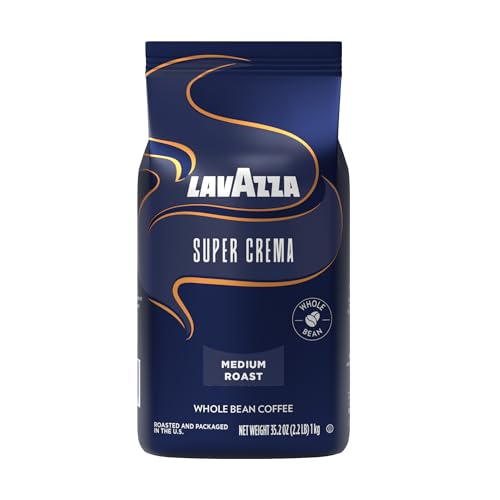
Robusta on purposeLavazza
Super Crema, 2.2 lb
Check price →
Lavazza lists its composition as arabica and robusta — a blend built that way deliberately, for crema and body that survive milk. It is the case this article makes for robusta, in a widely stocked bag.
Check price on Amazon → 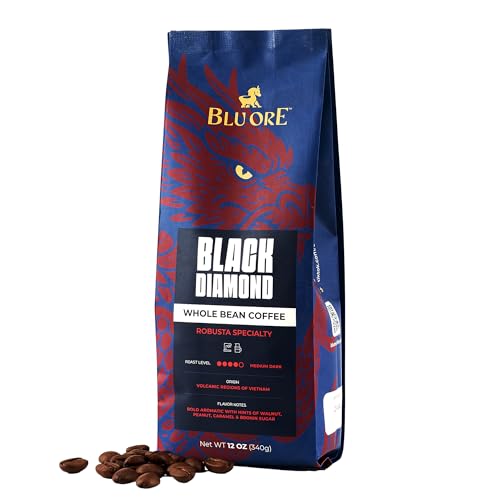
Robusta as its own thingBlu Ore
Black Diamond Specialty Robusta
Check price →
Blu Ore markets this as a single-origin Vietnamese "specialty robusta" — the seller's characterisation, not an independent grade, which is exactly the distinction this page asks you to make. If you have only ever met robusta in instant coffee, it is the comparison that makes the point.
Check price on Amazon →
Prices update live from Amazon and are accurate as of the time shown; the price on Amazon at purchase applies. For the full evidence-led ranking see the 10 best coffee beans, or the scored Best Coffee Beans award.
Frequently asked questions
What does 100% Arabica actually mean?
It means every bean in the bag is Coffea arabica rather than Coffea canephora (robusta) or another species. That is the entire guarantee. It says nothing about the grade of the beans, where they were grown, how recently they were roasted, or whether they taste good — a bag of stale, low-grade, badly roasted arabica is still 100% arabica.
Is arabica always better than robusta?
No — it is usually sweeter and more aromatic, which is why it dominates specialty coffee, but "better" depends on the job. Good robusta brings more body, more crema, and roughly double the caffeine, which is exactly why traditional Italian espresso blends include it deliberately. The bigger quality divide is usually between well-grown, well-processed coffee and poorly-grown, poorly-processed coffee — though species matters to sensory character too, and arabica keeps its dominant place in specialty coffee for real reasons: at the top of the market it offers a wider range of acidity, aroma and complexity.
How much more caffeine does robusta have?
Roughly double. Published composition studies put arabica at about 0.8–1.4% caffeine by dry weight and robusta at about 1.7–4.0%, with the exact figures varying by origin, variety, and growing conditions. Robusta also carries substantially more chlorogenic acids, which contribute to its harsher, more bitter edge.
What percentage of the world's coffee is arabica?
A little over half, and it moves. Calculated from USDA's PSD production dataset, arabica is about 56% of world output for 2026/27 — 105.9 million bags against robusta's 83.8 million. Across the four most recent marketing years the arabica share runs 57.4%, 57.8%, 52.8% and 55.8%, so treat any single number as a snapshot. Robusta's share has generally increased over recent decades, because it tolerates heat, disease and lower altitudes better than arabica does as growing conditions shift.
Why is robusta used in espresso blends?
For crema, body, and caffeine. Robusta produces thicker, longer-lasting crema and a heavier mouthfeel that survives milk, which is why traditional Italian espresso blends often run somewhere around 10–30% robusta, though actual blends range considerably wider in both directions. A blend like Lavazza Super Crema is arabica-and-robusta by design, not by cost-cutting.
Does 100% Arabica mean the coffee is high quality?
No, and this is the most useful thing to understand about the label. It is a species claim, not a quality claim. Freshness (a roast date on the bag), grade, origin transparency, and how the coffee was processed tell you far more about how the cup will taste. Any bag can print "100% Arabica"; comparatively few print the roast date.
Keep going