Home › Brew Methods › Siphon coffee
🧪 Brew Methods · 2026
Siphon Coffee: How the Vacuum Brewer Actually Works
Siphon (vacuum) coffee brewing: vapor pressure pushes hot water up into the coffee, and a vacuum pulls the finished brew back down through a filter.
6 facts, each with a source below
5 questions answered
1 verified products
Siphon brewing - also written syphon, also called vacuum coffee - is the most theatrical method in coffee and one of its oldest: two glass chambers, a heat source, and physics doing the work. Heat raises vapor pressure in the lower globe, pushing water up a tube into the coffee above; remove the heat, and the cooling gas contracts into a vacuum that pulls the finished brew back down through a filter. The result is a distinctly clean, tea-like, aromatic cup - full immersion brewing with a filtered finish - and a process genuinely worth watching.
Also calledVacuum coffee, syphon - the same two-chamber brewer
The pushVapor pressure drives hot water up into the grounds
The pullA cooling vacuum draws the brew back through the filter
The cupImmersion body with a filtered, clean, aromatic finish
VintageA 19th-century method - patents date to the 1830s-40s
The reference brewerHario Technica - borosilicate glass, verified below
The physics, which is the fun part
A siphon is two stacked glass chambers joined by a tube. Water starts in the lower globe over a burner; as it heats, expanding vapor pressure forces the water up the tube into the upper chamber, where it meets the coffee and steeps as a full immersion - visibly, dramatically, at just below boiling. Then the trick: kill the heat, and the gas remaining below cools and contracts, creating a partial vacuum that pulls the entire brew back down through a filter into the lower globe. Wikipedia's history of the vacuum brewer dates the design to 1830s-40s Europe - it predates the espresso machine by the better part of a century, and the mechanism has not needed improving since.
Brewing one, practically
The working pattern for a 5-cup Technica: fill the lower globe with hot water (starting hot shortens the burner wait), seat the filter in the upper chamber, and assemble over the flame. When the water rises, add medium-ground coffee - the middle of our grind chart - stir gently to submerge, and steep roughly a minute to ninety seconds. Remove the burner, stir once more, and watch the drawdown; a clean brew pulls through in under a minute, leaving a dome of grounds above. Ratios run like other filter methods - the 1:15-1:17 territory our calculator handles - and the variables reward the same weighing discipline as pour-over.
What the cup is actually like, and who it is for
The siphon's signature is a contradiction it genuinely delivers: immersion contact with a filtered finish. Steeping at stable near-boil extracts fully and evenly; the cloth or paper filter then removes the sediment a French press leaves in. The cup lands notably clean, aromatic and tea-like - closer to an excellent pour-over than to a press, with more roundness. Who is it for? The person for whom brewing is part of the pleasure. It is slower than every other method on this site, involves glassware and an open flame, and rewards ceremony - which is exactly why cafés in Japan built a culture around it and why it makes such a spectacular guest brew.
Verified products for this page
ℹ️
Affiliate disclosure: CoffeeLabAdvisor is an Amazon Associate and may earn a commission from these links, at no extra cost to you. Commissions play no part in what appears here — every product traces to a verified catalog entry or a published review.
The reference siphon, verified today: Hario's borosilicate Technica, the brewer this page's method is written for.
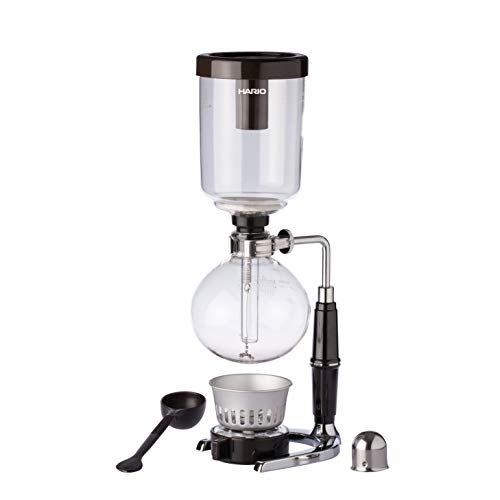
SiphonHario
Technica Coffee Syphon, 5-cup
$94.50Live Amazon price · as of 10/26/2026 9:43 PM
The reference siphon - the brewer this page's method is written for. Listing states upper and lower bowls and burner in heat-resistant borosilicate glass, stainless stand and filter, brass fasteners, 5-cup / 600 ml capacity, imported from Japan.
Check price on Amazon →
Frequently asked questions
What is siphon coffee?
Coffee brewed in a two-chamber vacuum brewer: vapor pressure pushes hot water up into the grounds for a full immersion steep, then a cooling vacuum pulls the brew back down through a filter. The method dates to the 1830s-40s and produces an unusually clean, aromatic cup.
Does siphon coffee taste different?
Distinctly: immersion-brewed body with a filtered, sediment-free finish - clean and tea-like in a way neither a French press (sediment) nor drip (less even extraction) quite matches. Whether the difference justifies the ceremony is honestly a personality question.
Is a siphon coffee maker hard to use?
More involved than any other home method - glassware, a burner, timing - but not difficult once the sequence is familiar. The brewing itself is forgiving: stable temperature and full immersion are inherently even. Treat the first two brews as practice runs.
What grind do you use for siphon coffee?
Medium - the middle of our grind chart, similar to drip. Too fine clogs the filter and slows the drawdown into over-extraction; too coarse under-extracts the short steep. The drawdown speed is your live feedback.
Why is siphon coffee so expensive at cafes?
Labor and theater: it is the slowest per-cup method a cafe can run, brewed to order on dedicated equipment by someone who cannot walk away from it. At home the economics invert - the verified Technica costs less than a mid-range grinder and lasts indefinitely with careful handling.
Sources for this page:
Vacuum-brewer mechanism (vapor pressure up, vacuum drawdown) and 1830s-40s origins: Wikipedia's Vacuum coffee maker entry, read 2026-09-02 · Brewer construction (borosilicate upper and lower bowls, stainless stand and filter, 5-cup / 600 ml, brass fasteners): Hario's own copy on the verified Technica listing B000IKLQZK, read on Amazon 2026-09-02 We have not lab-tested brewers; where a figure is a manufacturer's, the page names the manufacturer, and machine capabilities come from our own published review records.
Keep going