

🏆 2026 Best Bean-to-Cup Machine winner
Jura Z10
Bean-to-Cup · Automatic milk
$3,999.00Live Amazon price · as of 10/26/2026 8:35 PM
Buy on Amazon →Home › Coffee Drinks › Crema
🔬 Espresso Science · 2026Crema is the golden-to-reddish-brown foam on an espresso shot: CO₂ from roasting.
Crema is the layer of dense, golden-to-reddish-brown foam on top of an espresso shot, and it exists for one reason: pressure. Water forced through the coffee at roughly 9 bars dissolves the carbon dioxide that roasting trapped inside the beans; when the shot exits into the cup and the pressure drops, that gas comes out of solution as millions of tiny bubbles, stabilized by coffee oils the same pressure emulsified. No other brewing method produces it — which is why your drip machine never has and never will.
Three ingredients meet in the portafilter: gas, oil and pressure. Roasting produces carbon dioxide inside the bean, and that gas leaves only slowly — beans keep degassing for weeks after the roast date. When near-boiling water is driven through the compacted grounds at around 9 bars, it does two things no immersion or drip method can: it dissolves that trapped CO₂ into the liquid, and it strips and emulsifies the coffee's oils into microscopic droplets.
Then the shot leaves the basket, and the pressure vanishes. The dissolved gas expands out of solution as tiny bubbles; the emulsified oils coat and stabilize the bubble walls, slowing their collapse. The result is a foam that is genuinely part of the drink — those suspended oil droplets read as body and creaminess on the palate, and the layer briefly traps aromatics that other methods lose to the air.
Freshness first. Because the gas is the fuel, crema tracks the bean's degassing curve. Very fresh coffee — the first week off the roaster — carries so much CO₂ that it throws excessive, unstable crema; the sweet spot the sources describe lands at roughly one to three or four weeks post-roast; and old, fully degassed beans produce a pale layer that thins toward nothing. A shot with almost no crema is usually telling you about the bag's age before anything else.
Bean species second. Robusta produces noticeably more and denser crema than arabica — both of our read sources attribute this to robusta's higher CO₂ retention and insoluble content, and traditional Italian espresso blends have long used a robusta fraction partly for exactly this. More crema from a robusta blend is a fact about the blend, not a compliment to the barista.
The seductive idea is that thick crema equals a good shot. Both of our science sources reject it directly: a shot can carry thick, dark crema and still taste bitter and over-extracted, and a big crema layer can simply mean very fresh beans or robusta content — different, not better. Crema is evidence about the inputs (gas, oils, pressure), not a verdict on the taste.
It is still worth reading. A reasonable extraction tends to show a golden-hazelnut layer, sometimes with darker streaking; a pale, instantly-vanishing layer points toward under-extraction or exhausted beans; an unusually dark one can accompany over-extraction or excessive heat. Treat it as one diagnostic among several — then taste the shot, which outranks all of them.
Crema is young. It appeared when Achille Gaggia's lever-piston machines first pushed water through coffee at pressures earlier steam machines could not reach — and the strange new foam needed explaining to customers who had never seen it. Gaggia's advertising leaned in, emphasising the absence of steam and the presence of the foam, and marketed the drink under the name crema caffè. The pitch worked well enough that the foam became the visual signature of espresso itself, and every pump machine since has inherited it.
In rough order of likelihood: stale beans (months past roast, or pre-ground — the gas is simply gone); a grind too coarse, letting water pass without building pressure in the puck; too little coffee in the basket, with the same effect; or a machine that cannot hold brewing pressure. Steam-driven and no-pump devices do not reach the ~9 bars the foam requires. If your machine has a pressure gauge, our how-to-use guide covers what the extraction should look like from dose to flow; fixing the crema is usually a side effect of fixing the shot.
Crema is a function of brewing pressure, and every machine below is a reviewed pump espresso machine — each card names its published review score.
Bean-to-Cup · Automatic milk

Semi-Automatic · Automatic milk

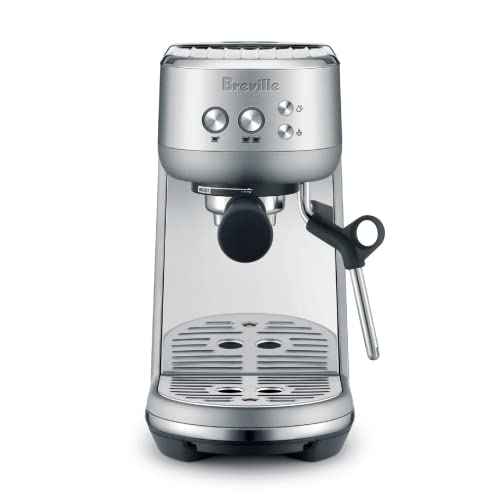
Semi-Automatic · Manual milk
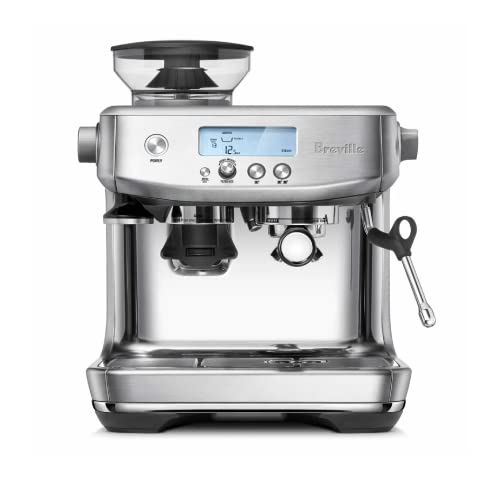
Semi-Automatic · Manual milk

A layer of dense foam unique to espresso: carbon dioxide from roasting, dissolved into the water under ~9 bars of pressure, expanding into tiny bubbles as the shot hits the cup — held together by coffee oils the same pressure emulsified. It reads as body and creaminess in the drink.
No. Thick crema can come from very fresh beans or robusta content, and a shot with impressive crema can still taste bitter or over-extracted — our sources reject the equation directly. Crema reflects the inputs, not the taste; use it as a clue and judge the shot on flavor.
Most often the beans: fully degassed or pre-ground coffee has lost the CO₂ that makes the foam. After that, look at a grind too coarse or a dose too small to build pressure, and finally at the machine — devices that cannot reach ~9 bars cannot produce crema at all.
A minute or two, then it gradually dissipates as the gas escapes — which is normal, not a defect. It collapses faster into cold liquid, one reason iced espresso drinks show so little of it.
It is genuinely optional. The crema holds emulsified oils and some of the shot's aromatics along with a bitter edge; stirring folds that into the body of the drink, skimming or sipping past it softens the first taste. Traditions differ — the chemistry supports either choice.
Sources for this page: Crema as a colloid of emulsified oils unique to espresso, CO₂ dissolved under pressure during roasting-and-extraction, aroma retention, and the Gaggia 1947–48 history incl. the crema caffè marketing name: Wikipedia's Espresso entry, read 2026-09-02 · Formation mechanism (~9 bars, CO₂ expansion at pressure drop, oil-stabilized bubbles), golden-to-reddish-brown color, freshness window and degassing, robusta vs arabica, minute-or-two lifespan, and the thick-crema-is-not-quality correction: Achilles Coffee Roasters' crema science article, read 2026-09-02 · Corroboration of the mechanism (lipid-stabilized bubble walls), the degassing window, robusta densifying crema, appearance diagnostics, quality misconception, and cold-collapse behavior: Kaffanero's espresso crema explainer, read 2026-09-02 We have not measured drinks in a lab; where volumes differ between authorities, the page names each authority rather than averaging them, and machine capabilities come from our own published review records.
Feedback on this page: What Is Crema on Espresso? How It Forms (2026)
Thank you. Your note is filed against this page and will be read.