Plastic-Free and Stainless Steel Coffee Makers: What Actually Touches the Water, Brewer by Brewer
Plastic-free coffee makers from each maker's own materials: glass, ceramic and stainless brewers with no plastic in the water path, and the ones that fail.
6 facts, each with a source below7 questions answered11 verified products
A plastic-free coffee maker is one where no plastic touches the water or the coffee, from the kettle to the cup. Very few automatic machines qualify, because the reservoir, the tubing and the brew basket are almost always plastic even when the shell is steel; most manual brewers do, because they are made of glass, ceramic or stainless steel and nothing else. This page lists the brewers whose own listings state their materials, method by method, says which parts of each are unverified rather than guessing, and names the popular brewers that are not plastic-free so you can decide whether that matters to you.
Plastic-free meansNo plastic in the water path or the coffee path; a steel shell over a plastic reservoir does not count
Materials that qualifyBorosilicate glass, ceramic, 18/8 or 18/10 stainless steel; aluminium moka pots with a caveat
BPA-free is not plastic-freeBPA-free, PFAS-free and Tritan describe plastics; they are honest claims, and they are about plastic
The cleanest answersChemex, a ceramic or glass V60, a stainless Kalita Wave, a stainless moka pot, a stainless kettle
The honest exceptionsAeroPress (polypropylene or Tritan), nearly every drip machine, every espresso machine's tank
What we didRead each maker's stated materials; we have not cut any brewer open
Glass, paper and a wood collar: the Chemex is the brewer with the shortest materials list on this page. Photo: Najib Kalil / UnsplashThe rest of the setup matters too: a steel hand grinder, a wooden bowl, and a scale that never touches the water. Photo: Najib Kalil / Unsplash
What plastic-free means, and what it does not
The phrase is used loosely, so this page uses it strictly: a plastic-free coffee maker is one where nothing plastic touches the water on its way to the coffee or the coffee on its way to the cup. That is the water path and the coffee path together. A brushed-steel drip machine with a plastic reservoir, plastic tubing and a plastic brew basket is a steel-shelled plastic coffee maker; a ceramic dripper on a glass jug with a steel kettle is plastic-free, and so is a stainless moka pot. Handles, knobs, lids and feet that never meet hot water are a separate, milder question, and where a listing does not describe them this page says so rather than assuming.
Three other labels get mistaken for plastic-free, and all three are about plastic. BPA-free means the plastic contains no bisphenol A. PFAS-free means no fluorinated coatings on the plastic or the heating parts. Tritan is a brand of copolyester plastic. Each is a legitimate, useful claim, and none of them is a claim that the brewer has no plastic; a machine can be BPA-free, PFAS-free and mostly plastic at once. The Zojirushi carded below is the honest example: its listing states that every food- and beverage-contact area is free of PFAS and BPA, which is more than most drip machines will say, and it is still a drip machine with a plastic water path. Whether any of this matters to your cup is a question this site does not answer; it makes no health claims. It answers the factual one: what is the thing made of.
The materials that qualify
Borosilicate glass is the laboratory glass that survives boiling water, and it is what the Chemex, the Bodum Chambord beaker and the Hario syphon bowls are made of; the Chemex listing describes it as non-porous, absorbing neither odours nor residues. Ceramic is the classic V60 material and the reason a ceramic dripper wants a hot rinse before use: it holds heat once warm and steals it when cold. Stainless steel is the workhorse, in two common grades: 18/8 (also called 304) and 18/10, both used for kettles, drippers, presses and moka pots; the Secura press describes 304 inside and out, the Stanley 18/8, the Bialetti Venus 18/10, the Kalita Wave polished stainless. Aluminium is what the classic Moka Express is made of, and it is plastic-free but not inert in the way steel is: Bialetti tells you to wash it in water only and never in the dishwasher, because detergent and oxidation taint it, which is why the stainless Venus is the moka pot this page cards. Paper filters, wood collars, leather ties, brass fasteners and silicone gaskets round out the list; silicone is not a plastic in the sense people mean, but a gasket is a wetted part and the page notes where one exists.
The plastic-free brewers, by method, from their own listings
Every material below is the maker's or the listing's statement. Where a part is not described, the table says so; we have not disassembled any of these.
Brewer
Method
Water and coffee path, per listing
Not described on the listing
Chemex Classic 6-cup
Pour-over
Non-porous borosilicate glass; bonded paper filters
The wood collar and leather tie touch nothing wet
Hario V60 02, ceramic
Pour-over
Ceramic dripper; paper cone filter
Nothing else in the path
Hario V60 02, glass
Pour-over
Glass dripper; paper cone filter
The glass V60 ships with a base or holder on some SKUs; the carded listing does not describe one
Hario V60, metal
Pour-over
Metal cone, made in Japan
The listing does not name the alloy
Kalita Wave 185
Pour-over
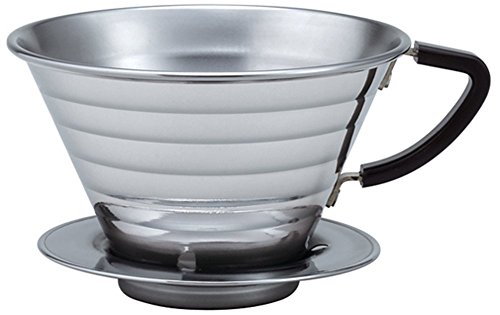
Polished stainless steel, dishwasher safe; wave paper filter
Nothing else in the path
Bialetti Venus 6-cup
Moka
18/10 stainless steel throughout
The gasket, which on Bialetti pots is a rubber or silicone ring
Cuisinox / Matiks cezve
Turkish
18/10 or food-grade stainless steel throughout
Nothing else in the path; the coffee is never filtered
Secura 50 oz press
French press
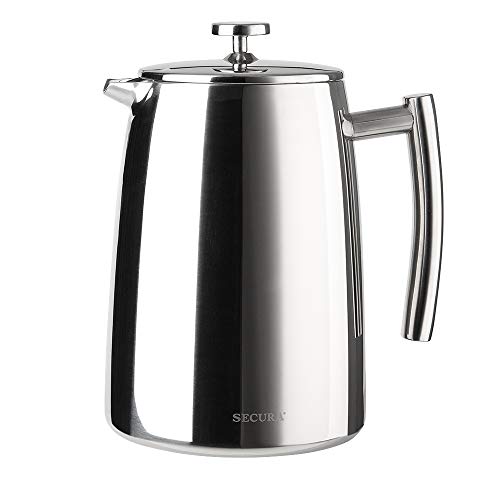
304 stainless interior and exterior; stainless filter screens
The listing describes a cool-touch handle and knob without naming their material
Stanley 48 oz press
French press
18/8 stainless double walls; mesh plunger
The lid; the listing describes the walls, not the lid
Bodum Chambord 34 oz
French press
Borosilicate glass beaker; polished stainless frame and filter
The handle and lid knob, which the listing does not describe
The pattern is obvious once it is laid out: the brewers with the shortest materials lists are the oldest designs. A glass Chemex and a ceramic cone were plastic-free before anyone asked; the stainless moka pot and the steel press are the modern re-issues of aluminium and glass classics. A stainless cezve, for the unfiltered Turkish cup, is plastic-free for the same reason. If plastic-free is the requirement, the manual methods are where the choice is, and the brewing methods guide sets them side by side.
The honest list: popular brewers that are not plastic-free
AeroPress. The maker states it directly: the Original chamber and plunger are polypropylene apart from the food-grade silicone seal, the Clear models are Tritan, and "All materials used in AeroPress coffee makers are free of BPA and phthalates, and are FDA and EU approved for use in contact with food." That is an unusually clear disclosure, and the standard models are plastic brewers; buy them for the two-minute clean cup our AeroPress guide covers, not for this page's criterion. Two newer models do meet it: the Premium, a double-wall borosilicate glass chamber with an anodized aluminum plunger, a stainless steel filter cap and a silicone seal (hand-wash only, per the maker), and the Steel, 304 stainless steel throughout except its silicone seal. Both are set against the plastic models on our which AeroPress to buy page.
Automatic drip machines. Nearly all have a plastic reservoir and plastic tubing behind the steel or glass you can see, including every machine on our drip coffee maker guide. The useful distinctions are the ones the makers actually state: Bonavita describes its lid, basket and showerhead as BPA-free; Zojirushi states its contact areas are PFAS-free and BPA-free; Breville describes a thermo-coil heater in place of aluminium. Those are claims about the plastic and the metal, not the absence of either.
Espresso machines. The water tank is plastic on every home machine we review, from the Bambino to the Linea Mini, and the boiler and group are metal; a plastic-free espresso machine does not exist at home scale, and a page that promised one would be lying. Electric kettles vary: many gooseneck electric kettles are stainless with a plastic lid or window, and the ones our search surfaced were third-party listings we did not verify, which is why the stovetop Buono is the kettle carded here. Cold brew pitchers are usually a glass jar with a plastic or mesh filter core; check the core. And the classic aluminium Moka Express is plastic-free but aluminium, with the care rules that implies; the stainless Venus is the same method without the caveat.
Choosing a plastic-free setup by method
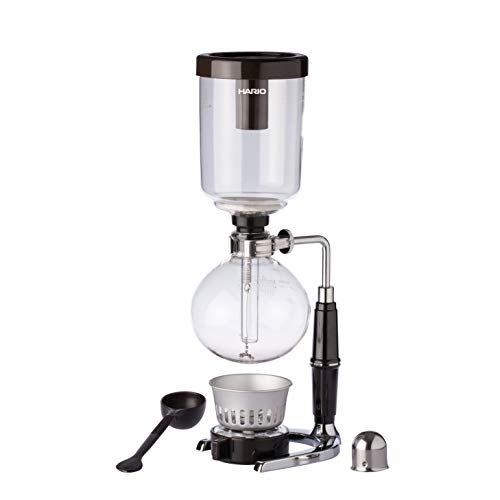
Pour-over is the easiest case: a ceramic, glass or metal V60 or a stainless Kalita Wave, a paper filter, the stainless Buono kettle and any mug. The Chemex adds a glass carafe for more than one cup. The pour-over maker guide chooses between them. Moka is the stainless Venus, which works on induction as well as gas and electric per its listing, brewed by the Bialetti method on our moka guide. French press is the Secura or Stanley for an all-steel, insulated press, or the Chambord if you prefer glass and accept that its handle and knob are not described; the French press guide has the ratio. Siphon is the Hario Technica, glass and steel and brass, and the most theatrical brewer on the site. Espresso has no plastic-free option at home, and the honest advice is to choose the machine on its espresso, which is what the rest of this site does.
Two things complete the picture. Grind at home with a steel-burr grinder, so the coffee never meets a plastic bag ground weeks ago; the hand grinder guide covers the steel-bodied options. And store beans in glass or steel with a good seal. Neither is required for the cup to be plastic-free, but both are what people who ask this question usually want next.
Caring for glass, ceramic and steel
Plastic-free brewers ask slightly more of you in the sink, and the rules differ by material. Glass and ceramic tolerate detergent and, where the listing says so, the dishwasher; both crack under thermal shock, so never pour boiling water into a cold Chemex or set a hot dripper on a wet steel sink. Stainless steel takes everything, including the dishwasher on the presses whose listings say so; coffee oils build on steel filters and mesh, so pull the press apart weekly. Stainless moka pots want the Bialetti rule from the Venus listing: rinse every component in water only, no detergent, no dishwasher, because both damage the product and the taste. The full routine for every brewer, and the descaling rules for the machines, is on the cleaning guide.
Verified products for this page
ℹ️
Affiliate disclosure: CoffeeLabAdvisor is an Amazon Associate and may earn a commission from these links, at no extra cost to you. Commissions play no part in what appears here — every product traces to a verified catalog entry or a published review.
Eleven verified listings whose stated materials are glass, ceramic or stainless steel in the water and coffee path. The table above says which parts each listing leaves undescribed; the cards repeat the listing's own words.
Pour-over
Chemex
Classic Series, 6-Cup
$47.03Live Amazon price · as of 10/26/2026 9:27 PM
Brewer and serving carafe in one piece - the table-service answer to the V60's single cup. Listing states a pour-over glass coffeemaker in non-porous borosilicate glass, using bonded filters, sediment-free.
$39.80Live Amazon price · as of 10/26/2026 9:49 PM
The flat-bed alternative to the cone: more forgiving of pour technique, and steel rather than ceramic. Listing states a flat-bottomed wave dripper made in Japan of polished stainless steel, dishwasher safe, with a 2-inch dripping area that fits most cups and carafes.
$46.99Live Amazon price · as of 10/26/2026 8:47 PM
The stainless answer to the induction problem - no adapter plate needed. Listing states 18/10 stainless steel, suitable for all types of hobs including induction, 6 cups (7.9 oz).
$42.99Live Amazon price · as of 10/26/2026 9:49 PM
The big-batch, keep-it-hot option - insulated steel instead of glass, half a liter more capacity. Listing states a 50-ounce 304 stainless steel insulated coffee press with an extra screen.
$70.00Live Amazon price · as of 10/26/2026 11:34 PM
The insulated steel press for a full carafe that stays hot; the listing describes the walls, not the lid. Listing states double vacuum-insulated 18/8 stainless steel walls described as naturally BPA-free, a mesh plunger, up to 4 hours hot, and every piece dishwasher safe.
$94.50Live Amazon price · as of 10/26/2026 9:43 PM
The reference siphon - the brewer this page's method is written for. Listing states upper and lower bowls and burner in heat-resistant borosilicate glass, stainless stand and filter, brass fasteners, 5-cup / 600 ml capacity, imported from Japan.
$53.95Live Amazon price · as of 10/26/2026 8:47 PM
Half the method is the pour, and the pour is the kettle. Listing states a slender gooseneck spout for a slow, steady and controlled pour, stainless steel, 1.2 L, for gas, electric and induction stoves.
$14.90Live Amazon price · as of 10/26/2026 11:34 PM
The low-maintenance cezve: steel rather than copper, dishwasher safe, and the cheapest way into the method. Listing states a mirror-polished 18/10 stainless steel Turkish coffee pot, 3.3 inches high by 3 inches wide with a 12 oz (355 ml) capacity, a wide lip to avoid spills, and dishwasher safe.
$29.99Live Amazon price · as of 10/26/2026 11:34 PM
The induction answer, since copper will not heat on a modern induction hob. Listing states 1 mm food-grade stainless steel with a double-layer base, heating on induction, gas, electric and ceramic cooktops, a stay-cool handle with dual pour spouts, dishwasher safe, 15 oz (450 ml) brewing 3 to 4 cups, supplied with a measuring scoop.
Mostly manual brewers: the glass Chemex, a ceramic, glass or metal Hario V60, the stainless Kalita Wave, a stainless moka pot such as the Bialetti Venus, all-steel French presses such as the Secura and Stanley, the glass-and-steel Hario syphon, and a stainless gooseneck kettle. Almost no automatic drip or espresso machine qualifies, because the reservoir and tubing are plastic.
Is a stainless steel coffee maker plastic-free?
Only if the water path is steel too. A stainless shell over a plastic reservoir, basket and tubing is the norm for drip machines. Manual steel brewers, a stainless moka pot, a double-wall steel press, a steel dripper and a steel kettle, are plastic-free in the path that matters, though listings often do not describe handles, lids or gaskets.
Is BPA-free the same as plastic-free?
No. BPA-free means the plastic contains no bisphenol A; PFAS-free means no fluorinated coatings; Tritan is a plastic brand. All three are claims about plastic. A brewer can carry every one of them and still have plastic in the water path, which is true of most drip machines and of the AeroPress.
Is the AeroPress plastic-free?
No, and the maker is clear about it: the Original chamber and plunger are polypropylene apart from a silicone seal, the Clear models are Tritan, and all materials are stated to be free of BPA and phthalates and approved for food contact. It is a plastic brewer with a full disclosure, which is more than most offer.
Is there a plastic-free espresso machine?
Not at home scale. Every home espresso machine we review has a plastic water tank, whatever the shell is made of, with metal boilers and groups behind it. Choose an espresso machine on its espresso; if plastic-free is the requirement, a stainless moka pot is the closest stovetop relative.
Is a moka pot plastic-free?
Yes, both the aluminium Moka Express and the stainless Venus, apart from the gasket ring. Aluminium comes with care rules, water only and no dishwasher per Bialetti, because detergent and oxidation taint it; the 18/10 stainless Venus removes that caveat and works on induction as well.
Are glass coffee makers safe with boiling water?
Borosilicate glass, the type the Chemex, Bodum and Hario listings name, is made for it. What breaks glass is thermal shock, boiling water into a cold vessel or a hot vessel onto a wet cold surface, so warm the brewer with a rinse first and set it down on something dry.
Sources for this page:
AeroPress materials (polypropylene chamber and plunger, silicone seal, Tritan on Clear models) and the BPA, phthalate and food-contact sentence quoted above: aeropress.com FAQ, read 2026-09-08 · Chemex borosilicate glass (non-porous, no odours or residues) and 5 oz cup convention; Bialetti Venus 18/10 stainless and its water-only cleaning rule; Secura 304 stainless; Stanley 18/8 walls; Bodum Chambord borosilicate and polished stainless; Hario Technica glass, stainless, brass and aluminium; Kalita Wave polished stainless; Hario V60 glass and metal; Buono stainless 1.2 L; Zojirushi PFAS-free and BPA-free contact areas; Bonavita BPA-free parts: each product's own Amazon listing, read 2026-09-02 and 2026-09-08 · Aluminium moka care (no detergent, no dishwasher, dry before reassembly): Bialetti's Tips and Care page, read 2026-09-07 for our cleaning guide We have not lab-tested brewers; where a figure is a manufacturer's, the page names the manufacturer, and machine capabilities come from our own published review records.