Every pick below is a product we actually evaluated — several carry a 2026 CoffeeLab Award. Organized by budget, with live Amazon prices and the honest trade-offs a gift receipt can't fix.
55 evaluated, Amazon-shoppable picks24 award winners3 budget tiersLive prices on every card
How this guide works: nothing here is a paid placement. These are products from our evaluated catalog that are available on Amazon — a gift guide is only useful if the gift is easy to buy — ordered award-winners-first inside each budget tier, with live links to the full evaluations. Our complete award results, including products sold only through their makers, live on the award winners hub. If you only remember one rule of coffee gifting: when in doubt, gift the grinder, not the machine.
🎁Serious gifts under $250
The most giftable tier in specialty coffee: real burr grinders and a genuinely capable espresso machine. Nothing here is a toy — every item is in our evaluated catalog.
Grinder
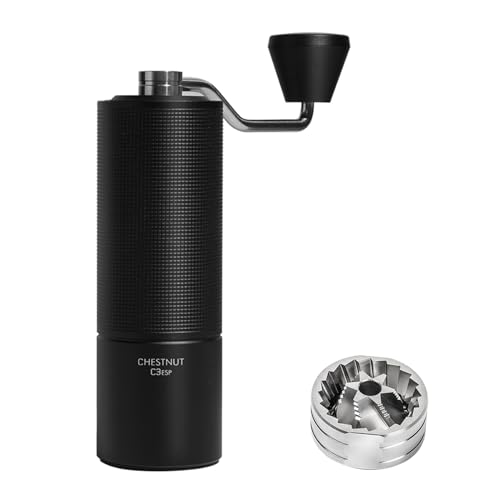
TIMEMORE Chestnut C3 ESP
Check price →
The lowest-priced of the four here, and a burr grinder rather than a blade. Its retail listing describes a stainless steel conical burr set of TIMEMORE's S2C design — S2C names the burr family rather than the material, and this is a listing claim we have not verified against a manufacturer datasheet. At this price the meaningful comparison is often against a blade grinder, and moving to a burr grinder is the more consequential change in grinding method.
1Zpresso publishes a 48 mm conical burr, a 30-click system per rotation, a 30–35 g capacity and a 705 g body. That burr diameter is part of what a manual grinder can offer at this price; what it is worth in the cup depends on geometry and alignment, which we do not measure.
Baratza took the Encore platform and reworked it for espresso: a tighter adjustment range at the fine end and M2 hardened steel burrs. Its adjustment is stepped rather than stepless, but the steps are unusually fine at the espresso end, so it can still be dialled in — that is the whole point of the ESP revision. It is not the quietest or the prettiest grinder, and 40 mm is a small burr set, but Baratza publishes exploded diagrams and sells replacement parts, so it is unusually serviceable for its price — you can repair it rather than replace it.
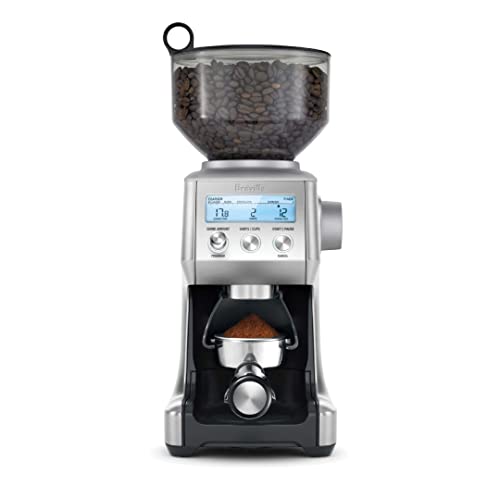
The Breville Smart Grinder Pro is the long-selling $200 conical with 60 settings and Dosing iQ — it grinds espresso to French press and straight into the portafilter. A direct Encore ESP competitor at the same price tier. Honest trade-offs: conical fines, time-based dosing, and a plastic build. Catalog listing — full review and award evaluation pending.
1Zpresso publishes 8 microns per click, a 35–40 g capacity and a 670 g body, and positions it for espresso. It does not give a burr diameter on the page we take these from, so we do not quote one. Its 8-micron increment is designed for fine control at espresso settings; adjustment resolution alone does not establish grind quality, and we have not measured any of it.
A compact 38mm conical grinder that hands-on testing found well suited to espresso, with low retention and a portafilter switch sized for Gemilai's own portafilters. Treat it as an espresso grinder: the one hands-on review found its coarsest setting still too fine for pour-over or French press, contrary to the listing.
Affiliate links — CoffeeLabAdvisor may earn a commission at no extra cost to you. Commissions never influence reviews or awards. Product images courtesy of Amazon.
✨The sweet spot: $250–$700
Where most first "proper setup" gifts land. This tier includes our no-price-cap award winner — the rare year where the best machine we evaluated is also a giftable one.
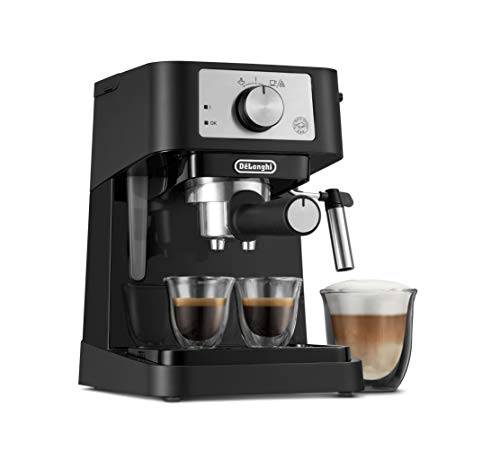
A compact machine with an automatic steam wand, so milk drinks do not depend on learning to texture by hand. ThermoJet heating; no integrated grinder, so budget for one alongside it.
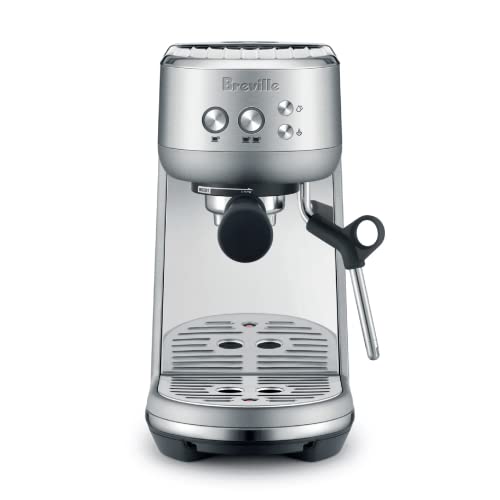
An ultra-compact machine aimed at small kitchens. Breville states its ThermoJet system reaches extraction temperature in 3 seconds. No integrated grinder, so budget for one alongside it.
64 mm flat burrs in a single-dose, stepless body — the same burr diameter as the Timemore Sculptor 064S in our catalog, which costs more, though diameter on its own does not settle how a grinder performs. Its real appeal is the upgrade path: it accepts aftermarket SSP burr sets, so the grinder can be improved rather than replaced. Owners frequently tune or replace the stock burr and declumper setup; we have not measured how much difference that makes. A reasonable entry into flat-burr espresso if you expect to modify it.
A bean-to-cup machine built around the LatteGo milk system, which separates into parts you rinse rather than running milk through internal tubes. That is the practical argument for it: in a household making milk drinks daily, cleaning effort is often what decides whether a machine keeps getting used.
Italian-made, with 55 mm hardened steel burrs, stepless adjustment and Eureka's Silent Technology, which makes it unusually quiet for a flat-burr grinder. The timed dosing can be calibrated to deliver repeatable doses, though changing beans or grind setting means recalibrating. It sits in the middle of this list on price rather than at the budget end, and what you are paying for is build quality and adjustment feel rather than a larger burr set.
Comandante's own page describes a Nitro Blade burr made from its Nitro Rex steel, a jar holding 40 grams, and manufacture in Germany. It does not publish a burr diameter, so we do not quote one. It is the highest-priced of the four here, and Comandante's own material emphasises durable construction and long-term ownership.
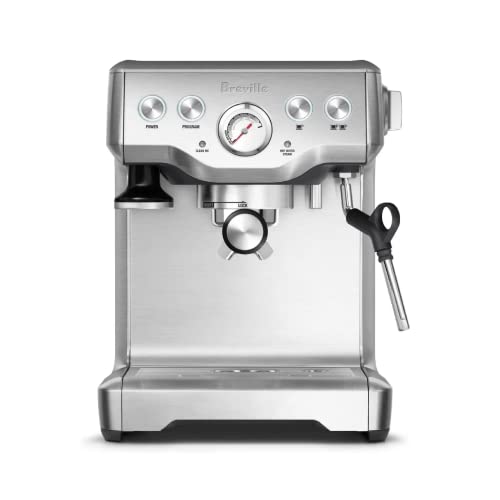
A narrow, well-built entry machine with a heavy 58mm flat-base portafilter, a 15 bar pump and three brew temperature steps. Hands-on testers liked its espresso once dialled in, but it has no valve to dry the puck, so shots drip and pucks come out wet, and its steam wand is slow. It needs a separate espresso grinder.
A 58mm thermoblock machine with a heated group, PID brew temperature and a strong two-hole steam wand, built for people who want to learn espresso properly without paying for a boiler. Pre-infusion is only a wet-and-pause, the pressure valve is not user-adjustable, and it needs a separate espresso grinder.
The Owl platform with the two things the original lacks: a built-in pressure valve that caps shot pressure and a two-stage pre-infusion. Its 'dual PID' is two temperature setpoints on one thermoblock, not two boilers, and its cold mode is a slow, pulsed low-temperature extraction rather than steeped cold brew.
A brew-only grinder with 64 mm flat burrs, a single-dose workflow and a small footprint, aimed at pour-over, AeroPress and batch brew. The Gen 2 revision changed the burr set. The decisive fact is not a matter of opinion: Fellow states the Ode Gen 2 is not suitable for espresso, so if you pull shots as well you need a second grinder — which is the whole reason it appears here as a filter recommendation rather than a general one.
A Luxe Café about 30% smaller: grinder with 60 settings and the same grind guidance, a built-in scale, a stored tamper, espresso and hot or iced drip coffee, and a manual steam wand. Its one full hands-on review found drip coffee and crema excellent but espresso volumes inconsistent at identical settings, and it drops the cold brew, cold foam and hot water of the bigger models.
The Mini with an automatic steam wand: a temperature probe in the tip stops the steam for you on three hot presets. The one US hands-on review found its espresso full-bodied and its long drinks accurate, and its wand powerful, but the automatic froth varied a lot from jug to jug; like the Mini it has no cold brew, cold foam or hot water in the US.
The machine that made guided espresso mainstream: a conical burr grinder that suggests its own setting, a built-in scale, an assisted tamper, unpressurised 53mm baskets, an automatic whisk-and-steam frother, drip coffee and cold brew. Testers found its dosing very consistent and its shots good with little effort; the guidance can over-correct, the auto milk runs hot, and the US model has no hot water or single basket.
KitchenAid's grinder-in-one machine: a conical burr grinder, a 58mm flat-base portafilter, a pressure gauge, a 2.5 L tank with a filter and a separate hot-water spout, on a two-year warranty. Testers rated its milk and its quiet grinder; its dose is timed rather than weighed, and its three temperature steps are coarser than a set temperature.
Affiliate links — CoffeeLabAdvisor may earn a commission at no extra cost to you. Commissions never influence reviews or awards. Product images courtesy of Amazon.
🏆Grand gestures: $700 and up
For the person whose counter is already an espresso bar — or the household gift that replaces the morning café run entirely.
Jura's flagship super-automatic, with Jura's Cold Extraction Process and a servo-driven Product Recognising Grinder. Jura lists its one-touch specialities at 32–40 depending on variant.
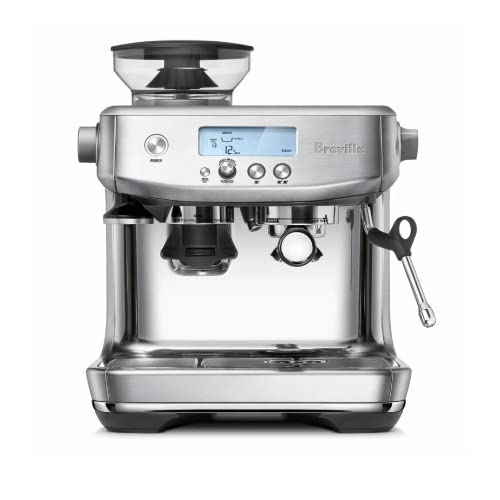
The all-in-one starter package: integrated conical burr grinder, ThermoCoil heating and a steam wand in one footprint, so you do not need a separate grinder to get started. The trade is the one the whole category makes — the grinder cannot be upgraded without replacing the machine.
The Eureka Mignon Libra brings grind-by-weight to the Mignon line: an integrated scale doses to within ±0.2 g straight into the portafilter, on 55mm flat burrs with stepless adjustment. Assessed in our 2026 evaluation and recognised with an Honorable Mention for the weight-based workflow. Honest trade-offs: hopper-only workflow, a chute that scatters grounds without a dosing ring, and a premium price.
A higher-end integrated-grinder option in Breville's Barista line, with ThermoJet heating and a digital interface in place of the Barista Express's ThermoCoil and dial. Breville states its ThermoJet system reaches extraction temperature in 3 seconds.
A bean-to-cup machine positioned between De'Longhi's entry machines and the Jura range, with an integrated grinder and the LatteCrema automatic milk system. Its step up from the entry machines is the interface and the milk workflow rather than a different brewing category.
Jura's mid-range bean-to-cup machine: dual thermoblock heating and one-touch espresso, lungo and milk drinks. It sits below the Z10 in Jura's own range, with a narrower speciality list.
A compact semi-automatic with an integrated grinder and a built-in tamping lever instead of a loose tamp, which De'Longhi positions as making the dose-and-tamp step more repeatable while you are learning it.
The Premier's grinder, scale and guidance with the gaps filled: a lever tamper built into the machine, separate hot water, a single basket, ristretto and lungo presets, a bigger milk jug and a cool-touch wand. Testers measured good, consistent double shots and rated its cold brew and cold foam among the best they had tried; light roasts expose it, auto milk temperature wanders, and several reviewers questioned the premium over the Premier.
An entry-level bean-to-cup machine with an integrated grinder and automatic milk system. It automates the full drink with a narrower range of configurable specialities than the machines above it — a trade at this level rather than a defect.
A small brew boiler built into a 58mm group, a separate steam thermoblock, and a pressure knob you can turn during the shot. It is not a dual boiler and the US 120 V version cannot brew and steam at once; its 'automatic frother' is a manual wand with a probe that stops the steam at your set milk temperature.
The only KitchenAid bean-to-cup with a steam wand, and both hands-on testers made better milk with it than with the hose systems on its siblings. It grinds and brews espresso, coffee and an over-ice shot at the press of a button from one of the narrowest bean-to-cup bodies on sale; the over-ice setting is a hot shot poured on ice, and there are no user profiles.
A long-running prosumer machine built around a commercial-size portafilter and a single brass boiler. It has no PID as standard, so temperature management is manual — the reason it is so often modified — and there is no integrated grinder.
The KF2's narrow body with an automatic milk hose, a small colour screen and four user profiles, so lattes and cappuccinos are one press. Testers agreed on the slim footprint and split on milk texture; no milk container comes in the box, and the over-ice drinks are hot shots on ice.
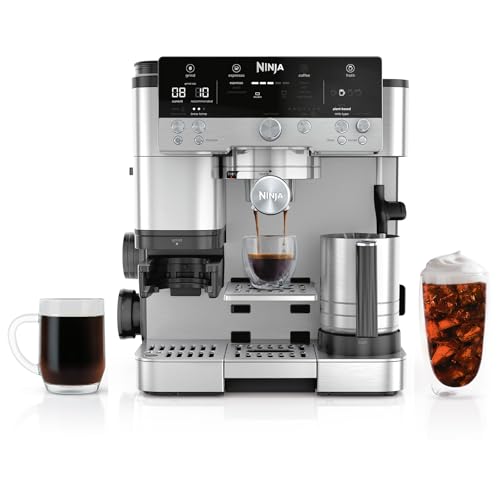
Ninja's first fully automatic machine: two swappable bean hoppers, a grinder that calibrates itself by pulling test shots, a removable brew unit, drip coffee, iced drinks and a strong steam wand that froths in a jug. Testers split on the espresso, four good, two mixed and two poor; most found shot volumes ran long, calibration used a lot of beans, and you still pour the milk yourself.
The entry to KitchenAid's metal-clad full-size range, and the model testers found closest to the KF8 in the cup: rich espresso once the factory settings are adjusted, a removable bean hopper you can swap, and a 2.2 L tank. Milk comes from a hose you put in your own jug, with volume the only setting, and the screen uses buttons rather than touch.
A real E61 heat-exchanger machine with a 2-litre stainless boiler, a pressure gauge and a live pressure knob, in a body only 22.8 cm wide. It brews and steams at once, but its one PID controls the steam boiler, not the shot, and the E61 group is slow to reach temperature.
The KF6 with the parts most buyers miss on it: a touchscreen, a milk container, a dual milk outlet for two drinks at once, named profiles and flat white, cortado and lungo presets. Inside it is the same machine, so the step up buys convenience rather than better espresso.
KitchenAid's flagship and the most tested machine in its range: a 5-inch touchscreen, six profiles, a plant-milk setting and the longest menu, on the same grinder and brew unit as the KF6 and KF7. The one six-month test reported no drop in extraction after more than 1,400 drinks; several testers still judged the KF7 or KF6 the better value.
Affiliate links — CoffeeLabAdvisor may earn a commission at no extra cost to you. Commissions never influence reviews or awards. Product images courtesy of Amazon.
Because this page limits itself to Amazon-shoppable gifts, these award-recognized products are not listed above — they are sold directly by their makers, and they remain exactly as recommended as their awards say:
La Marzocco Linea Mini — ⭐ 2026 Honorable Mention, see the award →
· La Marzocco Linea Micra — 🏆 2026 Best Dual Boiler Espresso Machine winner, see the award →
· ECM Synchronika II — ⭐ 2026 Honorable Mention, see the award →
· Niche Zero — 🏆 2026 Best Overall Burr Grinder winner, see the award →
Not sure which machine fits their kitchen?
The Machine Finder narrows our catalog by budget, counter space, and drink style — answer three questions as the recipient would and gift from the shortlist. Shareable results make it easy to drop hints, too.
This page is the whole catalog sorted by tier. If you already know what you want to spend, these go deeper into a single band, with the same live prices.
A quality burr grinder. It upgrades every cup the recipient already makes, fits any setup, and avoids the sizing and preference questions a machine raises. In our catalog the Baratza Encore ESP ($199) and Fellow Opus ($200) both sit in this tier; if they already own a grinder, the Casabrews 5700 ($199) is the most affordable real espresso machine we have evaluated.
Should I gift an espresso machine or a grinder first?
Grinder first. Grind quality decides more of the cup than the machine at entry level, and a good grinder outlives several machine upgrades. A machine gift makes sense when the recipient already grinds well — check what is on their counter before choosing the tier.
Is a bean-to-cup machine a good gift?
For households that want café drinks without the ritual, yes — it is the most "appliance-like" espresso experience: beans in, drink out. Our 2026 bean-to-cup award winner is the Jura Z10. The trade-off is price and less hands-on control, which an enthusiast may actually miss.
How do I know these picks are legitimate?
Every product here is in the CoffeeLabAdvisor evaluated catalog, and the award tags link to award pages with published methodology, scoring, and a verifiable certificate. Awards cannot be purchased, and affiliate commissions never influence selections — our editorial standards page explains how that separation works.