Home › Guides › Best Espresso Machine for Beginners

🌱 First Machine · 2026

The Best Espresso Machines for Beginners

The filter here is honest and mechanical: a machine appears below only when its published review record describes beginner-suited ownership — guided workflows, forgiving setups, or one-touch convenience — and the order follows our own assessment of those records. Scores are published on award pages only, so what you see here is award standing, price and fit. No machine was added because a brand is famous.

Written and reviewed by the CoffeeLabAdvisor editorial team · Published 2 September 2026

6 machines our records call beginner-suited $300 where the list starts 2 kinds of beginner, honestly split

There are two kinds of espresso beginner, and they need different machines. One wants to learn the craft — grind, dose, tamp, dial in — with a machine that forgives early mistakes. The other wants café drinks this week with no technique at all. Both are legitimate, both are served below, and confusing them is how first machines end up resold. Craft-leaning beginners should read the semi-automatic entries; drinks-first beginners should start at the one-touch machines.

The machines, in order

#1 of 6

Jura E8

⭐ Honorable mention

Our record says: Convenience-first buyers who want café drinks at home

  • Premium Swiss build quality and design
  • One-touch operation for a wide range of drinks
  • Very high price point
#2 of 6

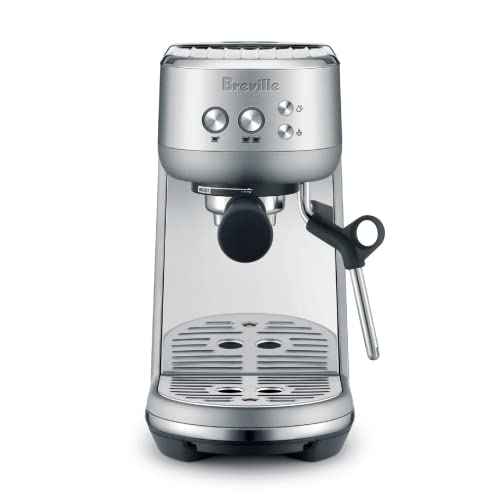
Breville Bambino

⭐ Honorable mention

Our record says: Espresso-first buyers in small kitchens

  • Smallest footprint of any quality espresso machine
  • 3-second ThermoJet heat-up time
  • No built-in grinder (separate purchase required)
#3 of 6

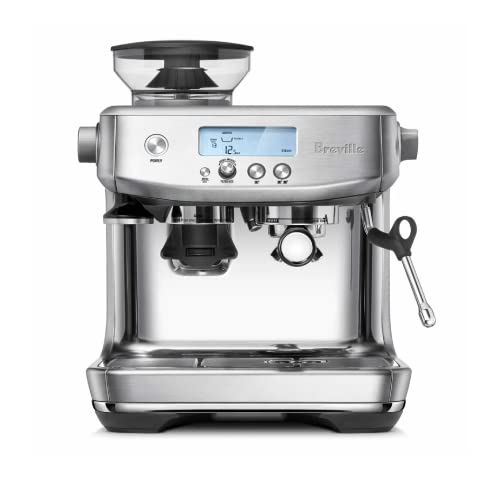
Breville Barista Pro

⭐ Honorable mention

Our record says: Home buyers who want fast, convenient espresso

  • ThermoJet heating — ready in about 3 seconds
  • Improved built-in grinder with 30 grind settings
  • Single boiler — no simultaneous brew and steam
#4 of 6

Philips 5400 LatteGo

⭐ Honorable mention

Our record says: Daily milk drinkers who want easy cleanup

  • LatteGo milk system — 2 parts, dishwasher safe, 15-second clean
  • 12-step ceramic grinder stays sharp longer than steel
  • Limited drink customisation compared to Jura
#5 of 6

Breville Barista Express

⭐ Honorable mention

Our record says: Beginners who want a complete all-in-one setup

  • Built-in conical burr grinder — fresh grinding on demand
  • Adjustable grind size and dose control
  • Grinder has a limited adjustment range for fine espresso settings

Our record says: Beginners who want guided, low-fuss espresso

  • Smart tamping lever removes guesswork from dosing
  • Built-in grinder with 8 settings
  • Proprietary 51mm portafilter limits accessory options
What this list is, and is not. The qualifying filter is each review's own “best for” record — machines our documentation describes as beginner-suited — ordered by scores that were published before this page existed. We have not physically bench-tested these machines, no placement was paid for, and a machine missing from this list may simply have a record aimed at a different owner, not a worse machine.

Frequently asked questions

What is the best espresso machine for a beginner?

It depends on which kind of beginner you are. If you want to learn the portafilter craft with training wheels, our records point at guided semi-automatics like the Jura E8 class of machine; if you want café drinks now with no technique, a one-touch bean-to-cup machine removes the learning curve entirely. Both kinds are on this page — the honest first question is craft or convenience, not brand.

Should a beginner buy a machine with a built-in grinder?

It solves the day-one problem: espresso needs an espresso-capable grinder, and all-in-one machines include a workable one. The trade is later — a built-in grinder cannot be upgraded separately. Machines without one (like the Bambino line) keep the upgrade path open but add a grinder to the real budget immediately.

How much should a beginner spend on an espresso machine?

The machines on this page run from $300 to $2,599 at our tracked prices. Under $500 buys a genuinely capable start; spending more mostly buys speed, milk automation and convenience rather than better first shots. Budget for beans and, where the machine lacks a grinder, a grinder.

Is a super-automatic machine cheating for a beginner?

No — it is a different goal. A super-automatic automates the technique away, which is exactly right if drinks are the point and craft is not. Nothing about starting there prevents moving to a portafilter machine later; our espresso vs bean-to-cup guide covers the fork.

What will I still need to learn on a beginner-friendly semi-automatic?

The loop that every espresso machine shares: grind setting, dose, tamp, and reading the shot. Guided machines shorten the loop with dose assistance and pressure feedback, but they do not remove it — our how-to-use guide walks it step by step with the manufacturer's own figures.

Keep going