6 facts, each with a source below7 questions answered3 verified products
Making good coffee is four decisions, in this order: fresh coffee, a grind that matches the brewer, a measured ratio of coffee to water, and water hot enough at 195 to 205 F. Get those four right and every brewer on the counter makes a good cup. Get them wrong and no machine rescues you, which is why an expensive brewer fed stale supermarket grounds at a guessed dose still makes disappointing coffee. This page settles each decision once, then gives the method for a drip machine step by step and a quick start for six other brewers.
Decision 1: the coffeeWhole beans, roasted within about a month, ground fresh
Decision 2: the grindMatched to the brewer; medium for drip, coarse for a press, fine for espresso
Decision 3: the ratio55 g of coffee per litre of water, the SCA Golden Cup figure
Decision 4: the water195 to 205 F (90 to 96 C); off the boil for about 30 seconds
Time neededFour to six minutes for drip; two for an AeroPress; hours for cold brew
What matters mostThe grinder, if you are only changing one thing
A drip machine automates three of the four decisions. The one it cannot make for you is the coffee you put in it. Photo: Skyler Smith / Unsplash
The four decisions, and why they are the only four
Every brewing guide eventually reduces to the same four variables, because they are the only four things you control. The coffee sets the ceiling: nothing downstream improves a stale bag. The grind sets how fast water can pass through the bed and therefore how much it extracts in the time available. The ratio sets strength: how much coffee is dissolved into how much water. The water temperature sets how efficiently the extraction happens at all.
Everything else that gets written about coffee is a refinement of these four or a consequence of them. Bloom time is a grind and water-temperature effect. Pour technique is a way of controlling the grind's behaviour. The machine you buy mostly decides how much of the four it handles for you: a drip machine fixes the water temperature and the pour and leaves you the coffee, the grind and the ratio; an espresso machine hands you all four plus pressure. That is also why the order matters. Fixing your beans and your grinder improves every brewer you will ever own; buying a better brewer improves only that brewer.
Decision 1: the coffee
Buy whole beans with a roast date on the bag, and buy an amount you will finish in a few weeks. Roast date beats every other label on the bag, including origin and roast level, because coffee degrades steadily from the day it is roasted and a bag with only a best-before date two years out is telling you it does not want you to know. Ground coffee degrades faster still, since grinding multiplies the surface exposed to air. Our storage guide covers how long that actually gives you and how to keep it, and the beans roster lists the bags we track.
Roast level is a preference rather than a quality ranking. Light roasts keep more of the origin's own character and want hotter water and a finer grind to extract properly; dark roasts taste more of the roast itself and are more forgiving. Our light roast guide covers the first case. If you are buying supermarket coffee, the honest advice is to buy whole beans there rather than a specialty bag you will keep for three months: freshness beats provenance at this end of the market.
Decision 2: the grind
Grind size decides contact time, and contact time decides extraction. The rule is inverse: the less time water spends with the coffee, the finer the grind has to be. Espresso passes water through in under thirty seconds and needs a fine, powdery grind; a French press steeps for four to six minutes and needs a coarse one; drip and pour-over sit in the middle at medium and medium-fine. Getting this wrong is the single most common cause of bad coffee at home. Too fine for the brewer and the water stalls, over-extracts and turns bitter, or overflows the basket. Too coarse and the water rushes through, under-extracts, and the cup tastes thin and sour.
Grind fresh if you can. A burr grinder produces particles of a consistent size, which is what makes an even extraction possible; a blade grinder chops at random and produces dust and boulders in the same batch, which extract at different rates in the same brew. That difference is larger than the difference between a good and a mediocre brewer, which is why the grinder is the first upgrade we recommend to anyone. Our grinding guide covers the technique and the settings, the grind size chart maps every brewer to its band, and the grinder guide covers what to buy.
Decision 3: the ratio
Measure, do not guess. The Specialty Coffee Association's Golden Cup standard puts the starting point at 55 g of coffee per litre of water, which is roughly 1:18 by weight and lands close to the familiar two tablespoons per 6 oz cup. From there, more coffee makes a stronger cup and less makes a weaker one, and neither is wrong; what is wrong is not knowing which you did, because then a disappointing cup gives you nothing to adjust.
The practical version: a small kitchen scale costs less than a bag of good beans and turns coffee from a guess into a recipe you can repeat or change deliberately. If you will not weigh, a level tablespoon of medium-ground coffee is about 5 g and a standard scoop is two tablespoons, so a 12-cup carafe with 5 oz cups wants about 98 g, which is around 20 tablespoons. Our ratio calculator does the arithmetic for any batch size and any brewer, and explains why a coffee-maker cup is not a mug.
Decision 4: the water
Brew between 195 and 205 F (90 to 96 C). Below that range the coffee under-extracts and tastes sour and thin however good the beans were; boiling water scalds the grounds and pulls harsh flavours forward. If you are pouring from a kettle, the simplest reliable method is to bring it to a boil and wait about thirty seconds before pouring, which lands you inside the range without a thermometer. If you are using a machine, this is the specification worth buying on, and it is why our drip machine guide ranks the machines that publish their brew temperature ahead of those that do not.
The water itself matters more than most people expect, because coffee is about 98% water. Filtered water makes a cleaner cup than hard tap water and protects the machine from scale; distilled water makes a flat one, because extraction needs some mineral content to work with. Tap water through a basic filter is the right answer for almost everyone. Whatever you use, descale the machine on schedule, per our cleaning guide, because a scaled heater quietly drops out of the temperature range above and the coffee gets worse so gradually that nobody notices.
How to make coffee in a drip coffee maker, step by step
The method most kitchens use, done properly. Total time is about six minutes.
Work out the water. Decide how many cups you want and remember that a machine cup is usually 5 oz. Four machine cups is about 20 oz, which is 590 ml.
Weigh the coffee. At 55 g per litre, 590 ml of water wants about 32 g of coffee, which is roughly six level tablespoons. Fill the reservoir first, then dose, so you never guess.
Grind medium. The texture of table salt. If you are using pre-ground, a bag labelled for drip is already in this band.
Set up the basket. Paper filter in, coffee in, then level the bed with a tap so the water meets it evenly rather than channelling down one side.
Brew. Start the machine and leave it alone. A full pot should take four to six minutes; much faster and the machine is not saturating the bed, much slower and it likely needs descaling.
Serve promptly. Coffee sitting on a hot plate keeps cooking and turns bitter within about twenty minutes. If you will not finish it quickly, decant it into a thermal carafe or buy a machine with one.
Empty the basket now, not later. Wet grounds left sitting are the usual cause of a musty machine.
If the result is weak, add coffee before you change anything else. If it is bitter, check the grind is not too fine and that the pot has not been sitting on the plate.
Quick starts for six other brewers
Brewer
Grind
Ratio
Time
The one thing that matters
French press
Coarse
1:15 to 1:18
4 to 6 min
Press slowly and pour it all out; leaving coffee on the grounds keeps extracting
Pour-over
Medium-fine
1:17
About 3 min
A gooseneck kettle; the pour is the method
AeroPress
Medium-fine
16 to 18 g to the No. 4 mark
About 2 min
The maker's recipe uses 185 F, cooler than everything else here
Moka pot
Fine to medium-fine
Fill the basket level, water to the valve
Minutes
Take it off the heat when it starts to gurgle
Cold brew
Coarse
1:5 to 1:8 concentrate
12 to 18 hours
It is a concentrate; dilute to taste before judging it
Espresso
Fine
1:2 (shot weighs twice the dose)
25 to 30 s
A grinder that can actually reach espresso fineness
Each of those has a full guide on this site, and the brewing methods comparison is the map that connects them. If you have no brewer at all, a saucepan and a fine strainer make a serviceable cup by the cold-brew or steep-and-strain route.
The five mistakes that cause most bad coffee
Old coffee. A bag opened two months ago is the most common cause, and no adjustment fixes it. Guessed doses. Weak coffee is nearly always under-dosed rather than under-extracted, and people respond by brewing longer, which makes it bitter as well as weak. The wrong grind for the brewer. Pre-ground coffee is ground for drip; using it in an espresso machine or a French press guarantees a bad cup. Water off temperature. Pouring straight off the boil, or brewing on a scaled machine that never reaches temperature. A dirty machine. Coffee oils go rancid within days, so a machine that has not been washed makes stale-tasting coffee from fresh beans.
Fix them in that order. The first three cost nothing, and between them they account for most of the difference between coffee at home and coffee in a good cafe.
Upgrades in the order that actually helps
A scale, then a burr grinder, then a better brewer. A scale costs almost nothing and makes everything repeatable. A burr grinder is the single biggest improvement most kitchens can make, and it improves every brewer you own now and every one you buy later; our grinder guide starts at the entry level. Only then does the brewer itself pay off, and at that point the drip guide, the pour-over guide and the espresso reviews are the places to look. The three items carded below are one of each: a certified drip machine, an entry burr grinder, and a bag with a roast date.
Verified products for this page
ℹ️
Affiliate disclosure: CoffeeLabAdvisor is an Amazon Associate and may earn a commission from these links, at no extra cost to you. Commissions play no part in what appears here — every product traces to a verified catalog entry or a published review.
One of each decision made well: a drip machine that publishes its brew temperature, an entry-level burr grinder, and a bag from a roaster that publishes roast dates. The machine and grinder carry published review scores; the bag's facts are its listing's own.
Drip coffee maker
OXO
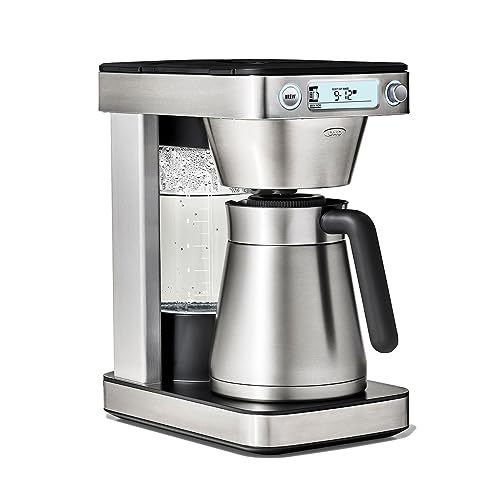
Brew 12-Cup Coffee Maker
$342.95Live Amazon price · as of 10/26/2026 11:43 PM
The 12-cup flagship on the SCA certified list, with a thermal carafe and a single-serve basket. Listing states water reaches the grounds at 194 to 205 F, a small basket for 2 to 4 cups and a large basket for 5 to 12, a double-wall vacuum-insulated carafe, and podless single-serve brewing.
$199.95Live Amazon price · as of 10/26/2026 8:03 PM
40 mm burrs · Conical Burr The best espresso grinder under $200: a repairable 40mm conical with 40 steps that pairs well with entry-level machines. Reliable and consistent, if not the clearest or most premium-feeling option.
$14.27Live Amazon price · as of 10/26/2026 9:08 PM
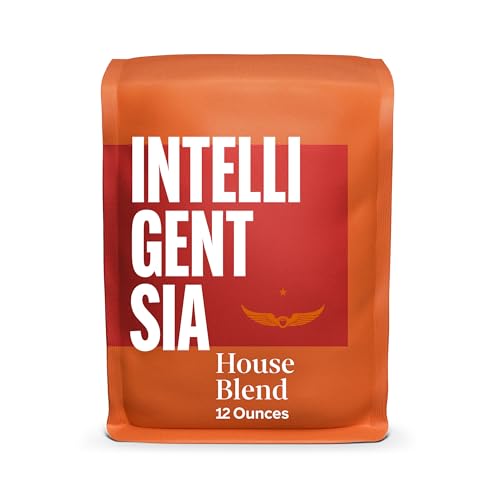
The light-roast demonstration: the brightness and origin clarity the roast section describes, from the bag with the strongest tested cup record on our roster. Listing states light roast, 12 oz whole bean, with caramel and red apple named in its own roast description.
Fill the reservoir, weigh out about 55 g of coffee per litre of water, grind it medium for a drip machine, level the bed in a paper filter, brew, and serve within about twenty minutes. The four decisions behind those steps are fresh coffee, the right grind, a measured ratio, and water at 195 to 205 F.
How much coffee do I use per cup?
About 55 g per litre, the SCA Golden Cup figure. In kitchen terms that is roughly two level tablespoons per 6 oz carafe cup, or about three per 8 oz mug. A full 12-cup carafe with 5 oz cups takes about 98 g. Our ratio calculator converts any batch size.
What is the best water temperature for coffee?
195 to 205 F, or 90 to 96 C. Without a thermometer, bring the kettle to a boil and wait about thirty seconds. Below the range coffee under-extracts and tastes sour; boiling water pulls harsh flavours forward.
Do I need to grind my own coffee?
You do not need to, but it is the biggest single improvement available. Ground coffee degrades much faster than whole beans because grinding exposes far more surface to air. A burr grinder also produces even particles, which is what makes an even extraction possible; a blade grinder does not.
Why does my coffee taste bitter?
Usually over-extraction: the grind is too fine for the brewer, the brew ran too long, or the pot sat on a hot plate after brewing. Water at a rolling boil does it too. Coarsen the grind one step, keep to the time for your brewer, and decant the pot rather than leaving it on the plate.
Why does my coffee taste weak or watery?
Usually under-dosing rather than under-brewing. Weigh the coffee before changing anything else, at about 55 g per litre. If the dose is right, the grind may be too coarse for the brewer, or the machine may be scaled and brewing below temperature.
What is the easiest way to make good coffee at home?
A drip machine that publishes its brew temperature, fresh whole beans, a burr grinder set to medium, and a scale. That combination removes every variable except your own preference, and it is the setup most home kitchens are best served by before anything more elaborate.
Sources for this page:
55 g per litre Golden Cup ratio and the 195 to 205 F brew temperature: the SCA standard as documented on our coffee-to-water ratio guide and its sources · Grind bands per brewer and the burr-versus-blade consistency point: our grind size chart and grinding guide and the manufacturer sources cited there · Per-method ratios and times (French press, pour-over, AeroPress, moka, cold brew, espresso): the figures published on each of our method guides, each from a maker's instructions or a benchmark roaster's recipe as cited there · Product facts on the cards: the OXO and Baratza review records, and the Intelligentsia listing on its catalog read date We have not lab-tested brewers; where a figure is a manufacturer's, the page names the manufacturer, and machine capabilities come from our own published review records.