

Brewer · for Cold brew
Takeya Deluxe cold brew
Coarse to extra coarse grind
$34.99Live Amazon price · as of 10/26/2026 10:34 PM
Buy on Amazon →Home › Guides › Coffee Grind Size Chart
📏 Reference · 2026Many grind charts present a neat sequence from espresso to cold brew and attach settings or particle-size ranges to it. The problem is that a grinder setting is not a universal unit of measurement. Here is the chart without the borrowed numbers, plus what each manufacturer we track publishes for its own dial.
Here is a practical starting grind region for each brew method, and a texture target you can check by eye and by touch. What no universal chart can honestly give you is a setting that transfers between machines — a setting is a position on one machine's mechanism, not a unit of measurement — so below the chart you will find the manufacturer-published settings and adjustment figures that can actually be sourced.
Use these bands as starting regions rather than precision measurements: the texture descriptions are practical reference points, and your final setting comes from dialling in your own grinder.
| Brew method | Starting grind | Texture target |
|---|---|---|
| Turkish (cezve/ibrik) | extra fine | Flour |
| Espresso | fine | Powdery, holds its shape when pinched |
| Moka pot | fine to medium-fine | Powdery, holds its shape when pinched / Finer than table salt |
| AeroPress (recipes vary widely) | medium-fine to medium | Finer than table salt / Table salt or coarse sand |
| Pour-over (V60, Kalita) | medium-fine to medium | Finer than table salt / Table salt or coarse sand |
| Drip | medium | Table salt or coarse sand |
| Siphon | medium | Table salt or coarse sand |
| Chemex | medium-coarse | Rough sand |
| French press, cupping | coarse | Sea salt |
| Cold brew | coarse to extra coarse | Sea salt / Peppercorns |
Order and overlap — nothing else. The bands are drawn at equal size on purpose: we have measured no particle sizes, so this picture depicts none. What it does claim is the order of the bands, the texture each one should feel like, and which bands each method spans — the shaded bars show that overlap directly, and a method sitting across two bands has no single correct grind. It is drawn from the same data as both tables below, so the underlying method mappings cannot diverge between the three views.
The ordering below is a practical convention rather than a universal standard — brew methods overlap, and the right grind depends on the brewer, the recipe, the coffee and the grinder. The texture descriptions are practical visual and tactile shorthand. What no column of this table can contain is your grinder's number — that comes from the manufacturer's own guidance and then your own dialling in.
| Grind | Feels / looks like | Common starting uses | Why this is a useful starting point (practical guidance, not measurement) |
|---|---|---|---|
| Extra coarse | Peppercorns | Cold brew | A coarser starting point is commonly used for long-contact brewing, and can make filtration easier |
| Coarse | Sea salt | French press, cupping, Cold brew | A coarser starting point is commonly used for full-immersion brewing, and may reduce the amount of fine material passing through |
| Medium-coarse | Rough sand | Chemex | A slightly coarser starting point is commonly used with Chemex-style brewing and its thicker paper filter |
| Medium | Table salt or coarse sand | AeroPress (recipes vary widely), Pour-over (V60, Kalita), Drip, Siphon | A versatile starting region for methods with moderate contact times; the exact grind depends on the brewer, the recipe and the coffee |
| Medium-fine | Finer than table salt | Moka pot, AeroPress (recipes vary widely), Pour-over (V60, Kalita) | Shorter contact times often benefit from a finer starting point; the appropriate grind still depends on the brewer, the recipe and the coffee |
| Fine | Powdery, holds its shape when pinched | Espresso, Moka pot | Espresso typically starts with a fine grind; bed structure and particle-size distribution also affect flow and extraction |
| Extra fine | Flour | Turkish (cezve/ibrik) | Because the grounds remain in the cup, Turkish coffee is traditionally ground exceptionally fine to produce its characteristic texture |
Ordinal and descriptive by design: we publish no micron ranges for these bands, because a universal micron range is only useful if it states what was measured, how it was measured, and on which grinder and burr set. We have measured no particle distributions ourselves, and an unsupported number is less useful than an explicitly qualitative starting point.
Need the equipment? The brewers and pre-ground coffees used as examples on this page are listed by grind size further down, after the methodology.
Three separate facts stack up to make "what number should I use" unanswerable in general:
These are six grinders we currently track, so the table reflects our coverage rather than the market, and it carries what their makers publish about the dial — no more. Where a maker publishes nothing numbered, the row says so rather than guessing.
Manufacturer information checked 30 August 2026. Product guidance changes; we update this table when we re-check the source.
| Grinder | What the manufacturer publishes | What that tells you |
|---|---|---|
| Baratza Encore ESP | Settings #1–20 for espresso; #21–40 for filter, French press, or cold brew | Method ranges you can start from directly |
| Breville Smart Grinder Pro | 60 settings, espresso to French press; no numeric split per method published | Total adjustment range, but no per-method starting point |
| Fellow Ode Gen 2 | 11 settings with 31 total steps; brewed methods only (pour-over, drip, batch) — not espresso | Adjustment resolution, plus an explicit statement of what the grinder is not for |
| 1Zpresso J (manual) | 30 clicks per rotation and 25 microns per click; no per-method setting numbers published | Mechanical resolution — how far one click moves the burrs, not a grind size |
| 1Zpresso J-Ultra (manual) | 8 microns of burr movement per click | Finer mechanical resolution than the J — again, adjustment, not grind size |
| Niche Zero | No manufacturer-published numeric range found on the product page we checked | No manufacturer figure found on the checked page; for this page, use the texture target as the starting point and dial in |
Read on the manufacturers' own pages on 30 August 2026: Baratza Encore ESP ("#1-20 will get you high-resolution espresso grinds and #21-40 is ready to grind for filter, french press, or cold brew!"), Breville Smart Grinder Pro ("From espresso to French press, 60 settings give you control over grind size for any brew."), Fellow Ode Gen 2 ("11 settings with 31 total steps for precise control"; "Designed for brewed coffee methods like pour-over, drip, and batch brew"), 1Zpresso J ("30 clicks per rotation and 25 microns per click"), and 1Zpresso J-Ultra ("an incredibly precise 8-micron" adjustment). The Niche Zero's page published no numbered guidance when we checked. Manufacturers revise pages; if a quote no longer appears, tell us and we will re-verify.
Wherever you start, the loop that follows is the same — keep the other major variables as consistent as practical:
Each grind size below carries a brewer for each method that starts there — a brewer representing that method, chosen to illustrate the band rather than to compete for it — and, where a listing exists, a bag of coffee sold at that grind. These are concrete examples, not scored picks — none has been through our evaluated award process, and this is not a market-wide selection and nothing here is ranked. Where we could not find coffee sold at the right grind, we say so rather than substituting something close.
Organised by grind size, coarsest to finest — the same order as the chart above. Find your band, and everything for it is together. A method that spans two bands is filed under its coarser band, the more forgiving place to start.
Coarse to extra coarse grind

Sold as coarse ground for cold brew
A pre-ground example within this grind band; the exact fit varies by method and recipe. The grind description comes from the listing itself, and we have not opened the bag.
Buy on Amazon →

Sold as coarse grind
A pre-ground example within this grind band; the exact fit varies by method and recipe. The grind description comes from the listing itself, and we have not opened the bag.
Buy on Amazon →
Medium-coarse grind
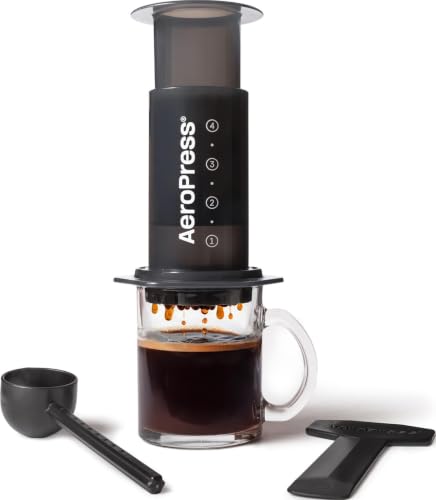
Medium-fine to medium grind · recipes vary widely

Medium-fine to medium grind

Medium grind
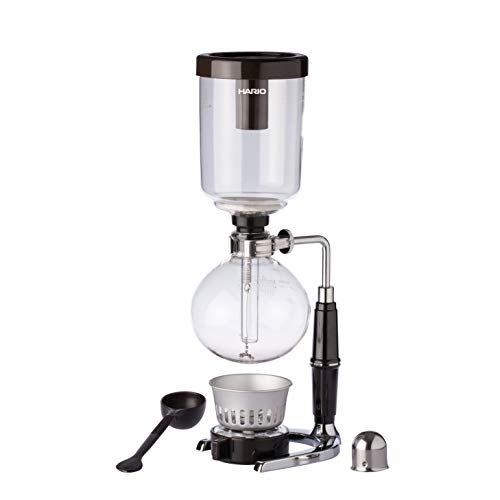
Medium grind
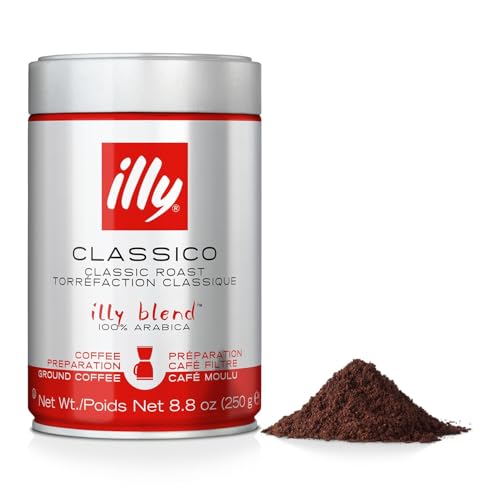
Sold as drip grind
A pre-ground example within this grind band; the exact fit varies by method and recipe. The grind description comes from the listing itself, and we have not opened the bag.
Buy on Amazon →
Fine to medium-fine grind

Sold as moka grind
A pre-ground example within this grind band; the exact fit varies by method and recipe. The grind description comes from the listing itself, and we have not opened the bag.
Buy on Amazon →
Fine grind

Sold as espresso grind
A pre-ground example within this grind band; the exact fit varies by method and recipe. The grind description comes from the listing itself, and we have not opened the bag.
Buy on Amazon →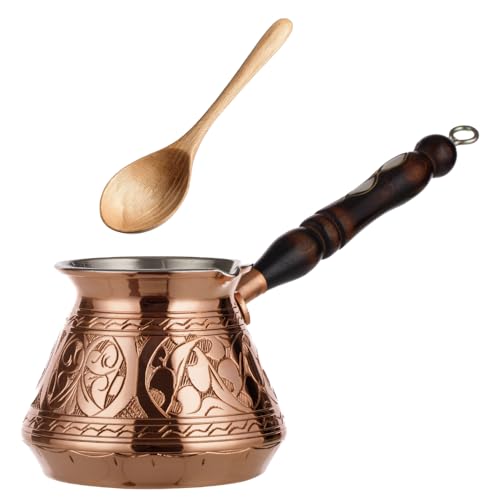
Extra fine grind

Sold as ground for cezve
A pre-ground example within this grind band; the exact fit varies by method and recipe. The grind description comes from the listing itself, and we have not opened the bag.
Buy on Amazon →Every product above was found through Amazon’s own catalog and confirmed to resolve to a live listing before publication. The illy pair is worth noticing: the same Classico blend is sold ground for moka and ground for drip — one roaster, one coffee, different grinds for different methods, which is this page’s argument in a single product line. Prices update live; the price on Amazon at purchase applies.
The finest everyday grind band: particles roughly the texture of table salt or finer, fine enough that a 25-30 second shot meets real resistance. On this chart it is the espresso band, and the gear section lists the machines and grinders we cover that operate there. If your grinder cannot reach it, that is a grinder limit rather than a technique problem.
Start inside your grinder’s espresso range, then adjust finer or coarser on how the shot flows and tastes. There is no single espresso setting that transfers across grinders, and the correct setting is not necessarily the finest your grinder can produce — grind interacts with dose, yield, time, pressure and puck preparation. Where a manufacturer publishes a range, start there: Baratza, for example, publishes settings 1–20 on the Encore ESP as its espresso range. Then adjust one step at a time: choking or very slow flow can indicate that the grind is too fine; gushing or very fast flow can indicate that it is too coarse.
They are not quite the same answer. On this page, pour-over methods such as the V60 and Kalita start in the medium-fine to medium region, while drip starts around medium — the chart above gives each its own row for that reason. Use the texture description as the physical target rather than a number, then adjust by taste: a brew that tastes sour or weak can indicate a grind that is too coarse; one that tastes bitter or muddy can indicate one that is too fine. Manufacturers that publish guidance put filter methods above their espresso range: Baratza publishes 21–40 on the Encore ESP for filter, French press or cold brew.
Because a grinder setting is just a position on that grinder's adjustment mechanism, not a measurement of particle size. Different burr sets, adjustment threads and calibrations mean "setting 15" describes different physical gaps on different machines — and it may differ between two units of the same model. That is also why this page does not print a universal settings table: a chart that treats settings as transferable between brands should explain what those numbers represent and how the settings were established.
Taste first; for espresso, use flow as a second signal. Sour, thin or quickly fading coffee can indicate under-extraction; if the grind is the limiting variable, try finer. Bitter, harsh or drying coffee can indicate over-extraction; try coarser. On espresso, shots that drip painfully slowly or choke the machine can indicate too fine a grind, and shots that gush pale and fast can indicate too coarse. Change one step at a time and keep the dose consistent, ideally by weighing it — our ratio calculator covers the dose side.
Sometimes. Espresso generally benefits from finer grounds and from fine enough adjustment control to dial a shot in, and not every grinder offers both. Some manufacturers say so plainly: Fellow positions the Ode Gen 2 for brewed methods — pour-over, drip, batch — not espresso, while Baratza splits the Encore ESP's dial into an espresso range and a filter range precisely so one grinder can do both. Check what the maker of your grinder claims for it before assuming either way.
A micron (µm) is one thousandth of a millimetre. Manufacturers may use microns to describe how far the adjustment mechanism moves; particle-size measurement is a different thing that happens to use the same unit. 1Zpresso’s figures — 25 microns per click on the J, 8 microns on the J-Ultra — describe adjustment resolution, NOT the size of the grounds produced. They tell you how small a step the dial makes, not what size to grind at. Published micron figures describe the mechanism; they still do not transfer a setting from one grinder to another.
Feedback on this page: Coffee Grind Size Chart (2026): By Brew Method
Thank you. Your note is filed against this page and will be read.