
🏆 2026 Best Bean-to-Cup Machine winner
Jura Z10
Bean-to-Cup · Automatic milk · Plant milk 5/5
$4,151.40Live Amazon price · as of 09/25/2026 12:32 AM
Buy on Amazon →Home › Coffee Drinks › Cortado vs cappuccino
☕ Coffee Drinks · 2026A cortado cuts espresso with an equal amount of steamed milk and almost no foam. A cappuccino adds four times the milk and a deep foam cap. Ratio, size, foam and which to order.
Written and reviewed by the CoffeeLabAdvisor editorial team · Published 24 September 2026
A cortado is espresso cut with a roughly equal amount of steamed milk and almost no foam. A cappuccino is espresso under about four times its volume in milk, finished with a deep cap of foam. Both are small drinks, which is why they get confused, but they are built on opposite instincts. The cortado exists to take the edge off a shot while leaving it recognisably espresso: commonly a double, cut roughly one to one, about 4–5 oz in the glass. The certified Italian cappuccino is 25 ml of espresso with 100 ml of milk steamed to 55 °C, around 125 ml of drink, and the foam cap is part of the definition rather than a garnish. The cortado tastes of coffee; the cappuccino tastes of milk and air.
Both arrive small, both are espresso and milk, and there the similarity stops. The figures below are the documented ones, with the authority named where a standard exists and a range given honestly where the sources genuinely differ.
| Cortado | Cappuccino | |
|---|---|---|
| Espresso | Commonly a double | One shot — 25 ml in the certified Italian version |
| Milk | Roughly equal to the espresso, steamed | 100 ml, steamed to 55 °C in the certified version |
| Ratio | About 1 part espresso to 1 part milk | About 1 part espresso to 4 parts milk |
| Foam | Little to none — the milk is steamed, not frothed | A deep cap, thick enough to spoon |
| Size | About 4–5 oz in total | About 125 ml of drink in a 150–160 ml cup |
| Served in | Often a small glass — the ~135 ml Gibraltar | A ceramic cappuccino cup |
The ratio row is the whole story. Four times as much milk, and a cap of air on top of it, is the difference between a drink that still tastes like espresso and one that tastes like warm milk.
The name is the instruction. Cortado comes from the Spanish cortar, to cut or to dilute, and the milk is there to cut the espresso — to take the sharp edge off the acidity without turning the drink into something else. The verb is precise and the drink is built around it.
The consequence people miss is that a cortado is not a foam drink. The milk is steamed to warm it and give it a little body, but it is not aerated into a cap. Poured well it leaves at most a thin film on the surface. If a cortado arrives with a visible head of foam, it has drifted toward being a very small cappuccino, and it will taste like one.
A cappuccino, by contrast, is defined partly by its foam. The wand draws air in near the surface for longer, the milk expands, and the foam separates into a distinct layer thick enough to hold a dusting of cocoa. Take that cap away and it is no longer a cappuccino; take the foam off a cortado and you still have exactly the drink you ordered.
That is also why the cortado is unforgiving of bad coffee. There is very little milk and no air to hide behind, so a sour or over-extracted shot arrives unedited.
The cortado, clearly, and for two reasons that stack.
The first is the ratio. One part milk to one part espresso is about as little dilution as a milk drink gets. The cappuccino puts four times as much milk around its shot.
The second is the air. Foam is mostly air, so a good part of a cappuccino's volume is padding: it fills the cup without adding coffee, and it changes how the drink feels on the tongue rather than how much coffee is in it. A cortado has almost none of that.
There is also a shot-count effect worth naming, because it widens the gap in practice: a cortado is commonly built on a double shot while a traditional cappuccino is built on a single. That alone can double the coffee in the cup before the milk is even poured.
As ever, keep taste and caffeine apart. Caffeine comes from the shots, so a cortado on a double and a cappuccino on a double carry the same caffeine whatever the foam does. Our espresso caffeine guide has the numbers.
If you have seen a cortado served in a small, heavy, ridged tumbler rather than a cup, that is a Gibraltar — named after the Libbey glass it is poured into, a roughly 135 ml tumbler that cafés in San Francisco adopted and that stuck as a name for the drink itself. A Gibraltar is a cortado; the word refers to the glassware.
The glass is not only decorative. Clear sides show the pour, and the small volume keeps the ratio honest — it is difficult to accidentally serve a milky cortado in a 135 ml glass, which is exactly the point.
The drink also appears around the world under its own local names: tallat in Catalan, ebaki in Basque, pingado in Portuguese, garoto in Portugal, and cortadito in Cuban-influenced cafés, where it is typically sweetened. They are not identical in every detail, but the shared idea is the same one: a small amount of milk cutting a shot of espresso.
Our cortado guide covers the drink and its variants on its own terms, and our Cuban coffee guide covers the sweetened end of that family.
If you order cortados regularly you will have noticed that they are far less consistent than cappuccinos. That is not your imagination, and there is a structural reason for it worth understanding before you blame a barista.
The cappuccino has a published specification and the cortado does not. There is a certified Italian standard for the cappuccino — 25 ml of espresso, 100 ml of milk at 55 °C — which gives cafés something to aim at even when they miss it. The cortado has no equivalent. What it has is a definition by relationship: espresso cut with roughly its own volume in steamed milk. Every quantity in that sentence is relative.
Three variables then move independently from one café to the next:
The practical upshot: if you have had a cortado you loved, note the café and the glass, because you are unlikely to be able to describe the drink precisely enough to reproduce it elsewhere. And if you are making them at home, the small glass is genuinely a useful constraint rather than an affectation — it stops the drink drifting milky without you noticing.
The same logic explains why our cortado guide gives a 2:1 starting ratio for home rather than a single authoritative recipe: it is a starting point to adjust from, which is the honest way to publish a drink that has no standard behind it.
Order a cortado when you want espresso with the edge taken off rather than a milk drink: mid-morning, after lunch, or whenever a cappuccino would be too much liquid. It is also the better order at a café whose coffee you already trust, because it puts the shot on display.
Order a cappuccino when you want warmth, volume and foam — something to sit with rather than drink in three mouthfuls. It is the gentler drink on an empty stomach, and the one that rewards a barista who can texture milk properly.
Two practical notes. A cortado is a poor order at a café that is struggling with its espresso, since there is nothing to hide a bad shot. And if you like the idea of a cortado but want a little more of it, a flat white is the natural next size up: still coffee-forward, still textured rather than foamy, just longer.
The cortado is the easier of the two to make well, which surprises people who assume less milk means more skill.
For a cortado: pull a double into a small glass or cup. Steam a small amount of milk with as little air as you can manage — get the wand under the surface quickly and concentrate on spinning the milk rather than aerating it. Stop while it is warm rather than hot. Pour it straight in. You are aiming for roughly as much milk as espresso, and a surface that looks like liquid rather than foam.
For a cappuccino: pull a single into a 150–160 ml cup. Steam about 100 ml of milk, letting the tip sit near the surface long enough to hear it draw air for two or three seconds, then submerge to spin. Stop around 55 °C. Pour the liquid milk in first, then spoon the foam on top.
The shared mistake is overheating. Past roughly 70 °C the milk loses sweetness and the foam turns dry and stiff, and no pouring technique fixes it afterwards. The cortado's smaller volume makes this easier to get wrong, because a small jug of milk heats fast — use more milk than you need and discard the rest if that helps you control it. Our frothing guide covers both textures, and the boiler guide explains which machines make you wait between pulling and steaming.
Both drinks are made at the steam wand, so every machine below has a steam system and a published review. A cortado needs milk steamed with almost no air, which is easier on a machine with a manual wand than on one that only makes stiff automatic foam.
Bean-to-Cup · Automatic milk · Plant milk 5/5

Semi-Automatic · Automatic milk · Plant milk 5/5

Bean-to-Cup · Automatic milk · Plant milk 4/5
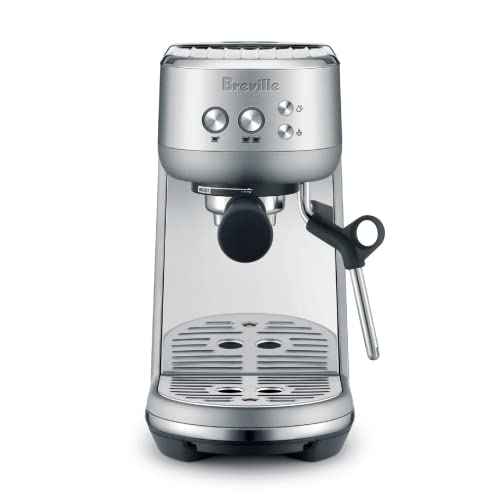
Semi-Automatic · Manual milk · Plant milk 4/5
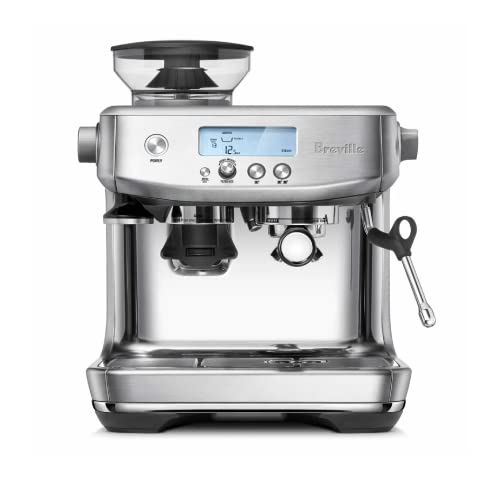
Semi-Automatic · Manual milk · Plant milk 4/5

Bean-to-Cup · Automatic milk · Plant milk 4/5
The amount of milk and the foam. A cortado cuts espresso with roughly its own volume in steamed milk and almost no foam, about 4 to 5 oz in total. A cappuccino uses around four times as much milk and finishes with a deep foam cap.
In taste, yes. A cortado is about one part milk to one part espresso and is commonly built on a double shot, while a traditional cappuccino is a single shot under four times its volume in milk plus foam. In caffeine, the shot count decides it, not the milk.
Little to none. The milk is steamed to warm it and give it body, not aerated into a cap. A thin film on the surface is normal; a visible head of foam means it has drifted toward being a small cappuccino.
A cortado served in a Libbey Gibraltar glass, a roughly 135 ml tumbler. The name comes from the glassware rather than from any difference in the recipe.
The cappuccino, slightly, at about 125 ml of drink in a 150 to 160 ml cup against a cortado's 4 to 5 oz. But far more of the cappuccino's volume is milk and air.
It comes from the Spanish cortar, to cut or dilute. The milk cuts the espresso, taking the edge off its acidity without turning it into a milk drink.
No, though they are close in spirit. A flat white is longer, built on more milk textured into microfoam, and typically served around 175 to 200 ml. A cortado is smaller, with roughly equal milk and espresso and less texturing.
The cortado, because it does not need a foam cap. You steam a small amount of milk with as little air as possible and pour it in. A cappuccino requires deliberately aerating the milk and then pouring and spooning it in two parts.
Because the cortado has no published specification, while the cappuccino does. A cortado is defined by a relationship rather than a quantity: espresso cut with roughly its own volume in steamed milk. The shot count, the glass size and how much air goes into the milk all vary between cafes, and each of them changes the drink.
Both are served and both are defended. Specialty cafes more often use a double, which is why a cortado usually tastes stronger than a traditional single-shot cappuccino despite being a similar size. If you are making them at home, pick one and keep it consistent so you can judge the milk.
No. A latte is a milk drink with a thin foam layer, poured long. A cortado is espresso cut with a roughly equal amount of steamed milk and almost no foam, which keeps the coffee in front. Shrinking a latte gives you a small milky drink, not a cortado.
Sources for this page: Cortado definition (espresso with a roughly equal amount of warm milk to reduce acidity), the etymology from cortar meaning to cut or dilute, milk steamed rather than frothed, the Gibraltar variant in a 135 ml Libbey glass, and the tallat, ebaki, pingado, garoto and cortadito names: Wikipedia's Cortado entry, read 2026-09-02 · Cortado size (4-5 oz, a double shot plus a few ounces of steamed milk), the 2:1 home starting ratio, Gibraltar glassware by Libbey, and the coffee-forwardness comparison against macchiato and cappuccino: Trade Coffee's cortado education page, read 2026-09-02 · The certified cappuccino - 25 ml of espresso with 100 ml of milk steamed to 55 C, about 125 ml in a 150-160 ml cup: the Italian Espresso National Institute's published certification, read 2026-09-01 for our cappuccino guide and corroborated by Wikipedia's Cappuccino entry · Milk texturing behaviour and the scalding threshold: our own published frothing guide and review records · Steam-wand types, single-boiler brew and steam sequencing, and plant-milk ratings: our own published review records We have not measured drinks in a lab; where volumes differ between authorities, the page names each authority rather than averaging them, and machine capabilities come from our own published review records.