
🏆 2026 Best Bean-to-Cup Machine winner
Jura Z10
Bean-to-Cup · Automatic milk · Plant milk 5/5
$4,151.40Live Amazon price · as of 09/25/2026 12:32 AM
Buy on Amazon →Home › Coffee Drinks › Macchiato vs cappuccino
☕ Coffee Drinks · 2026A macchiato is an espresso marked with a dash of foam. A cappuccino is a small cup of espresso under a deep cap of milk foam. Size, ratio, strength, and why the Starbucks version confuses everyone.
Written and reviewed by the CoffeeLabAdvisor editorial team · Published 24 September 2026
A macchiato is an espresso with a dash of milk foam on top. A cappuccino is a small cup of espresso under a deep cap of foam, with a good deal of steamed milk underneath. The gap between them is not subtle, and it is almost entirely about how much milk is in the cup. A traditional macchiato stays under about 60 ml in total: a shot, marked with a spoonful of foam, and nothing else. The certified Italian cappuccino is 25 ml of espresso with 100 ml of milk steamed to 55 °C, around 125 ml of drink in a 150–160 ml cup. So a macchiato is an espresso drink with a hint of milk; a cappuccino is a milk drink built on espresso. One further warning, because it causes more confusion than any other drink name on a menu: the large sweet caramel macchiato sold by coffee chains is a different drink entirely, and the section below explains why.
These two get compared constantly, and the comparison is usually made harder than it needs to be. One is a shot of espresso with a mark of foam on it. The other is a small milk drink. Here are the documented figures next to each other, with the authority named rather than averaged into a false middle.
| Macchiato | Cappuccino | |
|---|---|---|
| Espresso | One shot, single or double | One shot — 25 ml in the certified Italian version |
| Milk | A spoonful of foam, no steamed milk underneath | 100 ml, steamed to 55 °C in the certified version |
| Total volume | Under about 60 ml | About 125 ml of drink, in a 150–160 ml cup |
| Foam | A dash on the surface, marking the crema | A deep cap you can rest a spoon on |
| Served in | An espresso cup | A cappuccino cup, roughly twice the size |
| Tastes | Espresso, very slightly softened | Milky, warm, and much gentler |
Read the milk row and everything else follows. A macchiato adds a spoonful to a shot. A cappuccino adds four times the shot's volume in steamed milk and then caps it with foam. They are not two points on a scale so much as two different kinds of drink that happen to start in the same place.
The Italian word macchiato means stained, or marked. That is not a poetic flourish; it is a working description of what the barista does, and knowing it makes the drink much easier to order correctly.
A shot of espresso pulled on its own is difficult to tell apart, at a glance, from a small cup of very strong black coffee. The traditional purpose of the mark was practical: a dash of foam dropped onto the crema told anyone looking at the cup that this one had milk in it. The drink is an espresso first, and the milk is a label.
That is why the quantity is so small, and why a macchiato that arrives looking like a small latte has been made wrong. You should be able to see the crema around the mark. The foam sits on the surface rather than being poured through the drink, and there is no body of steamed milk beneath it.
A cappuccino inverts the relationship. The espresso is the base and the milk is the substance of the drink: first the liquid steamed milk, then a distinct cap of foam thick enough to hold a dusting of cocoa or to spoon on its own. If you want the full specification and the method, our cappuccino guide has both.
The macchiato, by a wide margin, and this is the most useful practical difference between them.
Milk does two things to espresso. It dilutes it, and it coats the tongue with fat and protein that physically mute bitterness and acidity. A cappuccino does both of those at some scale: about four times the shot's volume in milk, plus a cap of foam which is mostly air. A macchiato does almost neither. A spoonful of foam takes the sharpest edge off the crema and changes very little else.
So the macchiato tastes like espresso, softened slightly. The cappuccino tastes like a warm milk drink with coffee through it. If you find straight espresso a little too intense but a cappuccino too milky, the macchiato is precisely the drink that sits in that gap, and it is worth ordering deliberately rather than by accident.
Worth separating, because the two get conflated: this is about taste, not caffeine. Both drinks are built on espresso, and the caffeine comes from the shot. A single-shot macchiato and a single-shot cappuccino contain the same caffeine; the cappuccino simply spreads it through more liquid. Our espresso caffeine guide has the figures by shot count.
This is where most of the confusion comes from, and it is worth reading before you order in an unfamiliar café, because all three are correctly named and they are not remotely alike.
1. The espresso macchiato. The drink this page is about: a shot marked with a dash of foam, under about 60 ml, served in an espresso cup. In Italy, asking for a macchiato gets you this.
2. The latte macchiato. Literally stained milk, and it is the inverse of the first drink. Here the cup is filled with steamed milk and the espresso is poured into it, so the milk is what gets marked. It is a tall, layered, mostly-milk drink, far closer to a latte than to an espresso macchiato. Same word, opposite construction: in one the coffee is stained, in the other the milk is.
3. The caramel macchiato sold by the big chains. A large sweet drink built on vanilla syrup, steamed milk, espresso and caramel sauce. It takes its name from the way the espresso marks the milk, which is a fair use of the word, but in size and sweetness it has almost nothing in common with either drink above. Someone who has only ever ordered one of these and then orders a macchiato in Italy is in for a short, strong surprise.
If a menu is ambiguous, the reliable question is simply whether the drink is served in an espresso cup or a tall glass. That one detail tells you which family you are in.
No drink on a café menu attracts more folklore than the cappuccino, and some of it is worth knowing while some of it is worth ignoring. Since the comparison with a macchiato often comes down to which one you can order when, here is the honest sorting.
The morning-only convention is real, but it is a convention, not a rule. In Italy a cappuccino is overwhelmingly a breakfast drink, and ordering one after a meal marks you as a visitor. Nobody will refuse to serve it. If you want a milk drink after lunch and would rather not attract comment, the macchiato is the drink Italians actually order at that hour — which is part of why it exists.
The certified specification is real. Unlike most café drinks, the cappuccino has a published standard behind it: 25 ml of espresso with 100 ml of milk steamed to 55 °C, about 125 ml in the cup. Very few cafés outside Italy hold to it, and most serve a considerably larger drink on a double shot. That is not wrong, but it is worth knowing that the drink you get at home and the drink the standard describes may differ by a factor of two.
The chocolate dusting is optional and regional. It is common in Australia, Britain and much of the United States, and much rarer in Italy, where the foam is usually left plain. Neither is more authentic than the other at this point; it is a local habit.
The thirds rule is a teaching device. You will often read that a cappuccino is one third espresso, one third steamed milk and one third foam. It is a useful way to picture the drink and a poor way to measure it — the certified figures do not divide into neat thirds, and foam volume is not a stable quantity to measure anything by. Treat it as a picture rather than a recipe.
None of this folklore attaches to the macchiato, which is one of its quiet advantages: it is a small, well-defined drink that you can order at any hour without anyone having an opinion about it.
Order a macchiato when you want espresso but not quite neat: after a meal, as a second coffee in the afternoon, or when a cappuccino feels like too much liquid and too much milk. It is also the honest choice when you want to taste the coffee itself — there is nowhere for a poorly extracted shot to hide behind a spoonful of foam, which is why it is a good drink to judge an unfamiliar café by.
Order a cappuccino when you want something to sit with rather than something to drink quickly. It is warmer for longer, gentler on an empty stomach, and the foam is a genuine pleasure when it is made properly rather than blown into stiff bubbles.
Two practical notes. First, in a chain café you will often need to specify espresso macchiato to get the traditional drink, because the default under that name may well be the caramel version. Second, if the macchiato arrives in a cup much larger than an espresso cup, you have been served something else — politely, that is worth knowing rather than assuming you misremembered the drink.
If neither is quite right, a cortado sits between them: more milk than a macchiato, far less foam than a cappuccino.
Same machine, same jug of milk, two quite different amounts of effort.
The macchiato is the easier drink, and that makes it a good one to learn on. Pull a shot into an espresso cup. Steam a small amount of milk — far less than you think, since you only need a spoonful of foam — and spoon the foam onto the crema. You do not need to pour well, you do not need microfoam, and you do not need to hit a temperature precisely. If you have no steam wand at all, a handheld frother or even a jar shaken hard will produce enough foam for the mark, which is not true of any other milk drink.
The cappuccino asks for real steaming. Pull a single into a 150–160 ml cup. Steam about 100 ml of milk, letting the wand tip draw air in near the surface for two or three seconds before submerging it to spin the milk. Stop around 55 °C — hot to the hand, not too hot to hold. Pour the liquid milk in first and spoon the foam over the top.
The most common home mistake on the cappuccino is heat. Milk taken much past roughly 70 °C loses its sweetness and the foam goes stiff and dry, and nothing recovers it afterwards. Our milk frothing guide covers getting foam and microfoam deliberately, and if you have a single-boiler machine you will need to pull the shot first and steam second, because the boiler cannot do both at once.
Both drinks need a way to foam milk, so every machine below carries a steam system and a published review. A macchiato is forgiving about the quality of that foam; a cappuccino is not, so the steam type is named on each card.
Bean-to-Cup · Automatic milk · Plant milk 5/5

Semi-Automatic · Automatic milk · Plant milk 5/5

Bean-to-Cup · Automatic milk · Plant milk 4/5
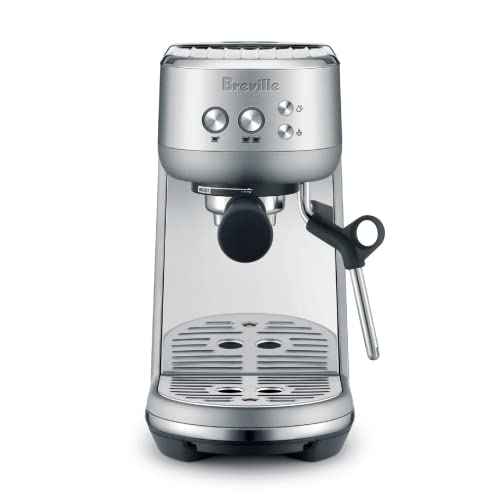
Semi-Automatic · Manual milk · Plant milk 4/5
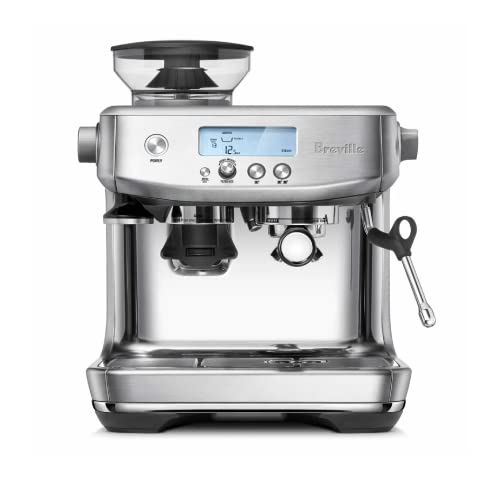
Semi-Automatic · Manual milk · Plant milk 4/5

Bean-to-Cup · Automatic milk · Plant milk 4/5
Milk volume. A macchiato is a shot of espresso marked with a spoonful of foam and nothing else, staying under about 60 ml. A cappuccino is about 125 ml of drink: a shot with roughly 100 ml of steamed milk under a deep cap of foam.
In taste, considerably. Almost nothing dilutes the shot in a macchiato, whereas a cappuccino surrounds the same shot with four times its volume in milk. In caffeine they are the same if the shot count is the same, because caffeine comes from the espresso.
Because it is a different drink that shares the name. A caramel macchiato is a large sweet drink of vanilla syrup, steamed milk, espresso and caramel sauce. The name refers to the espresso marking the milk, but it has little in common with a traditional espresso macchiato.
Stained, or marked, in Italian. It describes the dash of milk foam dropped onto the espresso, which traditionally served to show at a glance that the cup had milk in it.
Almost the inverse of an espresso macchiato. The cup is filled with steamed milk and the espresso is poured into it, so the milk is what gets marked. It is a tall, layered, mostly-milk drink much closer to a latte.
The cappuccino, by a long way. It carries roughly 100 ml of steamed milk plus a foam cap; a macchiato carries a spoonful of foam and no steamed milk at all.
Yes, more easily than any other milk drink. You only need a spoonful of foam, so a handheld frother or a jar of milk shaken hard will do. A cappuccino genuinely needs a steam wand to get the milk and foam right.
A macchiato is the small step. If that is still too intense, a cortado adds a roughly equal amount of steamed milk, and a cappuccino is gentler again.
Sources for this page: Macchiato definition and etymology - an espresso marked or stained with a dash of foamed milk, resembling a small cappuccino but tasting stronger and more aromatic: Wikipedia's Milk coffee entry read 2026-09-24, with Trade Coffee's espresso drinks glossary, MasterClass's macchiato explainer and L'OR's macchiato guide read 2026-09-01 for our macchiato guide · The certified cappuccino - 25 ml of espresso with 100 ml of milk steamed to 55 C, about 125 ml in a 150-160 ml cup: the Italian Espresso National Institute's published certification, read 2026-09-01 for our cappuccino guide and corroborated by Wikipedia's Cappuccino entry · Latte macchiato as stained milk, with the espresso poured into the milk rather than the milk onto the espresso: Wikipedia's Latte macchiato entry, corroborated by the same glossaries, read 2026-09-01 · Milk texturing behaviour and the scalding threshold: our own published frothing guide and review records · Steam-wand types, single-boiler brew and steam sequencing, and plant-milk ratings: our own published review records We have not measured drinks in a lab; where volumes differ between authorities, the page names each authority rather than averaging them, and machine capabilities come from our own published review records.