
🏆 2026 Best Bean-to-Cup Machine winner
Jura Z10
Bean-to-Cup · Automatic milk · Plant milk 5/5
$4,151.40Live Amazon price · as of 09/25/2026 12:32 AM
Buy on Amazon →Home › Coffee Drinks › Flat white vs cappuccino
☕ Coffee Drinks · 2026Flat white vs cappuccino: same espresso, two different milks. One is textured to a thin microfoam, the other capped with deep foam. Ratio, size, strength and which to order.
Written and reviewed by the CoffeeLabAdvisor editorial team · Published 24 September 2026
The difference between a flat white and a cappuccino is the milk, not the coffee. Both start from espresso. A cappuccino finishes with a deep, spoonable cap of foam — the certified Italian version is 25 ml of espresso with 100 ml of milk steamed to 55 °C, about 125 ml in the cup. A flat white finishes with almost no foam at all: the milk is textured into microfoam, a glossy liquid with the bubbles beaten so small they stay mixed in, leaving a surface layer of roughly 5 mm. A flat white is also typically built on a double shot in a slightly larger cup, around 200 ml in Australia and 175 ml in New Zealand. So the flat white usually tastes stronger and feels silkier; the cappuccino tastes lighter and feels airier.
Most explanations stop at the flat white has less foam. True, and not enough to order confidently or to make either one at home, because the foam is a consequence of two earlier decisions: how the milk is textured, and how much of it goes in. Here are the documented figures next to each other. Where a figure is a range, it is a range because the sources genuinely differ, and we name the authority rather than averaging them into false precision.
| Flat white | Cappuccino | |
|---|---|---|
| Espresso | Commonly a double, about 50 ml | One shot — the certified Italian standard uses 25 ml |
| Milk | About 130 ml, textured to microfoam | 100 ml steamed to 55 °C in the certified version |
| Ratio | 1 part espresso to 2–3 parts milk | Roughly 1 part espresso to 4 parts milk |
| Foam | A thin surface layer, around 5 mm | A deep cap you can rest a spoon on |
| Cup | About 200 ml (AU), about 175 ml (NZ) | 150–160 ml |
| Origin | Disputed — Australia and New Zealand both claim it | Italy, with a certified specification |
Read the ratio row and the rest follows. The flat white puts more coffee into less milk, so it tastes stronger. The cappuccino puts one small shot under a lot of air, so it tastes lighter and drinks softer.
This is the part that decides everything else, and it happens at the steam wand in the first few seconds.
Cappuccino foam is made by letting the steam wand pull air in near the surface of the milk for longer. The bubbles stay relatively large, the milk expands a lot, and the foam separates into a distinct layer that sits on top. That is what you are meant to get: a cap thick enough to hold a dusting of chocolate or to spoon.
Flat white microfoam is made by taking in air for barely a second and then dropping the wand deeper to spin the milk. The bubbles get broken down so small that they stop behaving like foam and start behaving like liquid — glossy, paint-like, integrated all the way through. Poured, it leaves only a thin skin at the top, and it is what makes latte art possible at all.
So the honest way to say it: a cappuccino has foam on it. A flat white has foam in it. Our milk frothing guide covers how to get each one deliberately rather than by accident.
The flat white, usually — and for two reasons that compound.
The first is the shot. A flat white is commonly built on a double, and a traditional cappuccino on a single. That alone is most of the difference.
The second is the air. Foam is mostly air, so a cappuccino's volume is partly padding: the cap takes up space in the cup without adding coffee or milk to taste. Milk also mutes bitterness and coats the tongue, so more milk around the same coffee reads as milder.
A caveat worth stating, because it is where the internet usually gets it wrong: this is about how it tastes, not about caffeine. Caffeine comes from the shots. A cappuccino and a flat white pulled from the same double contain the same caffeine, whatever the foam is doing. Our espresso caffeine guide has the figures by shot count.
Order a flat white if you want to taste the coffee and you find a cappuccino a bit airy or a latte a bit washed out. It is the strongest of the everyday milk drinks in a normal-sized cup, and its silkier body is the reason a lot of people switch and never switch back.
Order a cappuccino if you want something lighter and warmer to sit with, if you like the texture of foam, or if you are drinking it in the morning in Italy, which is the one place the timing genuinely matters to the locals.
Two practical notes. In a busy chain, the gap between the two narrows considerably — both are often built on a double shot in a larger cup, and the milk texture is somewhere in between. And if the foam arrives stiff and bubbly on either drink, that is not the recipe, that is the steaming; dry, soapy foam is a technique fault rather than a style.
If neither sounds right, a cortado is smaller and more coffee-forward again, and a latte is longer and milkier.
Same machine, same milk, one decision at the wand.
For a cappuccino: pull a single into a 150–160 ml cup. Steam about 100 ml of milk, keeping the wand tip near the surface long enough to hear it draw air in for two or three seconds, then submerge it to spin. Stop at about 55 °C — hot to the hand, not too hot to hold. Pour the liquid milk in first and spoon the foam on.
For a flat white: pull a double into a slightly larger cup. Steam about 130 ml of milk with barely a second of air, then straight into the spin, and keep spinning until the milk looks like wet paint with no visible bubbles. Swirl the jug before pouring, and pour from low and close so the microfoam goes in rather than on.
The single most common home mistake on both drinks is steaming too hot. Milk scalded past roughly 70 °C loses its sweetness and the foam turns stiff and dry, and no amount of pouring skill recovers it. If you have a single-boiler machine you also need to pull the shot first and steam second, because the boiler cannot do both at once — our boiler guide explains which machines make you wait.
Both drinks are decided at the steam wand, so every machine below carries a steam system and a published review. The steam type is named on each card, because a machine that only makes stiff foam can make a cappuccino and will struggle with a flat white.
Bean-to-Cup · Automatic milk · Plant milk 5/5

Semi-Automatic · Automatic milk · Plant milk 5/5

Bean-to-Cup · Automatic milk · Plant milk 4/5
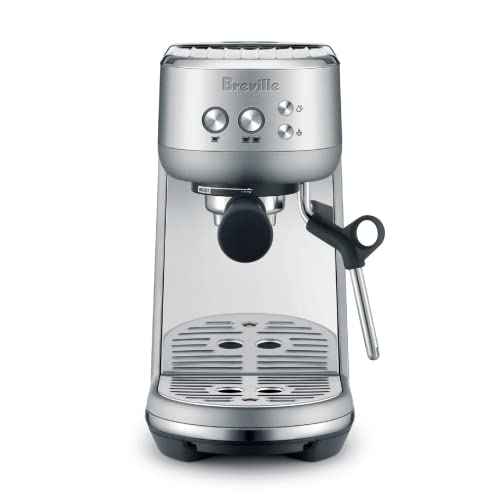
Semi-Automatic · Manual milk · Plant milk 4/5
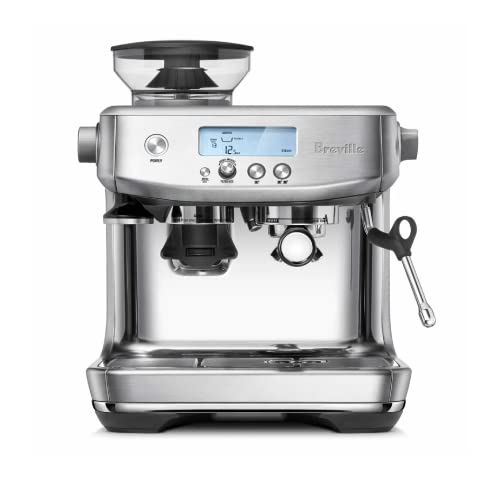
Semi-Automatic · Manual milk · Plant milk 4/5

Bean-to-Cup · Automatic milk · Plant milk 4/5
The milk. A cappuccino is finished with a deep cap of foam over a single shot in a small cup. A flat white is built on a double shot with milk textured into microfoam, which leaves only a thin surface layer of about 5 mm. Same espresso, two different textures and two different strengths.
In taste, usually yes: a flat white is commonly made with a double shot and less milk, and it has far less air in it. In caffeine, not necessarily. Caffeine comes from the shots, so two drinks pulled from the same double contain the same amount whatever the foam does.
The flat white, usually. Flat whites are commonly served around 200 ml in Australia and about 175 ml in New Zealand; the certified Italian cappuccino is about 125 ml of drink in a 150 to 160 ml cup.
A very thin layer, around 5 mm. The milk is textured to microfoam, which means the bubbles are broken down small enough to stay integrated in the milk rather than separating into a cap. That is the defining difference.
Not properly. A handheld frother or a jar can aerate milk, but microfoam needs the milk spun by steam pressure to break the bubbles down and integrate them. Without that you get foam on top, which is closer to a cappuccino.
The cappuccino has proportionally more milk relative to coffee, at roughly one part espresso to four parts milk. The flat white sits at about one to two or one to three, which is why it tastes more of coffee even though the cup is bigger.
No, though they are close cousins. A latte uses more milk and is served longer, with a thin foam layer over a larger volume. A flat white uses less milk in a smaller cup and is textured more carefully, so the coffee stays in front.
Sources for this page: Flat white definition, the microfoam layer of about 5 mm, the country sizes (about 200 ml in Australia, about 175 ml in New Zealand, roughly a 50 ml double with about 130 ml of milk) and the origin dispute: Wikipedia's Flat white entry and Trade Coffee's flat white education page, read 2026-09-02 for our flat white guide · The certified cappuccino - 25 ml of espresso with 100 ml of milk steamed to 55 C, about 125 ml in a 150-160 ml cup: the Italian Espresso National Institute's published certification, read 2026-09-01 for our cappuccino guide and corroborated by Wikipedia's Cappuccino entry · Milk texturing behaviour and the scalding threshold: our own published frothing guide and review records · Steam-wand types, single-boiler brew and steam sequencing, and plant-milk ratings: our own published review records We have not measured drinks in a lab; where volumes differ between authorities, the page names each authority rather than averaging them, and machine capabilities come from our own published review records.