An espresso machine has to make two things from one water supply: brew water at about 90 C and steam at well over 100 C. How it does that is the single biggest difference between machines at $500 and machines at $2,500. A single boiler heats one small vessel to one temperature at a time, so you brew, then wait while it climbs to steam, then wait again while it cools. A heat exchanger keeps one large boiler at steam temperature and passes brew water through a coil inside it, so you can brew and steam at once, at the cost of a cooling flush before the shot. A dual boiler has two boilers, each at its own temperature, usually each with its own PID, so brew and steam are both ready and both stable - and the machine is bigger and dearer. A thermoblock or thermojet heats water on demand instead of storing it, which is fast and compact but gives weaker steam. If you make one espresso a day, a single boiler is enough. If you make milk drinks back to back, you want two heat sources, and the dual boiler is the one that also holds brew temperature to the degree.
Single boilerOne boiler, one temperature at a time; brew, wait, steam
Heat exchangerOne steam boiler, brew coil inside; brew and steam together; cooling flush first
Dual boilerTwo boilers, two PIDs; stable brew temperature and steam at once
ThermoblockHeats on demand; fast and compact; lighter steam
Rancilio SilviaSingle 0.3 L brass boiler
Lelit MaraX1.8 L heat-exchange boiler, 24-minute warm-up
Silvia Pro X0.3 L brew and 1.0 L steam boilers
Linea Mini3.0 L steam boiler - the largest we hold
Single boiler: one vessel, one temperature at a time
The simplest espresso machine has one boiler that does both jobs. It sits at brew temperature until you ask for steam, then a thermostat or PID drives it up past boiling; when you want to brew again you wait for it to fall back, or run water through it to cool it faster. The Wikipedia entry on espresso machines describes this single-boiler-dual-use layout exactly: one chamber for both brewing and steaming, one operation at a time, and a warm-up period between pulling a shot and frothing milk because the two temperatures are far apart. The Rancilio Silvia is the reference example, and its listing states a single 12-ounce (0.3 L) brass boiler that serves both brew and steam temperatures; the Gaggia Classic Pro works the same way with an aluminium boiler. These machines are compact, comparatively cheap, and easy to repair, and for a black espresso drinker the wait never appears, because steam is never asked for.
The cost shows up with milk. A cappuccino means brew, wait a minute or more for steam, steam, then wait or flush before the next shot, and two cappuccinos in a row take several minutes longer than they would on any two-heat-source machine. Temperature stability is the other limit: a small boiler swings as it heats and cools, and the classic single boilers hold brew temperature by thermostat within a band of several degrees unless a PID is added, which is why the PID kit is the most common Silvia upgrade. Our Rancilio Silvia evaluation and Gaggia Classic Pro evaluation go through both machines in full.
Heat exchanger: one big boiler, a coil for the brew water
A heat exchanger machine keeps a single, large boiler at steam temperature all the time - typically 1.5 to 2 L in a home machine - and runs the brew water through a tube or coil that passes inside that boiler on its way to the group. The brew water picks up heat from the steam boiler without rising to its temperature, so steam is always ready and you can brew while you steam. Wikipedia's description matches: a single boiler kept at steaming temperature with brew water passed through a heat exchanger, taking some heat from the steam. The catch is that water sitting in the exchanger between shots keeps heating toward the boiler's temperature, so the first water out is too hot; the standard practice is a cooling flush of a few seconds before the shot, which the same source puts at four to six seconds, and which most heat exchanger owners judge by the sound and the moment the flush stops sputtering.
The Lelit MaraX V2 is the heat exchanger in our catalog, and Lelit's own page states a 1.8 L boiler with a stainless steel heat exchanger, a double-probe system with thermosyphon circulation, a mode button that sets coffee or steam priority, three temperature settings and a 24-minute warm-up; its design aims to remove the cooling flush by managing the exchanger temperature directly. The Rocket Appartamento 2.0 on this page is the classic form: its listing states a 1.8 L heat-exchange steam boiler that lets you brew and froth at the same time, a group head kept hot by a small flow off the boiler, and all-mechanical controls. The Diletta Bello+ is the E61 version with a PID on its steam boiler and programmable pre-infusion. Heat exchangers are the traditional cafe layout scaled down: excellent steam, brew and steam together, a larger footprint than a single boiler, and the flush as a habit to learn. Our MaraX record holds the verified specification.
Dual boiler: two boilers, two temperatures, both under control
A dual boiler machine gives the brew water its own boiler. One boiler sits at brew temperature, usually under a PID that holds it within a degree; a second, larger boiler sits at steam temperature; and because the two never share water, there is no cooling flush, no wait between brewing and steaming, and no swing when steam is drawn. Wikipedia puts it plainly: water for brewing is heated in a separate chamber, true dual boiler machines provide stable brew temperatures and fast steaming, and they are larger and more expensive. The specification lines on this page's machines show the layout in numbers. The Breville Dual Boiler has, per Breville's product page, a PID-controlled espresso boiler and a separate steam boiler, both stainless steel, with a heated group head, delivering extraction and steam at the same time; its listing adds an over-pressure valve, low-pressure pre-infusion and a 58 mm portafilter. The Rancilio Silvia Pro X lists a 300 ml brew boiler and a 1 L steam boiler with a PID on each, adjustable to the degree, and adjustable soft pre-infusion, which Rancilio's own page describes as two PID controllers in the coffee boiler and the steam boiler. The Lelit Bianca V3 holds 0.8 L brew and 1.5 L steam boilers, and the La Marzocco Linea Mini a 3.0 L steam boiler, the largest we hold, per the specifications recorded on their Advisor records.
Two more dual boilers here fill in the range. The Diletta Alto lists dedicated brew and steam boilers with PID on both, steam and hot-water paddles and an adjustable over-pressure valve behind a hatch; the Meraki lists 350 ml brew and 550 ml steam boilers plus a built-in grinder and scales, which is the all-in-one interpretation of the layout. What you pay for is repeatability: the same brew temperature shot after shot, steam that does not sag on the third cappuccino, and the ability to change the brew temperature for a light roast without touching the steam. What you give up is counter space, warm-up time (two boilers take longer than one) and money - the layout starts around $1,600 with the Breville and runs past $6,000. The five prosumer machines we hold have their specifications recorded on their Advisor records, linked from each card or name.
Thermoblock, thermojet and dual thermoblock: heating on demand
The fourth answer is to have no boiler at all. A thermoblock or thermocoil is a heated metal block with a channel through it; water is pumped through and heated on the way, so the machine is ready in seconds rather than minutes and there is no stored water to keep hot. Breville's Bambino Plus and Barista Pro use the company's ThermoJet version of this, which is why they are ready almost immediately after switching on. Wikipedia notes the trade-off for the class: machines that pair a small brew heater with a thermoblock for steam tend to offer more stable brew temperature at the expense of steaming performance and speed, and in practice a thermoblock's steam is lighter and slower than a boiler's, so a cappuccino takes longer to texture and back-to-back milk drinks are where these machines feel their limit. For a household that makes one or two milk drinks and wants the machine cold between them, the instant warm-up is worth more than boiler steam.
The Ascaso Steel DUO PID on this page is the prosumer version: two thermoblocks, one for brew and one for steam, with a PID adjustable in one-degree steps and volumetric programming, which its listing describes as giving continuous steam at constant pressure. It is a way to get simultaneous brew and steam and precise brew temperature in a machine that heats quickly and stores nothing, at a price close to the entry dual boilers. Our Bambino Plus and Barista Pro evaluations cover the thermojet machines in the catalog, and our guide to espresso machine prices explains where the money goes between the four layouts.
Which layout, by how you drink
Espresso only, one or two a day: a single boiler. The Rancilio Silvia or the Gaggia Classic Pro; the wait for steam never arises. One milk drink a day, small counter, ready fast: a thermojet - the Bambino Plus for the least space, the Barista Pro with its grinder built in. Milk drinks for two, most mornings, and a taste for the manual cafe ritual: a heat exchanger - the MaraX V2 if you want the flush managed for you, the Appartamento 2.0 or the Bello+ if you want the traditional E61 form. Back-to-back milk drinks, light roasts you want to brew hotter, or a household that will not wait: a dual boiler. The Breville Dual Boiler is the affordable way in; the Silvia Pro X, Diletta Alto and Bianca V3 add build and control; the Linea Mini is the cafe machine at home. Simultaneous brew and steam without a boiler to heat: the Ascaso Steel DUO's dual thermoblocks. Whichever layout you choose, the grinder decides more of the cup than the boiler does; our espresso grind size guide and the grinder pairing tool are the next stop.
Verified products for this page
ℹ️
Affiliate disclosure: CoffeeLabAdvisor is an Amazon Associate and may earn a commission from these links, at no extra cost to you. Commissions play no part in what appears here — every product traces to a verified catalog entry or a published review.
Eleven machines in layout order: two single boilers and two thermojets we have evaluated, two heat exchangers, four dual boilers and one dual thermoblock. Reviewed machines link to their evaluation; every other claim is the listing's own statement, read on the date shown on the card. The Lelit MaraX V2, Lelit Bianca V3 and La Marzocco Linea Mini are sold direct and have no listing we could verify, so they appear in the text with links to their Advisor records rather than as cards. Live prices come from Amazon rather than being retyped here.

⭐ Honorable mention$995.00Live Amazon price · as of 09/21/2026 10:24 PM
Semi-Automatic · Manual milk The Rancilio Silvia is a durable, commercial-grade home espresso machine that rewards technique. Buy it for the 58mm group, the brass boiler, and the upgrade ecosystem — not for convenience or speed.
Check price on Amazon → 
Reviewed$499.00Live Amazon price · as of 09/21/2026 10:23 PM
Semi-Automatic · Manual milk A compact machine with a 58mm group and no built-in grinder, so the grinder and accessories remain separate choices. It has no PID and no automatic milk system.
Check price on Amazon → 
🏆 2026 Best Overall Espresso Machine winner$485.00Live Amazon price · as of 09/21/2026 10:23 PM
Semi-Automatic · Automatic milk The best entry-level espresso machine with an automatic steam wand: 3-second heat-up, 54mm group and excellent plant-milk support in a compact footprint. The ideal pick for milk-forward home drinkers.
Check price on Amazon → 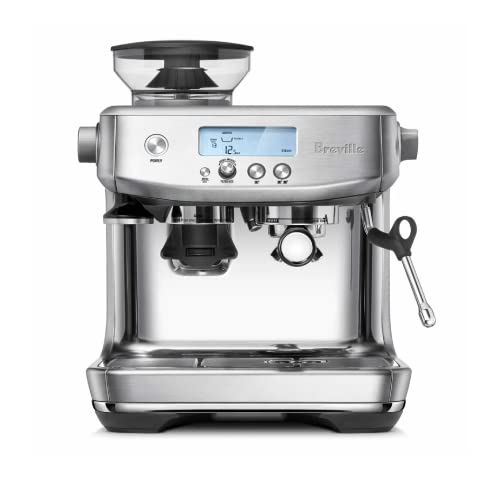
⭐ Honorable mention$849.95Live Amazon price · as of 09/21/2026 10:23 PM
Semi-Automatic · Manual milk The Breville Barista Pro is the best all-in-one espresso machine for most home buyers: 3-second heat-up, a capable built-in grinder, and reliable 54mm extractions. Its ceiling is raised further with a dedicated grinder, which is how our pairing award uses it.
Check price on Amazon → 
Espresso machineRocket Espresso
Appartamento 2.0 (heat exchanger)
$2,150.00Live Amazon price · as of 09/22/2026 1:13 AM
The compact Italian heat exchanger - one big boiler, brew and steam together, all-manual controls. Listing states a compact heat-exchanger machine with a 1.8 L heat-exchange steam boiler that brews espresso and froths milk at the same time, a group head kept hot by a small flow of water off the boiler, mechanical brew, steam and hot-water controls, a deeper drip tray and an updated control board.
Check price on Amazon → 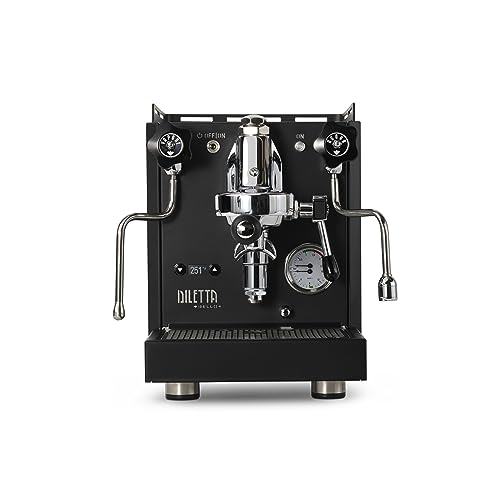
Espresso machineDiletta
Bello+ (E61, PID)
$1,899.00Live Amazon price · as of 09/22/2026 1:13 AM
An E61 machine with one boiler under PID - the heat-exchanger layout with a temperature readout. Listing states an E61 group, PID control of the steam boiler temperature, a PID screen that doubles as a shot timer, programmable passive pre-infusion up to 10 seconds, a low-power eco mode, all-manual brew and steam controls, and a stainless steel case, frame and boiler, handmade in Italy.
Check price on Amazon → 
Espresso machineBreville
Dual Boiler BES920XL
$1,599.95Live Amazon price · as of 09/21/2026 10:23 PM
The dual boiler that made the layout affordable - two boilers and a PID on each, under $1,700. Listing states dual stainless steel boilers and a heated group head regulated by PID to within about 2 F, a 58 mm portafilter for a 19-22 g dose, an over-pressure valve, low-pressure pre-infusion, and an LCD with a shot clock.
Check price on Amazon → 
Espresso machineRancilio
Silvia Pro X
$2,195.00Live Amazon price · as of 09/21/2026 10:23 PM
The Silvia grown into a dual boiler: the same 58 mm group with a second boiler and two PIDs. Listing states a 1 L steam boiler and a 300 ml brew boiler for simultaneous brewing and steaming, dedicated brew and steam PIDs adjustable to the degree, adjustable low-pressure soft pre-infusion, a front PID screen that doubles as a shot timer, and a programmable auto-on.
Check price on Amazon → 
Espresso machineDiletta
Alto (dual boiler, PID)
$2,499.00Live Amazon price · as of 09/22/2026 1:13 AM
A dual boiler with paddles, two PIDs and an adjustable pressure valve. Listing states dedicated brew and steam boilers, PID control of both temperatures to the degree, steam and hot-water paddles, a PID screen that doubles as a shot timer, a low-power eco mode, and an adjustable over-pressure valve reached through a hatch under the drip tray.
Check price on Amazon → 
Espresso machineMeraki
Dual boiler espresso machine with grinder and built-in scales
$1,999.00Live Amazon price · as of 09/22/2026 1:13 AM
A dual boiler with the grinder and the scales built in - the all-in-one at the prosumer end. Listing states independent 350 ml brew and 550 ml steam boilers for simultaneous extraction and milk texturing, PID control and a heated group head, built-in scales for dose and yield stated to within 0.2 g, a 45-setting burr grinder, a rotary pump at 9 bar with pre-infusion, and an E61-compatible 58 mm portafilter.
Check price on Amazon → 
Espresso machineAscaso
Steel DUO PID V3 (dual thermoblock)
$2,095.00Live Amazon price · as of 09/22/2026 1:13 AM
The other way to get brew and steam at once: two thermoblocks instead of two boilers. Listing states a dual-thermoblock machine with digitally displayed PID control in one-degree steps, volumetric programming for pre-infusion, single and double shots and auto-standby, a 58 mm portafilter with a walnut handle, and an aluminium and stainless steel thermoblock group described as giving continuous steam at constant pressure.
Check price on Amazon →
Frequently asked questions
What is the difference between a single boiler and a dual boiler espresso machine?
A single boiler heats one vessel to brew temperature or steam temperature, one at a time, so you wait between brewing and steaming. A dual boiler has a separate boiler for each, usually each with its own PID, so brew and steam are both ready, both stable, and can run at once.
What is a heat exchanger espresso machine?
A machine with one large boiler kept at steam temperature and a coil inside it that heats the brew water on its way to the group. You can brew and steam at the same time; the trade-off is a short cooling flush before the shot so the first water is not too hot.
Is a dual boiler worth it?
If you make milk drinks back to back, brew light roasts that want a specific temperature, or share the machine with people who will not wait, yes: it removes the wait and holds temperature to the degree. For one espresso a day, a single boiler does the same job for a third of the money.
Which dual boiler espresso machine is the cheapest?
Among the machines we hold, the Breville Dual Boiler, whose listing showed just under $1,600 on the day this page was built. The Rancilio Silvia Pro X, Diletta Alto, Lelit Bianca V3 and La Marzocco Linea Mini sit above it in that order.
Can you brew and steam at the same time on a single boiler?
No. One boiler holds one temperature, and brew and steam temperatures are far apart. Heat exchanger, dual boiler and dual thermoblock machines are the layouts that allow both at once.
What is a thermoblock or thermojet espresso machine?
A machine that heats water on demand as it passes through a heated block rather than storing it in a boiler. It is ready in seconds and takes little space; steam is lighter and slower than from a boiler. Breville's Bambino Plus and Barista Pro use a ThermoJet.
What does PID mean on an espresso machine?
A proportional-integral-derivative controller: an electronic thermostat that holds a boiler at a set temperature within about a degree instead of the several-degree swing of a mechanical thermostat. Dual boilers usually have one on each boiler; the classic single boilers get one as an upgrade.
How big are the boilers on prosumer machines?
From the makers' specifications: Rancilio Silvia 0.3 L (single); Lelit MaraX V2 1.8 L (heat exchanger); Rancilio Silvia Pro X 0.3 L brew and 1.0 L steam; Lelit Bianca V3 0.8 L brew and 1.5 L steam; La Marzocco Linea Mini 3.0 L steam. A bigger steam boiler means steam that holds up over several drinks.
Sources for this page:
Layout definitions (single boiler dual use: one chamber for brewing and steaming, one operation at a time with a warm-up between; heat exchanger: one boiler at steaming temperature with brew water passed through an exchanger and a cooling flush of 4-6 seconds; dual boiler: separate brewing chamber, stable brew temperatures and fast steaming, larger and more expensive; dual-heater machines with a thermoblock for steam: more stable brew temperature at the expense of steaming performance): Wikipedia, Espresso machine, read 2026-09-16 · Breville Dual Boiler heating system (PID-controlled espresso boiler, separate steam boiler, stainless steel boilers and heated group head under PID, simultaneous extraction and steam, 58 mm portafilter, low-pressure pre-infusion): Breville's product page for the Dual Boiler, breville.com, read 2026-09-16; corroborated by the machine's Amazon listing read the same day · Rancilio Silvia Pro X (two boilers for independent coffee and steam management; two PID controllers; soft infusion adjustable 0-6 seconds): Rancilio Group's Silvia Pro X product page, read 2026-09-16; boiler volumes (0.3 L brew, 1.0 L steam) from the specification recorded on our Advisor record, read from Rancilio's page on 2026-08-18, and the 300 ml / 1 L figures on the machine's Amazon listing read 2026-09-16 · Lelit MaraX V2 (1.8 L boiler with AISI 316L stainless heat exchanger, double-probe HX system with thermosyphon circulation, Xmode coffee or steam priority, three temperature settings, 24-minute warm-up, 22.5 by 52 by 35.5 cm, 18.5 kg): Lelit's MaraX PL62X product page, read 2026-09-16, and our Advisor record · Rancilio Silvia single 12-ounce brass boiler serving brew and steam: the machine's Amazon listing read 2026-09-16, consistent with our published evaluation (0.3 L brass, from Rancilio's page read 2026-09-01) · Lelit Bianca V3 (0.8 L brew, 1.5 L steam) and La Marzocco Linea Mini (3.0 L steam) boiler volumes: our Advisor records, read from the makers' pages on 2026-08-18 · Gaggia Classic Pro single aluminium boiler and the Breville Bambino Plus and Barista Pro ThermoJet heating: our published evaluations and the makers' listings cited there · Rocket Appartamento 2.0, Diletta Bello+, Diletta Alto, Meraki and Ascaso Steel DUO specifications: each machine's own Amazon listing (title and feature bullets), read 2026-09-16; every card links to the listing it was read from We have not lab-tested brewers; where a figure is a manufacturer's, the page names the manufacturer, and machine capabilities come from our own published review records.
Keep going