Most Ninja Luxe Café problems are one of four things. Clean the milk system and brew group after use, because the Dual Froth system and the puck are where residue builds fastest. Descale when the machine asks, using a descaling solution rather than a stronger acid. Set the water hardness to match your supply, because that setting is what decides how often the machine asks. And fit the water filter, which slows scale at the source. The portafilter is 53.3 mm, so that is the puck screen size to buy. Water underneath the machine is usually a seated-part problem rather than a failure: the drip tray, the tank or the portafilter.
Portafilter and puck screen53.3 mm (accessories sold as 54 mm generally fit)
Models coveredLuxe Café Premier ES601 and Luxe Café Pro ES701
Clean after each useMilk system and portafilter basket
DescaleWhen the machine prompts; interval depends on water hardness
Water hardnessSet it to your supply, or the prompts will be wrong
Water filterFits in the tank; slows scale before it starts
What this page is, and what it is not
This page collects the questions Ninja Luxe Café owners actually ask, and answers them from Ninja's own materials and the verified accessory listings. It covers the Luxe Café Premier (ES601) and the Luxe Café Pro (ES701), which share a portafilter size, a water filter fitting and a milk system design.
It is not a repair manual, and it does not tell you to open the machine. Anything involving the housing, the pump or the electrics is a warranty question for Ninja's support line, not a job for a guide. Where the honest answer is check your manual or contact Ninja, that is the answer given, because the alternative, a confident instruction assembled from other websites, is how people void warranties. Your model's manual is the authority over anything here.
How to clean a Ninja Luxe Café
Cleaning splits into three jobs on three schedules, and the reason people find their machine dirty is that only the first is obvious.
After every milk drink: run the milk system's own clean cycle and rinse the frothing components. Milk residue is the fastest-building deposit on any machine that automates froth, and it is the usual cause of a milk system that starts underperforming within weeks. Ninja describes the Pro's Dual Froth System Pro as easy to clean, and both models are designed to be rinsed rather than dismantled.
After every espresso: knock out the puck and rinse the basket. Coffee oils go rancid within days, which is what makes a clean-looking machine produce stale-tasting shots. Our general cleaning guide explains why washing and descaling are two different jobs that fix two different problems.
Weekly: wash the drip tray, the water tank and the portafilter and baskets in warm soapy water, and wipe the shower screen. A puck screen, covered below, cuts most of the shower-screen work.
How and how often to descale
Descale when the machine prompts you. That is the real answer, and it is better than any fixed interval, because the right frequency depends entirely on your water. Hard water can mean descaling every few weeks; soft water can stretch it to months. The machine can only prompt correctly if the water hardness setting matches your supply, which is the next section and the reason so many owners think the prompts are wrong.
Use a descaling solution, not a stronger acid and not a household substitute. The universal citric-acid descalers used across espresso machines are the right product class, and one bottle covers several machines. Do not improvise with anything harsher: descaling solutions are formulated to dissolve scale without attacking seals and metals, which is exactly the trade a stronger acid gets wrong.
Whatever you use, rinse thoroughly afterwards. The single most common descaling mistake on any machine is stopping before the rinse is finished, and the symptom is coffee that tastes wrong for a week. Run clean water through until there is no trace of solution, and wash the parts the solution passed through. Our cleaning guide sets out the full method, and our Breville descaling guide shows how much the specifics vary between makers, which is why your Ninja manual's sequence is the one to follow.
Setting the water hardness
This is the setting almost nobody changes and almost everybody should. The machine uses your stated water hardness to decide when to ask for descaling. Set it too soft and the machine under-prompts, so scale builds while you are told everything is fine. Set it too hard and it nags.
Find your water hardness first. Most municipal water suppliers publish it in an annual water quality report, and hardness test strips are sold cheaply and are the faster route. Then set the machine to match, following your model's manual for the menu path, and reset it if you move house or switch to filtered water.
Two things follow from this. If your machine seems to demand descaling constantly, check the hardness setting before assuming a fault. And if it has never asked in a year of hard-water use, check the setting too, for the opposite reason.
The water filter, and why it changes everything else
Both models take a water filter that sits in the tank, held in a filter holder. Fitting one is the single most effective thing you can do to reduce descaling frequency, because it treats the cause rather than the symptom: less mineral content going in means less scale forming on the heater and in the lines.
Replacement sets are inexpensive, and the one carded below states compatibility with the Luxe Café, the ES601 and the Pro ES701, ships five filters with a holder, and installs by removing the bottom cover, fitting the filter and placing it in the tank. Note the point one of these listings makes explicitly: a filter insert will not work without its holder, so if you buy inserts alone, make sure you already have the holder.
Filtered water also makes better coffee, since coffee is about 98% water, and it is a cheaper improvement than most equipment upgrades. Our how to make coffee guide covers why filtered beats both hard tap water and distilled.
What size puck screen fits: 53.3 mm
The Ninja Luxe Café takes a 53.3 mm puck screen, on both the ES601 and the ES701. Screens sold as 54 mm generally fit this class of machine, and the verified listing carded below states compatibility with the Ninja ES601 and Luxe Café alongside the Breville Barista Express, Barista Express Impress, Barista Touch, Bambino and Bambino Plus, which all share the same portafilter class.
A puck screen is a thin metal disc that sits on top of the coffee before the shot. The practical benefit its listing claims is a much cleaner shower screen afterwards, which is real: most of the weekly wiping described earlier goes away. Two cautions worth repeating from that listing: thickness matters, at 0.2 mm on the one carded here, and it is not recommended where the shower head has protruding screws, so look before you buy.
The same 53.3 mm figure is what to use when shopping for baskets or a bottomless portafilter. Our portafilter size chart covers how the sizes work across machines, and our portafilter explainer covers the part itself.
Why water appears under the machine
Water underneath is the question that worries owners most, and in most cases it is a seated-part problem rather than a fault. Work through the harmless explanations before assuming a failure.
The drip tray is full. These machines rinse themselves at start-up and shutdown, and that water goes to the tray. A tray emptied weekly on a machine used daily will overflow.
The tank is not seated. A tank pushed back at a slight angle can seep. Remove it and refit it squarely.
The portafilter is not locked in fully. Water escaping around the rim during a shot lands under the machine and looks like a leak from the body.
The puck is loose or the basket is overfilled. Water finds the easiest path, and an underfilled or overfilled basket sends it around the puck rather than through it.
If none of those explains it, and particularly if water appears when the machine is idle and cold, stop diagnosing and contact Ninja's support. A machine leaking at rest is a warranty conversation, and this guide will not tell you to open it.
Resetting the machine
Owners search for a reset for two different reasons, and they have different answers. If the machine is behaving oddly, unresponsive controls, a cycle that will not finish, the first step is the same as with any appliance: power it down at the outlet, wait a minute, and power it back up. That clears most transient states without touching any settings.
If instead you want to clear settings, water hardness, saved preferences, descaling counters, that is a menu function specific to your model, and the sequence is in your manual. We do not publish button sequences we have not verified against the manual for your exact model, because a wrong sequence here wastes your morning at best.
One thing worth knowing: resetting settings will reset the water hardness value too, so set it again afterwards, or the descaling prompts will be wrong from that point on.
When the coffee tastes wrong and the machine is clean
If everything above is done and the coffee is still disappointing, the problem has probably moved off the machine. Three usual causes, in order of likelihood. Stale coffee: beans more than a month past roasting, or pre-ground coffee opened weeks ago, cannot be rescued by any machine; our storage guide covers the real shelf lives. Grind size: sour and thin means grind finer, bitter and harsh means coarser, and the Pro's adaptive grind recommendations exist precisely because this is the variable people get wrong; our grinding guide explains the direction to move. Dose: weak coffee is usually under-dosed rather than under-brewed, and our ratio calculator gives the starting figures.
Both machines dose by weight and both offer grind guidance, which removes more of this guesswork than most machines do. That is worth remembering before concluding the machine is at fault.
Verified products for this page
ℹ️
Affiliate disclosure: CoffeeLabAdvisor is an Amazon Associate and may earn a commission from these links, at no extra cost to you. Commissions play no part in what appears here — every product traces to a verified catalog entry or a published review.
The four things this page refers to, each verified against its live listing. Every product fact is the listing's own statement; none is a recommendation about your specific machine's warranty or servicing.

Water filterbrikinte
Water Filter Set for Ninja Luxe Café (ES601 / ES701)
$17.99Live Amazon price · as of 10/26/2026 8:17 PM
Filtered water slows scale, which is the cause behind most of the questions on this page. Listing states 5 replacement water filters and 1 filter holder, compatibility with the Ninja Luxe Café, Ninja ES601 and Ninja Luxe Café Pro ES701, food-grade BPA-free material, and installation by removing the bottom cover, fitting the filter and placing it in the water tank.
Check price on Amazon → 
Puck screenWollibao
Espresso Puck Screen, 53.3 mm, 3-pack
$9.98Live Amazon price · as of 10/26/2026 8:09 PM
The answer to the size question: 53.3 mm, which is what a 54 mm-class portafilter actually takes. Listing states a 0.2 mm thick 316 stainless steel puck screen measuring 53.3 mm, supplied in a 3-pack, and lists compatibility with the Ninja ES601 and Ninja Luxe Café as well as the Breville Barista Express, Barista Express Impress, Barista Touch, Bambino and Bambino Plus, and most 54 mm portafilter machines. It notes it is not recommended where the shower head has protruding screws.
Check price on Amazon → 
DescalerIMPRESA
Coffee Machine Descaler, 2-pack
$13.49Live Amazon price · as of 10/26/2026 8:27 PM
The liquid option: pre-measured per session, for owners who would rather pour than weigh. Listing states a universal descaling solution, two 8 oz bottles for four sessions at 4 oz each, with a recommended cleaning every 3 to 4 months, compatible with drip, pod, espresso and super-automatic machines and kettles.
Check price on Amazon → 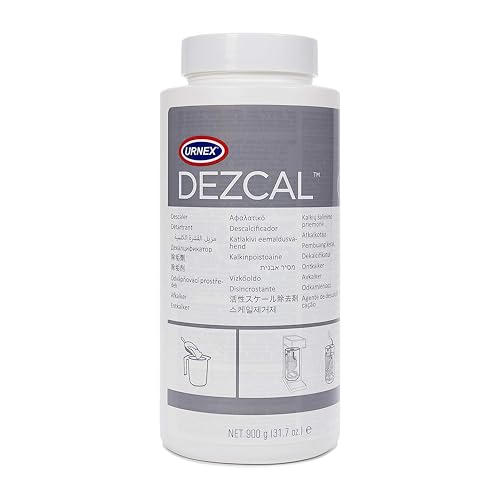
DescalerUrnex
Dezcal Descaler, 900 g
$29.98Live Amazon price · as of 10/26/2026 8:59 PM
The descaler Moccamaster names in its own descaling guide; a bottle covers many cycles. Listing states a universally compatible descaling powder for drip coffee makers, espresso machines, super-automatics and kettles, dosed at 1 oz of powder per 32 oz of reservoir capacity.
Check price on Amazon →
Frequently asked questions
How do you descale a Ninja Luxe Cafe?
Descale when the machine prompts, using a descaling solution rather than a stronger acid or a household substitute, then rinse thoroughly with clean water until no trace of solution remains. Follow your model's manual for the exact cycle. The prompt interval depends on your water hardness setting, so set that correctly first.
How often should I descale a Ninja Luxe Cafe?
When the machine asks, which depends entirely on your water. Hard water can mean every few weeks and soft water can stretch to months. A fixed interval is the wrong way to think about it. If the prompts seem too frequent or suspiciously rare, check the water hardness setting before assuming a fault.
What size puck screen fits the Ninja Luxe Cafe?
53.3 mm, on both the ES601 Premier and the ES701 Pro. Screens sold as 54 mm generally fit this class of machine. Check that your shower head has no protruding screws, which one verified listing warns can damage a screen.
How do I change the water hardness on a Ninja Luxe Cafe?
It is a settings menu function, and the menu path is in your model's manual. Find your actual water hardness first, either from your water supplier's annual quality report or with a test strip, then set the machine to match. This setting decides when the machine asks to be descaled, so a wrong value makes every prompt wrong.
Why is my Ninja Luxe Cafe leaking water?
Usually a seated part rather than a fault. Check whether the drip tray is full, since the machine rinses itself at start-up and shutdown; whether the water tank is seated squarely; whether the portafilter is locked in fully; and whether the basket is over or underfilled. If water appears when the machine is idle and cold, contact Ninja support rather than opening it.
How do I reset a Ninja Luxe Cafe?
For odd behaviour, power the machine off at the outlet, wait a minute and power it back on, which clears most transient states. To clear saved settings, use the menu function in your model's manual. Note that resetting settings clears the water hardness value, so set that again afterwards.
Do I need a water filter in a Ninja Luxe Cafe?
You do not need one, but it is the most effective way to reduce how often you descale, because it treats the cause rather than the symptom. Filters sit in the water tank in a holder, and filter inserts will not work without that holder. Filtered water also makes better coffee, since coffee is about 98% water.
Why does my Ninja Luxe Cafe coffee taste bad even though it is clean?
The cause has probably moved off the machine. Stale beans are the most common, followed by grind size, sour and thin means grind finer while bitter means coarser, and then dose, since weak coffee is usually under-dosed. Both models dose by weight and offer grind guidance, which removes more of this guesswork than most machines.
Sources for this page:
Machine features referred to here (Dual Froth and Dual Froth Pro milk systems, weight-based dosing, grind-size recommendations, 25-setting grinder): Ninja's own copy on the verified listings B0D45PK5V4 (ES601) and B0F5JFTR1Q (ES701) from its Amazon listing, read 2026-09-08 · Portafilter and puck screen diameter of 53.3 mm, and the protruding-screw caution: the verified puck screen listing B0D4L8ZP35, which states compatibility with the Ninja ES601 and Luxe Café and with Breville's 54 mm-class machines, read 2026-09-08 · Water filter fitting, contents and the holder requirement: the verified listings B0FKBJGTTJ and B0DZX856NZ for the ES601 and ES701, read 2026-09-08 · General descaling method and the rinse rule: our how to clean a coffee maker guide and the manufacturer sources cited there · Model-specific menu paths and cycle sequences are deliberately NOT published here: they are in each model's own manual, and we do not publish button sequences we have not verified against the manual for that exact model We have not lab-tested brewers; where a figure is a manufacturer's, the page names the manufacturer, and machine capabilities come from our own published review records.
Keep going