How to Make Coffee Without a Coffee Maker: Four Methods That Work With Kitchen Things
Four ways to brew with no brewer: a saucepan and a strainer, a mug and patience, instant coffee, or an overnight jar. Ratios, temperatures and grind sizes.
8 facts, each with a source below7 questions answered4 verified products
You need three things and none of them is a coffee maker: ground coffee, hot water off the boil, and some way to separate the two afterwards. The fastest good result is the saucepan method — stir coarse-ground coffee into hot water, let it steep about four minutes, then pour it through a fine mesh strainer. With no strainer at all, brew in the mug and let the grounds settle to the bottom instead. With no grinder, instant coffee genuinely is the right answer, at about 1 teaspoon per 6 oz. And if you have hours rather than minutes, a jar in the fridge overnight makes better coffee than any of them.
What you actually needCoffee, hot water, and a way to separate them
RatioAbout 1:15 to 1:18 by weight — 2 tbsp per 6 oz works
WaterOff the boil, around 200°F — not boiling
GrindCoarse, like rock salt, for anything you steep
SteepAbout 4 minutes, then separate immediately
No strainerLet the grounds settle; drink from above them
No grinderInstant coffee, 1 tsp per 6 oz
Best resultOvernight in the fridge, strained in the morning
All four methods are immersion brewing: coffee sits in water, then the two are separated. Only the separation changes, which is why grind size matters more here than equipment.
A stovetop moka pot needs no electricity and no filters - the cheapest permanent fix on this page. Photo: Eric BARBEAU / UnsplashThe finish line either way: brewed coffee, separated from its grounds. Photo: Nathan Dumlao / Unsplash
The one idea that makes all of this work
A coffee maker does three jobs: it heats water, it brings water and coffee together for a while, and it separates them at the end. You can do the first with anything that boils water and the second with any container. It is only the third that people get stuck on, and the third is the one with the most substitutes.
That reframing matters because it tells you which variable to control. Every method on this page is immersion brewing — coffee sitting in water, like a French press — rather than percolation, where water passes through a bed of coffee, like a drip machine or a pour-over. Immersion is far more forgiving of imprecise pouring and imprecise timing, which is exactly what you have right now. What it is not forgiving of is a fine grind, because fine grounds pass through improvised filters and keep extracting after you have finished separating. Our brewing methods guide sets out that distinction properly.
So: grind coarse if you have the choice, get the water hot but not boiling, and decide before you start how you plan to separate the two.
Method 1: a saucepan and a strainer, about 5 minutes
The best of these methods, and close enough to a French press that the difference is hard to name in the cup.
Heat water in a saucepan or kettle and take it off the heat. Aim for around 200 °F, which in practice means letting a boil stand for roughly thirty seconds — boiling water extracts harshly.
Stir in coarse-ground coffee. Roughly two tablespoons per 6 oz of water, or about 1:16 by weight if you have a scale.
Let it steep about four minutes. Stir once at the start and then leave it, because agitation late in the steep pulls out the bitter end of the extraction.
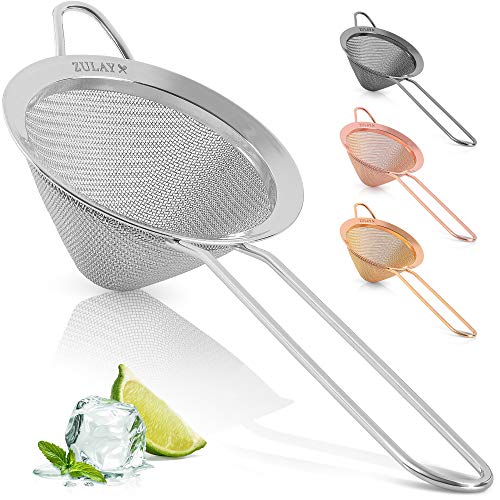
Pour through a fine mesh strainer into your mug. Pour steadily and stop before the last of the sludge tips in.
A strainer alone leaves some fine sediment, which is the same trade a French press makes and is not a fault. If you want it cleaner, line the strainer with a paper coffee filter if you happen to have one. We are not going to recommend improvising a filter from a paper towel or a fabric cloth, which is common advice elsewhere: those are not made for food contact at brewing temperature and we have no basis for telling you a particular one is safe. A $10 mesh strainer is a better answer.
StrainerZulay Kitchen 304 Stainless Fine Mesh Strainer, 3.35 in
A $10 drawer item that turns any saucepan into a filter brewer - the cheapest thing on this page that actually solves the problem.
This is the method for when you have neither strainer nor filter, and it works better than it sounds. It is essentially how Turkish and Greek coffee are drunk — the grounds are simply part of the arrangement rather than a problem.
Put coarse-ground coffee straight into the mug. Slightly less than you would otherwise use, because it will keep extracting the entire time you drink it.
Add water off the boil, stir once, and cover the mug with a saucer to hold the heat.
Wait four to five minutes, then wait one more. The extra minute is not for extraction, it is for the grounds to sink.
Drink from the top and stop before the bottom. Do not stir it again.
Two things make this work or fail. Coarse grind is not optional here: fine grounds stay suspended and you drink them. And you must accept leaving the last centimetre behind, which is the price of having no filter. If you find yourself doing this more than once, our Turkish coffee guide covers a tradition built around this method deliberately, with the grind and the vessel that suit it.
Method 3: instant coffee, about 30 seconds
There is a snobbery about instant that is worth setting down for a moment, because when you have no grinder and no brewer it is not a compromise — it is the method that was designed for exactly this situation. The National Coffee Association's own summary of it is blunt: “all you need is a cup of hot water. No coffee maker, filter, or grinder needed!”
The proportion is smaller than people expect, and most bad instant coffee is simply over-dosed. The NCA gives 1 teaspoon of granules per 6 ounces of hot water, and says the ideal water temperature is slightly below boiling, around 80 °C. Nescafé's own directions for their Clásico jar say the same thing: one teaspoon to six fluid ounces.
Instant coffee is brewed coffee that has had its water removed, which the NCA describes as either freezing it at −40 °C to form granules, or spraying it into very hot air to make a powder. Freeze-dried granules generally taste closer to brewed coffee than spray-dried powder, and cost a little more. That difference also matters if you are making whipped coffee, which only works with instant.
Instant coffeeMount Hagen Organic Freeze-Dried Instant Coffee, 3.53 oz
Freeze-dried, which is the process that makes whipping possible - and the listing names whipped coffee itself.
Method 4: a jar overnight, and the best cup of the four
If the constraint is equipment rather than time, this beats everything above. Cold brewing needs no heat, no filter paper and no precision — only patience and a container.
Put coarse-ground coffee and cold water in a jar, at roughly 1:8 by weight. That is deliberately much stronger than the ratios above, because you are making a concentrate to dilute later.
Stir, lid it, and leave it in the fridge for 12 to 18 hours.
Strain it through a mesh strainer, twice if the first pass leaves sediment.
Dilute to taste with water or milk, usually somewhere around one part concentrate to two parts water.
The concentrate keeps in the fridge for several days, so one jar solves the problem for a week rather than a morning. Cold brew is also lower in the compounds that make hot-brewed coffee taste sharp, which is why it reads as smoother even at the same strength. Our cold brew comparison covers what actually differs, and our cold brew maker guide covers the dedicated vessels if the jar version wins you over.
Which one to use, in one table
Method
Time
You need
What you give up
Saucepan and strainer
~5 min
A pan, a mesh strainer
A little sediment in the cup
Mug, settled
~6 min
A mug and a saucer
The last of the cup, and no fine grind
Instant
~30 sec
A jar of instant, hot water
The character of fresh-ground coffee
Jar overnight
12-18 hr
A jar, fridge space, a strainer
All of tonight, none of tomorrow
Two practical notes that apply to all of them. Grind matters more than any other variable here, so if you are buying coffee specifically for this, buy it coarse-ground rather than fine — our grind size chart shows the bands. And if you have no grinder at all and want to keep grinding fresh, a hand grinder costs less than most kettles; our hand grinder guide covers the ones we have evaluated.
If this is not a one-off
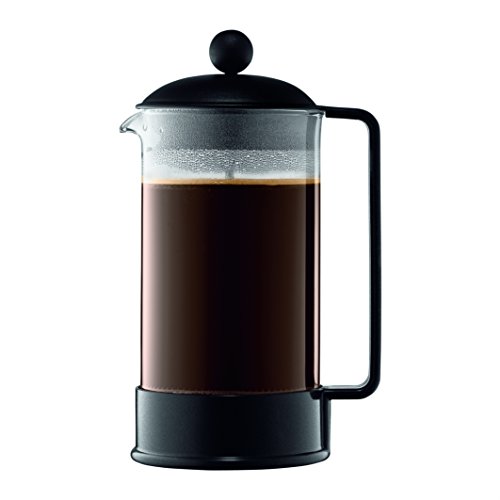
There is a difference between a hotel room, a power cut, and having genuinely never owned a brewer. If it is the last one, the cheapest real fix is a French press, which is the saucepan-and-strainer method with the strainer built in, or a stovetop moka pot, which needs no electricity and makes something much closer to espresso. Both cost less than a fortnight of takeaway coffee.
Our moka pot guide and French press ratio guide cover both properly, with the makers' own instructions. For a camping trip or a hotel, instant plus a kettle remains unbeatable on weight and cleanup, and nothing on this page is a reason to feel bad about it.
Verified products for this page
ℹ️
Affiliate disclosure: CoffeeLabAdvisor is an Amazon Associate and may earn a commission from these links, at no extra cost to you. Commissions play no part in what appears here — every product traces to a verified catalog entry or a published review.
The things that actually fix this if it happens twice: instant coffee for the no-equipment case, and the two cheapest brewers that build in the separation step these methods improvise.
Instant coffee
Nescafé
Clásico Dark Roast Instant Coffee, 10.5 oz
$13.46Live Amazon price · as of 10/27/2026 1:14 AM
The supermarket default, and its own directions match the 1 teaspoon per 6 oz the National Coffee Association publishes. Listing states a dark roast instant coffee, prepared with 1 teaspoon to 6 fluid ounces of hot water, making up to 150 cups from the 10.5 oz jar.
Freeze-dried, which is the process that makes whipping possible - and the listing names whipped coffee itself. Listing states organic freeze-dried instant coffee from 100% Fair Trade arabica beans from Papua New Guinea, dissolving in hot or cold water for iced coffee and whipped coffee, about 50 cups per jar.
The $20 workhorse - same brewing as presses at three times the price. Listing states the Bodum 34 oz Brazil French press in high-heat borosilicate glass, made in Portugal.
$39.99Live Amazon price · as of 10/26/2026 10:29 PM
The reference moka pot at the one-to-two-person size. Listing states the original stovetop espresso maker, invented by Alfonso Bialetti in 1933, aluminium, 3 cups (4.3 oz / 130 ml), made in Italy, with the patented safety valve.
Can you make coffee with just hot water and ground coffee?
Yes. Stir the ground coffee into hot water, wait about four minutes, then separate the two — through a fine mesh strainer if you have one, or by letting the grounds settle and drinking from above them. That is immersion brewing, the same principle a French press uses.
How much coffee per cup without a coffee maker?
About two tablespoons of ground coffee per 6 ounces of water, or roughly 1:16 by weight. The National Coffee Association's general guidance for brewed coffee is 1 to 2 tablespoons per 6 ounces. For instant coffee it is much less: about 1 teaspoon per 6 ounces.
Should the water be boiling?
No. Take it off the boil and let it stand about thirty seconds, which lands you near 200 °F. Boiling water pulls harsher compounds out of the grounds, and it is one of the few mistakes that will spoil an otherwise well-made cup.
What grind do I need if I have no filter?
Coarse, like rock salt. Fine grounds stay suspended in the water and pass through improvised strainers, so you end up drinking them. Coarse grounds sink, which is what makes the settle-in-the-mug method work at all.
Can I use a paper towel or a cloth as a coffee filter?
We are not going to recommend it. Those materials are not made for food contact at brewing temperature and we have no basis for telling you a specific one is safe to brew through. A fine mesh strainer costs about $10 and solves it properly, and a paper coffee filter is fine if you happen to have one.
Is instant coffee a legitimate answer?
For this problem, yes. It was designed for it. The National Coffee Association describes instant as needing nothing but a cup of hot water, with no coffee maker, filter or grinder. Use about a teaspoon per 6 ounces — most disappointing instant coffee is simply over-dosed.
What is the best-tasting method without equipment?
The overnight jar, if you have the time. Cold brewing needs no heat and no filter paper, produces a concentrate that keeps for days in the fridge, and is far more forgiving of imprecision than any hot method. The cost is that it takes 12 to 18 hours.
Sources for this page:
General brewed-coffee ratio guidance (1 to 2 tablespoons of ground coffee per 6 ounces of water, the 'Golden Ratio'), and the medium and coarse grind descriptions: the National Coffee Association's own brewing pages at aboutcoffee.org, read 2026-09-09 · Instant coffee preparation and manufacture (1 teaspoon per 6 ounces, water slightly below boiling at around 80 °C, freeze-drying at −40 °C to granules versus spray-drying to a powder, and the statement that it needs no coffee maker, filter or grinder): the National Coffee Association's instant coffee page, read 2026-09-09 · Corroboration of the 1 teaspoon per 6 fluid ounces instant dose: Nescafé's own directions on the verified Clásico listing B00CJ8IUQ2, read on Amazon 2026-09-09 · Ratios, temperatures, steep times and grind bands for the immersion methods this page improvises, and the immersion-versus-percolation distinction: the figures published on our own French press, moka pot, cold brew and brewing methods guides, each sourced there from a maker's instructions or a benchmark roaster's recipe · Not claimed here, deliberately: that any improvised household material is safe to filter hot coffee through We have not lab-tested brewers; where a figure is a manufacturer's, the page names the manufacturer, and machine capabilities come from our own published review records.