Two things build up inside an espresso machine and they need two different products. Coffee oil and grounds collect in the group head, the shower screen, the valve and the baskets, turn rancid within days, and make every shot taste bitter and flat; an espresso machine cleaner - Cafiza, Puro Caff, Puly Caff, or the maker's own tablets - is an alkaline detergent that dissolves them. Limescale forms from the minerals in water on the heating element and inside the boiler; a descaler is an acid that dissolves that, and no cleaner will. For a machine with a three-way valve - most prosumer and E61 machines - the cleaner is used in a backflush with a blind basket. For a Breville, the instruction book prescribes a cleaning cycle with a cleaning disc and tablet instead. The grinder needs its own tablets, and a steam wand needs a milk-protein cleaner. Buy the cleaner your manual names, then a descaler, then the grinder tablets.
CleanerAlkaline; dissolves coffee oil and grounds
DescalerAcid; dissolves limescale from water minerals
BackflushBlind basket plus cleaner, on machines with a three-way valve
BrevilleCleaning cycle with disc and tablet, per the instruction books
Cafiza backflush doseUp to half a teaspoon (3 g), per Urnex
Soak6 g per litre of hot water, 30 minutes, per Urnex
GrinderTablets through the burrs, then purge with beans
MilkAlkaline milk cleaner for the wand and pitcher
Cleaner versus descaler: two problems, two chemistries
The confusion that sends people to the wrong bottle is that both products are sold as coffee machine cleaner. They do opposite jobs. Every shot leaves coffee oil on the shower screen, in the group head, on the gasket and inside the three-way valve that vents the puck after the shot; oils oxidise and go rancid within days, and old grounds packed in the screen block holes and skew the extraction. An espresso machine cleaner is an alkaline detergent built to dissolve those oils - Urnex describes Cafiza as eliminating coffee residue and oils from group heads, valves and lines and keeping screens and filters clear for even extraction, and the Puro Caff and Puly Caff listings say the same in their own words. It does nothing to scale. Scale is calcium and magnesium carbonate left behind when water is heated, and it coats the element and the inside of the boiler until the machine heats slowly, drips from the group, or stops; a descaler is an acid that dissolves it, and Urnex's Dezcal listing describes exactly that, with a dose of 1 oz of powder per 32 oz of reservoir. It does nothing to coffee oil. Urnex even sells its milk cleaner in an alkaline formula and an acid formula for different automatic milk systems, which is the clearest illustration that the two chemistries are not interchangeable.
So a machine needs both, on different schedules. Coffee oil is a matter of shots: cafes backflush daily, and a home machine pulling two or three shots a day is cleaned weekly. Scale is a matter of water: hard water needs descaling every month or two, filtered or soft water every few months, and a machine on a good filter may need it rarely. The three descaling guides on this site - for Breville, Nespresso and Keurig machines - cover that side. This page is about the other one.
Backflushing with a blind basket: which machines, and how
Backflushing is the cafe method and it depends on one part: a three-way solenoid valve that opens to the drip tray when the pump stops, which is what releases pressure from the puck. Put a blind basket - a basket with no holes, also sold as a backflush insert or disc - in the portafilter, add the cleaner, lock it in and run the pump for a few seconds. With nowhere to go, the water and detergent are forced back up through the shower screen and the valve, and when the pump stops the valve dumps the dirty solution into the tray. Urnex's instructions for Cafiza powder: insert the blind filter, add up to half a teaspoon (3 g) of powder, and run the cycle; then repeat with clean water until it runs clear. Tablets do the same job in a pre-measured form - Cafiza tablets, or the small 1.5 g Cafetto Tevo Mini tablets whose listing names Breville, Sage, Gaggia, Rancilio, Rocket, ECM, Profitec and Lelit as compatible machines. The Puro Caff listing calls the daily backflush integral to traditional espresso machines, and that is the class this method belongs to: E61 and prosumer machines with a solenoid valve, which includes every heat exchanger and dual boiler on our boiler types guide.
Two cautions. If your manual has no backflush procedure, do not backflush; a machine without a three-way valve has nowhere to send the pressure. And backflush with detergent only as often as the manual says - many makers specify water-only backflushes daily and detergent weekly - because the alkaline solution that strips coffee oil also strips the lubricant from the group's moving parts if overused. The same powders double as a soak: Urnex's dose is 6 g per litre of hot water, parts in for 30 minutes, then rinse. Soak the portafilter, baskets, shower screen and the drip tray grate; the brush on this page reaches the gasket groove and the screen in place, and its handle has a scoop for the powder. Cafiza powder and tablets are NSF certified and OMRI listed per their listings.
Breville and other machines with a cleaning cycle
Breville's home machines do not backflush in the cafe sense; their instruction books, quoted on our Breville descaling guide, prescribe a cleaning cycle: a rubber cleaning disc goes into the single-cup basket, a cleaning tablet goes on the disc, the portafilter locks in and the machine runs its own programmed cycle when the CLEAN alert shows. The machine still has a valve that vents to the tray, which is why the cycle works, but the dose, the timing and the alert are the machine's own, and the tablet is sized for them. Breville's BEC250 tablets state on their listing that they remove coffee oils and residues from the shower screen and filter baskets, suit all Breville espresso machines and are non-corrosive. The Cafetto Tevo Mini tablet, at 1.5 g, is the third-party alternative that names Breville and Sage among its compatible machines, and it also fits a blind basket on a traditional machine, so it is the one tablet that serves both kinds of household. Machines without any cycle or valve - most entry thermoblock machines - are cleaned by soaking the removable parts in the same powders and wiping the group with the brush.
Drip machines and pod brewers have their own product. Urnex's Cleancaf is run through like a pot of coffee and its listing states it removes residual coffee oils and buildup and gently removes lime scale in automatic coffee makers, which makes it the one product on this page that touches both problems, at the gentle end of each; our coffee maker cleaning guide covers the full routine for drip machines.
Grinder tablets and milk-system cleaner
The grinder collects the same oils, plus fine grounds packed into the burr chamber, and a dirty grinder drifts finer and tastes stale. Grinder cleaning tablets are the fix that needs no disassembly: Urnex's Grindz are made from plant-based ingredients, and Urnex's instructions are to use one jar cap (35 to 40 g) for an espresso grinder, run it through at a medium setting, then repeat with coffee beans to purge the residue. The listing and Urnex's page both carry the one hard rule: do not use Grindz in the integrated grinder of a super-automatic machine; Urnex makes SuperGrindz for those. The Full Circle grinder tablets in three single-use packets are the way to try the method, and both listings note the tablets also prevent flavour transfer when switching between regular, decaf and flavoured beans. Brush the burrs and the chute when you clean, and for hand grinders, which take tablets less well, a brush and a dry cloth do most of the work; the makers' own guidance for each grinder is linked from our espresso grind size guide.
Milk is the third residue and the one that turns fastest. A steam wand that is not purged and wiped after every use bakes milk protein onto the tip and inside the wand, and an automatic frother grows it in the tubing. Urnex's Rinza in the alkaline formula, per its listing, breaks down milk protein buildup, cleans traditional steam wands and steel pitchers, cycles through automatic frothers, and measures itself from a dual-chamber bottle for over 30 uses; soak the wand tip in the solution, run the frother's cycle with it, and rinse. Our milk frothing guide covers the purge-and-wipe habit that makes the deep clean rare.
Which cleaner, by machine
E61, heat exchanger or dual boiler with a three-way valve: Cafiza powder (or Puro Caff or Puly Caff), a blind basket, the group brush, and weekly detergent backflushes with daily water ones - plus a descaler on your water's schedule. A Breville: BEC250 tablets or the Cafetto Tevo Mini for the cleaning cycle, Breville's descaler for the descale alert, and the powder for soaking baskets. An entry machine with no cycle: soak the removable parts in Cafiza or Puly Caff, brush the group, descale on schedule. Any grinder that is not inside a super-automatic: Grindz or the Full Circle packets, then a purge with beans. A super-automatic: the maker's own tablets and its own descaler, and SuperGrindz rather than Grindz for the grinder. Milk drinks: Rinza for the wand, the pitcher and the auto-frother. A drip machine or pod brewer: Cleancaf through the brew cycle, or the routine on our coffee maker cleaning guide. The accessories that make the routine painless - knock box, tamping mat, cloths - are on the espresso machine accessories guide.
Verified products for this page
ℹ️
Affiliate disclosure: CoffeeLabAdvisor is an Amazon Associate and may earn a commission from these links, at no extra cost to you. Commissions play no part in what appears here — every product traces to a verified catalog entry or a published review.
Fourteen verified listings in the order you would use them: four backflush and soak cleaners, two tablets, the blind basket and the group brush, two grinder cleaners, the milk cleaner, the drip-machine cleaner, and two descalers as the cross-reference. Each claim is the listing's own statement, read on the date shown on the card; live prices come from Amazon rather than being retyped here.

Cleaning powderUrnex
Cafiza espresso machine cleaning powder, 566 g
$19.99Live Amazon price · as of 09/22/2026 12:56 AM
The cafe-standard backflush powder in the tub that lasts a home machine years. Listing states a powder that eliminates coffee residue and oils from group heads, valves and lines, formulated for heavily soiled equipment, recommended as part of a daily backflush regimen, easy to dose, OMRI listed and NSF certified.
Check price on Amazon → 
Cleaning tabletsUrnex
Cafiza Espresso Machine Cleaning Tablets, 100
$17.99Live Amazon price · as of 09/22/2026 2:01 AM
For the other job on an espresso machine - the backflush - not for descaling. Listing states professional espresso machine cleaning tablets that remove coffee residue and oils from group heads, valves and lines, recommended as part of a daily backflush regimen, OMRI listed and NSF certified.
Check price on Amazon → 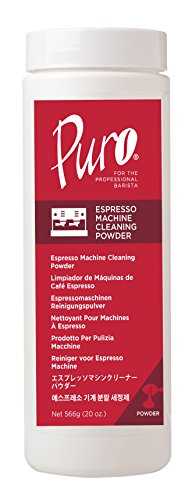
Cleaning powderPuro Caff
Espresso machine cleaning powder, 20 oz
$16.00Live Amazon price · as of 09/22/2026 2:01 AM
The other professional backflush powder - the one Espresso Parts sells under its own name. Listing states a powder that eliminates residue and buildup in group heads and keeps screens and filters clear for even extraction, integral to the daily backflush regimen on traditional espresso machines and suited to soaking machine parts, also available as tablets.
Check price on Amazon → 
Cleaning powderPuly Caff
Puly Caff Plus cleaning powder, 900 g
$20.99Live Amazon price · as of 09/22/2026 2:01 AM
The Italian backflush and soak powder - the brand many Italian machine manuals name. Listing states a 900 g (32 oz) coffee-machine cleaning powder described as ideal for cleaning filters and filter holders.
Check price on Amazon → 
Cleaning tabletsCafetto
Tevo Mini 1.5 g cleaning tablets, 100 count
$21.90Live Amazon price · as of 09/22/2026 2:01 AM
Small tablets that fit a blind basket or a Breville cleaning disc - one tablet, one clean. Listing states 100 non-corrosive 1.5 g tablets designed and made for manual and semi-automatic espresso machines, compatible with Breville, Sage, Gaggia, Rancilio, Rocket, ECM, Profitec and Lelit, safe on aluminium, brass and stainless steel, made in Australia.
Check price on Amazon → 
Cleaning tabletsBreville
Breville Espresso Cleaning Tablets, 8 pack (BEC250)
$11.98Live Amazon price · as of 09/21/2026 10:23 PM
For the flashing CLEAN light and the FLUSH alert - the backflush cycle, which is not descaling. Listing states official Breville tablets that remove coffee oils and residue from the shower screen and filter baskets, suitable for all Breville espresso machines, with a non-corrosive formulation.
Check price on Amazon → 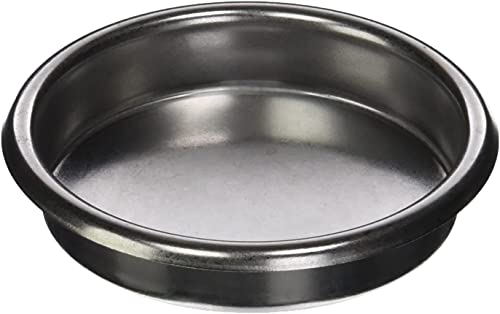
Cleaning accessoryEspresso Supply
58 mm backflush insert (blind basket)
$4.00Live Amazon price · as of 09/22/2026 2:01 AM
The blank basket that makes a backflush possible - a few dollars, lasts forever. Listing states a metal 58 mm backflush insert that is placed into the portafilter to backflush the machine.
Check price on Amazon → 
Cleaning accessorywatchget
58 mm group head cleaning brush with scoop
$15.99Live Amazon price · as of 09/22/2026 2:01 AM
The brush for the gasket groove and the screen, with the powder scoop on the handle. Listing states a 26 cm brush for 58 mm group heads with a soft inner nylon head for the shower screen, an outer 360-degree ring brush for the gasket, a water deflector to keep hands dry, and a scoop on the other end for cleaning powder.
Check price on Amazon → 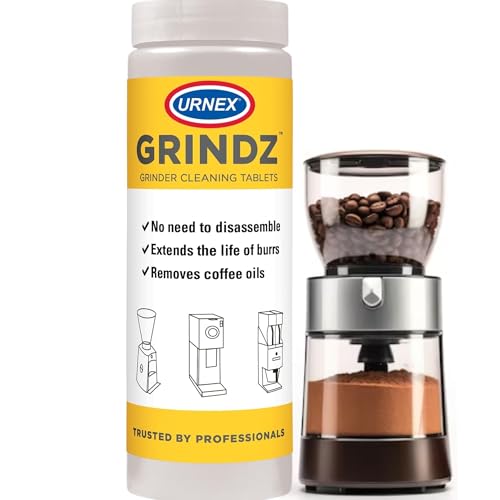
Cleaning tabletsUrnex
Grindz Grinder Cleaning Tablets, 430 g
$19.99Live Amazon price · as of 09/21/2026 10:48 PM
Grinders need cleaning too, and nothing else does this job. Listing states professional coffee grinder cleaning tablets in a 430 gram container.
Check price on Amazon → 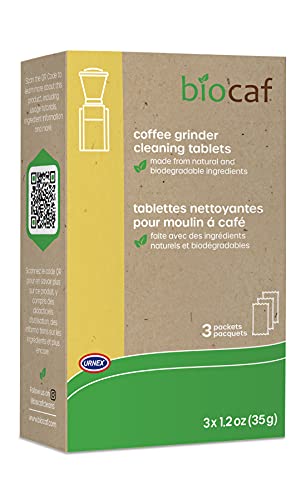
Cleaning tabletsUrnex
Full Circle grinder cleaning tablets, 3 single-use packets
$12.95Live Amazon price · as of 09/22/2026 2:01 AM
Three pre-measured grinder cleans - the way to try grinder tablets before buying the jar. Listing states three single-use packets of a patented tablet that absorbs and loosens coffee grounds lodged in a grinder, cleaning without disassembling burrs or casings, and preventing flavour transfer between regular, decaf and flavoured beans.
Check price on Amazon → 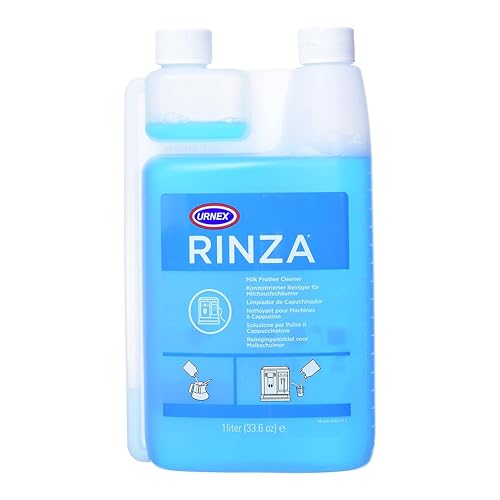
Cleaning powderUrnex
Rinza milk frother cleaner, alkaline formula, 33.6 oz
$15.00Live Amazon price · as of 09/22/2026 2:01 AM
The milk cleaner: for the wand, the pitcher and the auto-frother. Listing states a milk-system cleaner that breaks down milk protein buildup, cleans traditional steam wands and steel pitchers, cycles through automatic frothers, and comes in a dual-chamber bottle with a built-in measure for over 30 uses.
Check price on Amazon → 
Cleaning powderUrnex
Cleancaf coffee maker cleaner, 3 packets
$8.99Live Amazon price · as of 09/22/2026 2:01 AM
For the drip machine and the pod brewer - run it through like a pot of coffee. Listing states three single-use treatments that remove residual coffee oils and buildup and gently remove lime scale in automatic coffee makers and espresso machines, odorless and non-toxic, made in the USA, used like brewing a pot of coffee.
Check price on Amazon → 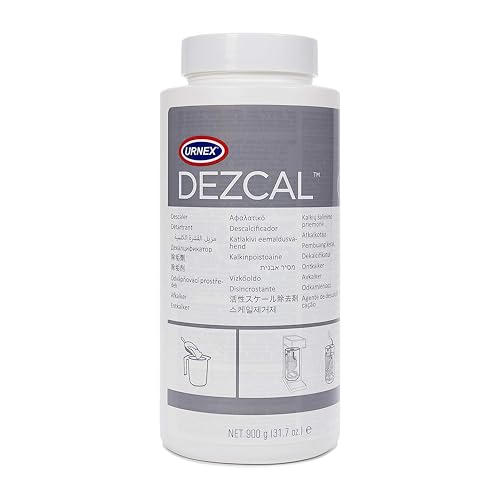
DescalerUrnex
Dezcal Descaler, 900 g
$29.98Live Amazon price · as of 09/22/2026 2:01 AM
The descaler Moccamaster names in its own descaling guide; a bottle covers many cycles. Listing states a universally compatible descaling powder for drip coffee makers, espresso machines, super-automatics and kettles, dosed at 1 oz of powder per 32 oz of reservoir capacity.
Check price on Amazon → 
DescalerUrnex
Full Circle Descaling Powder, 2 packets
$13.10Live Amazon price · as of 09/22/2026 2:01 AM
The single-use, low-waste format: one packet, one descale. Listing states a plant- and mineral-based, biodegradable, phosphate-free descaling powder for coffee and espresso machines and kettles, in two single-use packets.
Check price on Amazon →
Frequently asked questions
What is the difference between an espresso machine cleaner and a descaler?
A cleaner is an alkaline detergent that dissolves coffee oil and grounds from the group head, screen, valve and baskets. A descaler is an acid that dissolves limescale left by water minerals on the heating element and boiler. Each does nothing for the other problem, so a machine needs both.
What is the best espresso machine cleaner?
For a machine with a three-way valve, Urnex Cafiza is the cafe standard: NSF certified, used at up to half a teaspoon (3 g) per backflush or 6 g per litre as a soak, per Urnex. Puro Caff and Puly Caff do the same job. For a Breville, the tablets its instruction book names - BEC250, or the compatible Cafetto Tevo Mini.
Can I backflush a Breville espresso machine?
Not in the cafe sense. Breville's instruction books prescribe a cleaning cycle: a cleaning disc and tablet in the single-cup basket, run when the CLEAN alert shows. Use the powders for soaking baskets and the screen; use the tablets for the cycle.
How often should I clean an espresso machine?
Coffee oil by shots, scale by water. A home machine pulling a few shots a day: a water backflush daily on machines that allow it and a detergent backflush or cleaning cycle weekly; soak the baskets and screen weekly; descale every month or two on hard water, less on filtered water.
Is Cafiza safe for home espresso machines?
Yes - the Cafiza listing states it suits home equipment as well as professional machines, and it is NSF certified and OMRI listed. Use it only on machines whose manual describes backflushing, and only at the manual's frequency, because an alkaline detergent also strips group lubricant if overused.
How do I clean a coffee grinder without taking it apart?
Grinder cleaning tablets. Urnex's instruction for Grindz is one jar cap (35-40 g) for an espresso grinder, run through at a medium setting, then a purge with coffee beans. Do not use them in the grinder of a super-automatic machine; Urnex makes SuperGrindz for those.
What cleans a steam wand?
A milk-protein cleaner such as Urnex Rinza in the alkaline formula: its listing states it breaks down milk protein buildup and cleans traditional steam wands, steel pitchers and automatic frothers. Purging and wiping the wand after every use is what keeps that deep clean rare.
Can I use vinegar or dish soap instead?
Vinegar is a weak descaler with a lingering smell and does nothing to coffee oil; the Dezcal listing describes its descaler as more effective and faster than vinegar. Dish soap leaves a film and a taste in the group. The purpose-made cleaner costs a few cents a use and is what the makers' manuals name.
Sources for this page:
Cafiza purpose (eliminates coffee residue and oils from groupheads, valves and lines; keeps screens and filters clear), backflush dose (blind filter, up to half a teaspoon / 3 g), soak (6 g per litre of hot water, 30 minutes, rinse), NSF and Kosher statements: Urnex's Cafiza product page, urnex.com, read 2026-09-16; NSF and OMRI statements corroborated by the Cafiza powder and tablet listings read the same day · Grindz composition (plant-based, no phosphates), dose (one jar cap, 35-40 g, for espresso grinders; two for shop grinders), method (medium setting, then repeat with beans) and the super-automatic warning: Urnex's Grindz product page, read 2026-09-16; corroborated by the Grindz listing · Breville cleaning cycle (cleaning disc and tablet in the single-cup basket, run at the CLEAN alert) and descaling procedure: Breville's instruction books for the Barista Express, Barista Pro and Bambino Plus as quoted on our Breville descaling guide, read 2026-09-07 · Descaler chemistry and dose (limescale from water minerals; 1 oz of Dezcal per 32 oz of reservoir; more effective and faster than vinegar): the Urnex Dezcal listing, read 2026-09-16; alkaline versus acid milk-cleaner formulas: the Urnex Rinza alkaline and acid listings, read 2026-09-16 · Product purposes, compatibility lists, certifications and doses (Puro Caff, Puly Caff Plus, Cafetto Tevo Mini, Breville BEC250, Full Circle grinder tablets, Rinza, Cleancaf, backflush insert, group brush): each product's own Amazon listing (title and feature bullets), read 2026-09-16; every card links to the listing it was read from · Cleaning frequency: the makers' instruction books cited above and Urnex's daily-backflush wording on the Cafiza and Puro Caff listings; the home schedule stated here is our reading of those sources for a machine pulling a few shots a day We have not lab-tested brewers; where a figure is a manufacturer's, the page names the manufacturer, and machine capabilities come from our own published review records.
Keep going