8 facts, each with a source below7 questions answered4 verified products
Stir coarsely ground coffee into cold water at roughly 1:5 to 1:8 by weight, cover it, and leave it in the fridge for 12 to 18 hours. Strain the grounds out through a mesh filter and you have a concentrate, not a drink — dilute it about one part concentrate to two parts water or milk, over ice. No heat is used at any stage, which is the whole difference between cold brew and iced coffee, and it is why the National Coffee Association describes the result as having a “less bitter, smoother taste”.
Ratio1:5 to 1:8 by weight — a concentrate, not a cup
WaterCold, from the tap or the fridge — never warm
Steep12 to 18 hours; about 12 is the usual figure
WhereIn the fridge, covered
StrainMesh filter, twice if it is still gritty
DilutionAbout 1 part concentrate to 2 parts water or milk
KeepsSeveral days as concentrate, in the fridge
Steep, strain, dilute. No heat anywhere in the process, which is what separates cold brew from iced coffee poured over ice.
A jar is genuinely enough equipment. Cold brew is a vessel, a filter and patience. Photo: Clint Bustrillos / UnsplashCoarser than this: cold brew wants rock salt, not table salt. Fine grounds pass the filter and turn the cup muddy. Photo: Yohan Marion / Unsplash
The method, start to finish
Grind coarse. The National Coffee Association's grind guidance for cold brew is “Coarse”, comparable to rock salt. This matters more here than in any other method: the coffee sits in water for half a day, so fine particles keep extracting long past the point of tasting good, and they slip through a mesh filter into the cup.
Weigh, if you can. Aim for 1 part coffee to 5–8 parts water by weight. For a practical batch: 100 g of coffee to 700 g of water fills a 1 litre jar. Expect roughly 500 ml of concentrate back, not 700 — wet grounds hold about twice their own dry weight in water, and that loss is why a batch always looks smaller than the arithmetic suggests. Without scales, about one cup of grounds to four cups of water is close enough to start.
Use cold water. Tap-cold or fridge-cold. Not warm, not “just off the boil to help it along” — heat is the one variable that turns this into a different drink, and in a glass jar it is also a hazard the makers warn about directly.
Stir once, then leave it. Make sure every ground is wet, cover the jar, and put it in the fridge. Stirring later does not help and agitating the bed near the end pulls out the harsh compounds you are avoiding.
Wait 12 to 18 hours. The NCA gives “approximate 12 hours of contact between coffee and water” as typical, and notes the practical range runs “from as little as a few minutes to 12–18+ hours overnight”. Overnight is the honest answer: start it after dinner, strain it at breakfast.
Strain, twice if needed. Pour through the vessel's mesh filter, or a fine mesh strainer if you are using a plain jar. A second pass removes the fines that make the first cup taste chalky.
Dilute to taste. Roughly one part concentrate to two parts water or milk, over ice. This is where people go wrong: undiluted cold brew concentrate is not a strong coffee, it is four coffees.
That is the whole method. Our brewing methods guide puts it in context: cold brew is immersion brewing, like a French press, with time doing the work that heat and pressure do elsewhere.
The ratio, and why published numbers disagree
Cold brew ratios look inconsistent across the internet for a reason worth knowing: some sources quote the ratio for a concentrate you will dilute, and others quote it for a ready-to-drink batch. They are describing different things.
Ratio
What it produces
What to do with it
1:4 to 1:5
A strong concentrate — the National Coffee Association's stated range
Dilute roughly 1:2 or more
1:5 to 1:8
A concentrate, the range this site publishes throughout
Dilute roughly 1:1 to 1:2
1:15 to 1:17
Ready to drink, no dilution
Serve as it is, over ice
We publish 1:5 to 1:8 because it is the range our other pages use and because a concentrate is the more useful thing to make: it keeps for days, takes less fridge space, and lets you decide the strength per glass instead of committing the whole batch. If you would rather brew it drinkable and skip the arithmetic, use a normal brewing ratio and expect it to taste lighter than the same beans hot.
Note what the ratio does not control. Steeping longer does not compensate for using less coffee — past about 18 hours you gain very little strength and start picking up woody, papery flavours. Strength comes from the ratio; time only gets you to the ceiling that ratio allows.
Cold brew is not iced coffee
These are two different drinks that arrive at the same temperature, and the National Coffee Association draws the line precisely: “Iced coffee is coffee that has been brewed hot using a standard method, then cooled down to serve. Cold brew is brewed with room temperature or cooler water and can be served hot or over ice.”
The consequence is in the cup. Hot water extracts acids and aromatics quickly; cold water extracts them slowly and incompletely, which is why the NCA describes cold brew as having a “less bitter, smoother taste”. That smoothness is not a brewing skill, it is chemistry — the compounds that make coffee taste sharp are simply less soluble at fridge temperature.
Which one you want depends on what you like. Iced coffee keeps the brightness and acidity of the beans and can be made in five minutes; cold brew trades that brightness for body and low bitterness and takes overnight. Our cold brew versus espresso comparison covers the third axis, and if you want cold coffee in the next ten minutes rather than tomorrow, brewing hot straight onto ice is the method to use.
What to brew it in
You need something that holds liquid and something that separates grounds from it. That is the entire specification, which is why a jar and a strainer genuinely work and why we said so on our no-coffee-maker guide.
A dedicated vessel buys you convenience rather than better coffee: a built-in filter you do not have to hold, a lid that seals for fridge storage, and a spout that pours without a second container. The cheapest real upgrade is a glass jug with a mesh basket.
Cold brew makerHARIO "Mizudashi" Cold Brew Coffee Maker, 1000 ml
The $20 default: a glass jug with a mesh basket, which is the whole apparatus cold brew actually needs.
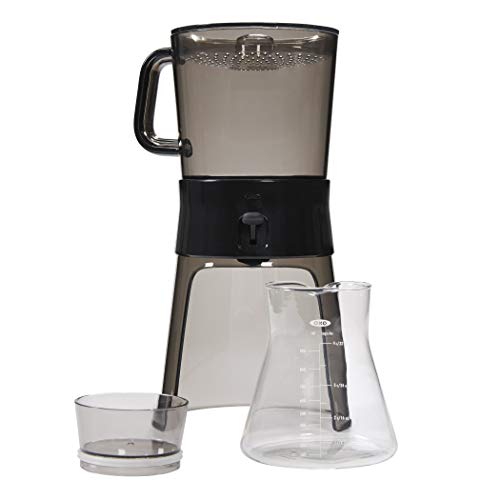
Two cautions from the makers' own materials, both worth repeating because they are about safety and about glass rather than taste. County Line Kitchen's listing for its 64 oz mason jar states, in capitals, “DO NOT ADD WARM OR BOILING WATER”. And OXO's listing describes a 12–24 hour steep with a “Rainmaker” top that distributes water over the grounds — a reminder that even saturation at the start is the one bit of technique cold brew has.
If you are choosing between vessels rather than methods, our cold brew maker guide sets out the catalog picks and what separates them.
Which coffee to use
Cold brew is forgiving of the things that ruin hot coffee and unforgiving of one thing that hot coffee tolerates.
Forgiving: roast level, bean origin and even a little staleness matter less than usual, because low-temperature extraction flattens differences. A medium or dark roast that tastes flat and heavy as filter coffee often makes excellent cold brew, since the chocolate and nut notes survive the cold and the sharpness you would have missed was never extracted.
Unforgiving: grind. A cold brew made with pre-ground supermarket coffee, which is ground for drip machines, will be muddy and over-extracted no matter what else you do. If you are buying coffee specifically for this, buy whole beans and grind coarse, or ask for a cold brew or French press grind at the counter. Our grind size chart shows where the bands sit, and our grinding guide covers doing it yourself.
On quantity: this method uses four to five times the coffee per finished drink that a filter brew does, before dilution. Buy accordingly, and buy the cheaper bag — a $25 single-origin's delicate florals are exactly what cold extraction leaves behind.
Keeping it, and the mistake at the end
Strained concentrate keeps in a sealed container in the fridge for several days, which is the practical argument for making a concentrate in the first place: one overnight batch covers a working week. Diluted cold brew does not keep as well, so dilute per glass rather than per jar.
The mistake almost everyone makes once: leaving the grounds in. Cold brew does not stop extracting when you decide it is ready, and a jar left with its grounds for two days is bitter and astringent in a way no amount of milk fixes. Strain at the end of the steep, even if you are not going to drink any yet.
One honest caveat about strength. Cold brew is frequently described as higher in caffeine than hot coffee, and as a concentrate it usually is — but that is a consequence of the heavy dose, not of cold extraction, and what reaches your glass depends entirely on how far you dilute it. Our caffeine chart sets out the figures per drink with their sources rather than repeating the claim.
Verified products for this page
ℹ️
Affiliate disclosure: CoffeeLabAdvisor is an Amazon Associate and may earn a commission from these links, at no extra cost to you. Commissions play no part in what appears here — every product traces to a verified catalog entry or a published review.
Verified cold brew vessels, each a jug and a filter in a different arrangement. None has been through our evaluated award process, so none carries a score; the claims are the makers' own, quoted in the source note.
Cold brew maker
HARIO
"Mizudashi" Cold Brew Coffee Maker, 1000 ml
$20.40Live Amazon price · as of 10/26/2026 8:35 PM
The $20 default: a glass jug with a mesh basket, which is the whole apparatus cold brew actually needs. Listing states a 1000 ml five-cup heatproof glass cold brew maker made in Japan with a removable reusable fine mesh basket, and advises grinding coarse for a lighter cup or finer for more body.
$49.99Live Amazon price · as of 10/26/2026 8:49 PM
The one with a mechanism: it holds the grounds above the carafe and releases when you decide the steep is done. Listing states a steep-and-release system brewing low-acid concentrate for up to 14 drinks, with a Rainmaker top that distributes water over coarse grounds, a 12-24 hour steep, a brew-release switch and a reusable stainless mesh filter.
$26.99Live Amazon price · as of 10/26/2026 8:35 PM
A big-batch jar, and the maker's own warning is the useful part: cold water only, or the glass is the problem. Listing states a 64 oz wide-mouth glass mason jar with a stainless steel fine mesh filter and a leak-proof flip-cap lid, dishwasher safe, and warns in capitals not to add warm or boiling water.
$24.98Live Amazon price · as of 10/26/2026 8:09 PM
Plastic rather than glass, which is the point: it survives a fridge door and a rucksack. Listing states a shatter-proof BPA-free Tritan pitcher with an airtight leak-proof lid, a fine-mesh filter and a silicone grip handle, sized to fit most refrigerator doors, made in the USA.
About 1 part coffee to 5 to 8 parts water by weight, which produces a concentrate you then dilute roughly one part to two. The National Coffee Association publishes a stronger 1:4 to 1:5 for concentrate. If you would rather brew it ready to drink, use a normal 1:15 to 1:17 brewing ratio and expect a lighter cup.
How long should cold brew steep?
12 to 18 hours in the fridge. The National Coffee Association gives approximately 12 hours of contact as typical and notes the practical range runs from a few minutes to 12 to 18 hours or more overnight. Past about 18 hours you gain very little strength and start picking up woody flavours.
What grind do I need for cold brew?
Coarse, which the National Coffee Association compares to rock salt. This matters more for cold brew than any other method because the coffee sits in water for hours, so fine particles keep extracting and slip through the filter into the cup.
Can I use hot water to speed up cold brew?
No, and not only because it changes the drink. Using hot water makes it iced coffee rather than cold brew — the National Coffee Association's own distinction — and the makers of glass vessels warn against it directly; County Line Kitchen's listing states in capitals not to add warm or boiling water.
What is the difference between cold brew and iced coffee?
The brewing temperature. In the National Coffee Association's words, iced coffee is brewed hot using a standard method then cooled to serve, while cold brew is brewed with room temperature or cooler water and can be served hot or over ice. Cold brew tastes smoother and less bitter because the compounds that make coffee sharp are less soluble in cold water.
How long does cold brew last in the fridge?
Strained concentrate keeps for several days in a sealed container. Dilute per glass rather than per batch, because diluted cold brew does not keep as well. Strain the grounds out at the end of the steep even if you are not drinking any yet — coffee left in water keeps extracting and turns bitter.
Does cold brew have more caffeine than regular coffee?
As a concentrate it usually does, but that is because of the heavy dose rather than anything about cold extraction, and what ends up in your glass depends on how far you dilute it. Our caffeine chart gives the figures per drink with their sources.
Sources for this page:
Grind guidance (coarse, compared to rock salt), the coffee-to-water range of 1:4 to 1:5, room-temperature-or-cooler brewing, the approximately 12 hour typical contact time and the 'few minutes to 12-18+ hours overnight' range, the 'less bitter, smoother taste' description, and the verbatim iced-coffee-versus-cold-brew distinction: the National Coffee Association's cold brew page at aboutcoffee.org, read 2026-09-09 · The 1:5 to 1:8 concentrate range and the 12 to 18 hour steep published on this page: the figures already published on our own how-to-make-coffee and caffeine-in-coffee guides, kept consistent across the site deliberately rather than re-sourced · Vessel facts, the 12-24 hour steep and Rainmaker distribution, and the capitalised warning against warm or boiling water: the makers' own copy on the verified Amazon listings B001VPXEBU, B00JVSVM36, B07VJJJ764 and B00FFLY64U from its Amazon listing, read 2026-09-09 · Grind bands per method: our grind size chart and the manufacturer sources cited there · Not claimed here: that cold extraction itself raises caffeine content, or any figure for how long diluted cold brew keeps We have not lab-tested brewers; where a figure is a manufacturer's, the page names the manufacturer, and machine capabilities come from our own published review records.