8 facts, each with a source below5 questions answered7 verified products
Match the shape first, then the size. A cone filter comes in two sizes that are not interchangeable: #2 for brewers making roughly one to six cups, and #4 for eight to twelve. A basket filter is flat-bottomed and fits most drip machines. A Chemex takes its own thick square paper and nothing else will do. Getting the shape right but the size wrong is the common mistake, and it shows up as thin coffee and a flooded bed, because a filter that is too small collapses down the side of the cone. Beyond fitment there is one real choice: paper traps oils and gives a cleaner cup; metal passes them and gives more body and more sediment.
If you already own the brewer and just need to know what to buy for it, you are in the right place.
The four shapes
Cone. A folded paper cone, used by cone-shaped drip brewers and by pour-over drippers like the V60. The bed of coffee is deep and narrow, water passes through the middle, and the filter tapers to a point.
Basket. Flat-bottomed with fluted sides, sitting in a basket rather than a cone. This is what most drip coffee makers take. The bed is shallow and wide, which is more forgiving of an uneven pour because the machine is doing the pouring.
Chemex. A category of one. Chemex paper is noticeably thicker than ordinary filters and is folded into a square that opens into a cone with a triple-thick side. No other filter fits a Chemex properly, and no other brewer wants Chemex paper.
Flat-bottomed wave. The Kalita Wave and similar use a filter with a flat base and a ridged wall that holds the paper off the brewer. It is not a basket filter and the two do not substitute.
Then there are proprietary shapes: disc filters for AeroPress, in a standard size and a larger XL size that do not interchange (our AeroPress comparison maps which model takes which), and the mesh in a press, which has no paper at all.
The numbers: #2 and #4
This is where most wrong purchases happen, because the numbers look like sizes on a scale and are really about brewer capacity.
#2 suits brewers in roughly the one to six cup range, including most single-cup pour-over cones. #4 suits eight to twelve cup brewers. There are #1 and #6 sizes as well, but they are rare enough that most kitchens never meet one.
What goes wrong when the size is off is worth knowing, because the symptom does not look like a filter problem:
Too small and the paper does not reach the top of the cone. Water finds the gap, runs down the side and bypasses the coffee entirely. The result is weak, thin coffee from a normal dose.
Too large and the paper crumples into the brew bed, channelling the water through folds instead of grounds, with much the same outcome.
If your brewer did not come with a size printed on it, the cup capacity is the reliable guide. Pour-over drippers usually carry the size in the model name instead, as an 01 or 02.
White or brown, and the rinse
White filters are bleached, brown ones are not, and the practical difference is smaller than the packaging suggests.
Modern bleaching for coffee filters is done with oxygen or chlorine dioxide rather than elemental chlorine. Unbleached paper skips the step, which is why it is brown.
The one difference you can taste is papery flavour, and unbleached paper tends to carry more of it. The fix for either is the same and takes ten seconds: rinse the filter with hot water before you add coffee, then tip the water away. This also warms the brewer, which is worth doing anyway.
If you rinse, the choice between them comes down to price and whether you would rather not buy a bleached product. Both make the same coffee.
Paper versus metal: the one choice that changes the cup
Everything above is fitment. This is the part that alters what you drink.
Paper traps oils and the smallest particles. The cup is cleaner, lighter and more transparent, and sediment is essentially absent. Paper is also disposable, which is a running cost and a bin.
Metal passes oils through. The cup has more body and a heavier mouthfeel, and it carries fine sediment. Some people much prefer it; nobody thinks it is cleaner. A permanent metal filter also never runs out, which is the whole appeal.
This is the same difference that separates a French press from a pour-over, and it is why the same beans taste so different through each. Neither is correct. If you like the weight of press coffee but not the silt, paper in a cone is the compromise; if you find paper-filtered coffee thin, a metal filter is the fix.
One practical note on metal: it needs actual cleaning rather than a rinse, because the oils it passes also build up in the mesh.
Refillable pod filters
A pod machine has a filter question of its own: whether to keep buying capsules or to fill a reusable one with your own coffee.
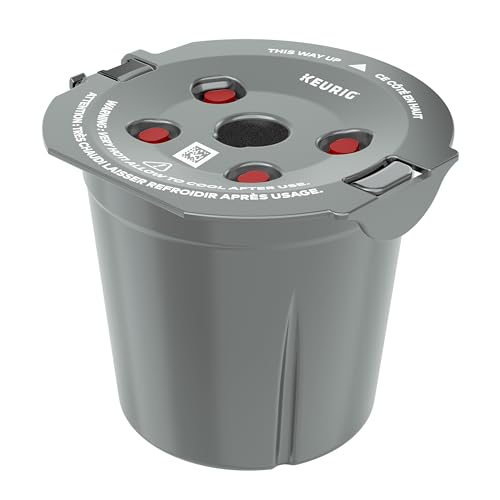
A refillable pod is a small basket with a mesh base that sits where a capsule would. It lets you use any coffee, grinds included, and removes the per-capsule cost. What it asks in return is that you grind, dose and clean it each time, which is most of the convenience a pod machine was bought for.
There is one thing worth reading before you commit, and it is in the machine paperwork rather than on the pod packaging: Keurig's warranty addresses the use of non-Keurig pods and accessories directly. Our Keurig buying guide quotes that language in full so you can decide with it in front of you.
What to actually buy
Filters are one of the few coffee purchases where the cheap option is genuinely fine, so the advice is short.
For a drip machine: basket paper in bulk. It is the lowest cost per filter of anything here and the machine is not sensitive to which brand.
For a cone brewer: match #2 or #4 to your capacity, then buy whichever of bleached or unbleached you prefer, and rinse either.
For a Chemex: Chemex paper. This is the one case where there is no substitute worth trying.
For a V60 or a Wave: the maker's own paper, because the shape is specific to the dripper. Both are carded on the pour-over guide.
Where it is worth spending a little more is storage rather than the filters themselves: paper picks up kitchen smells, and a box left open near spices will eventually put them in your coffee.
Where this page stops
Every product fact on this page is the listing's own statement, read on the date shown on each card. Fitment claims come from the listing too, which is why they are stated as capacity ranges rather than as a guarantee about your particular brewer.
We have not run extraction tests comparing papers, and the paper-versus-metal section is a description of what each material does mechanically rather than a measurement of what it does to a specific coffee. Where we say a cup is cleaner or heavier, read that as the well-established consequence of filtering oils out or letting them through, not as a laboratory result of ours.
Verified products for this page
ℹ️Affiliate disclosure: CoffeeLabAdvisor is an Amazon Associate and may earn a commission from these links, at no extra cost to you. Commissions play no part in what appears here — every product traces to a verified catalog entry or a published review.
The filters this page refers to, across the common shapes and sizes. Each product fact is its listing's own statement, read on the date shown on the card.
Coffee filter
Amazon Basics
Basket Filters, 8-12 cup
$2.22Live Amazon price · as of 09/22/2026 4:29 AM
Basket paper at the lowest price per filter here. Listing states basket coffee filters for 8 to 12 cup coffee makers, in white.
$35.49Live Amazon price · as of 09/22/2026 4:29 AM
The thick square paper a Chemex needs; nothing else fits it. Listing states Chemex bonded filters in natural square form, 100 count, sold as a pack of 2.
What is the difference between #2 and #4 coffee filters?
Brewer capacity, not a quality grade. A #2 cone suits brewers making roughly one to six cups, and a #4 suits eight to twelve. They are not interchangeable: a filter that is too small does not reach the top of the cone, so water runs down the side and bypasses the coffee, giving thin coffee from a normal dose. If your brewer has no size marked, use its cup capacity as the guide.
Are bleached or unbleached coffee filters better?
They make the same coffee. Unbleached paper is brown because it skips a bleaching step, and it tends to carry a little more papery flavour. Rinsing the filter with hot water before adding coffee removes that from either type in about ten seconds, and warms the brewer while you do it. After a rinse, the choice is price and preference.
Can I use a metal filter instead of paper?
Yes, and it changes the coffee rather than just saving paper. Metal passes the oils and the finest particles that paper traps, so the cup has more body and more sediment. It is the same difference that separates French press coffee from pour-over. Neither is correct; if you like the weight of press coffee but not the silt, paper in a cone is the middle ground.
What filter does a Chemex take?
Its own. Chemex paper is noticeably thicker than ordinary filters and folds into a square that opens with a triple-thick side, and no other filter fits properly. That thickness is part of why Chemex coffee tastes as clean as it does, so substituting a standard cone filter changes the result as well as the fit.
Do coffee filters expire?
Not in any meaningful way, but they absorb smells. Paper left open in a cupboard near spices, or in a drawer with anything strongly scented, will carry that into the brew. Keep them in a closed box or bag, which matters more than any date on the packaging.
Sources for this page:
Every product fact on this page is its Amazon listing's own statement, read on 2026-09-11. Prices on the cards are fetched live and are not written into the text. We have not lab-tested brewers; where a figure is a manufacturer's, the page names the manufacturer, and machine capabilities come from our own published review records.