8 facts, each with a source below6 questions answered4 verified products
Two different questions hide inside this one. By concentration, espresso wins easily: USDA figures put it at 212 mg of caffeine per 100 g against 40 mg for brewed coffee. By serving, ordinary drip wins: an 8 fl oz mug carries about 95 mg and a single espresso about 63 mg. Bean species matters less than people think — the trade body puts robusta at 50–60% more caffeine than arabica, not double — and roast level barely matters at all.
The real variableHow much you drink, and whether you scoop or weigh
Concentration and dose are different questions. Espresso wins one of them and loses the other, which is why the popular answer depends on which one you meant.
Concentration and dose are not the same question
Almost every argument about this is two people answering different questions.
Concentration asks how much caffeine is in a given amount of liquid. USDA FoodData Central measures brewed espresso at 212 mg per 100 g and ordinary brewed coffee at 40 mg per 100 g. Espresso is more than five times as concentrated, and that is not close.
Dose asks how much caffeine you actually swallow, which depends on the size of the drink. A single espresso is about 1 fl oz, roughly 30 g, so around 63 mg. A mug of drip is 8 fl oz, roughly 237 g, so around 95 mg.
So the mug beats the shot, the double shot beats the mug at about 127 mg, and a 12 oz drip beats the double at around 142 mg. Nobody is wrong in these arguments; they are measuring different things.
By preparation, measured
These are the measured beverage values, not estimates. Each is caffeine per 100 g of the drink as served, from USDA FoodData Central:
Espresso, restaurant-prepared — 212 mg
Brewed coffee, prepared with tap water — 40 mg
Instant coffee, prepared with water — 26 mg
Instant is the quiet finding there. Prepared as a drink it carries roughly two thirds the caffeine of brewed coffee, which is a real difference rather than a rounding error.
One number on the same database is a trap worth naming: instant coffee powder measures 3,140 mg per 100 g. That is the dry granules, not a drink. Comparing a powder figure to a beverage figure is how instant coffee acquires a reputation for being enormously caffeinated.
Bean species: real, and smaller than you have read
The bean-side lever is species. Arabica and robusta are different plants, and robusta carries more caffeine.
How much more is where the internet overstates. The National Coffee Association's own comparison of the two species says robusta Contains 50-60% more caffeine than arabica. That is a substantial difference and it is not the double that gets repeated.
Robusta is also, per the same source, grown at Lower altitudes, warmer temperatures, with beans that are Smaller, rounder and trees that are Heartier, more resistant to disease and parasites. It makes up 43% of global production against arabica's 57%.
The practical version: if you want more caffeine from the bean rather than from the cup size, an espresso blend containing robusta will get you there. Most Italian-style espresso blends already do, which is part of why they taste the way they do.
Roast level: the argument that will not die
You will find confident claims in both directions — that dark roast has more caffeine because it tastes stronger, and that light roast has more because roasting burns caffeine off. Both are mostly wrong, and they are wrong for an interesting reason.
Caffeine is thermally stable at roasting temperatures. Very little of it is destroyed. What changes is the bean: roasting drives off water and the bean swells, so a dark-roasted bean weighs less and takes up more space than the same bean did lighter.
That is the whole effect, and it only shows up in how you measure. Scoop by volume and a scoop of dark roast holds fewer grams of coffee, so you get slightly less caffeine. Weigh on a scale and the difference very nearly disappears.
So the honest answer is: roast level is not a caffeine decision. If you have noticed a difference, you are almost certainly measuring by scoop. We have not found a published measurement we consider solid enough to put a number on the gap, and we would rather say that than invent one.
If you actually want more caffeine
In order of how much they move the number:
1. Drink more of it. Serving size dominates everything else on this page. Going from an 8 oz mug to a 12 oz one adds about 47 mg, which is more than any bean or roast choice will give you.
2. Pull a double. Two shots is about 127 mg against 63 for one. This is the same lever as the first, stated in espresso.
3. Choose a blend with robusta. Worth 50–60% on the bean side, per the trade body's figure.
4. Do not bother changing roast. Unless you are scooping rather than weighing, in which case switch to weighing and you have removed the variable entirely.
And the one worth knowing in the other direction: decaf is not caffeine-free, but it is close enough that it will not do this job. A decaf shot measures about 0.3 mg.
Verified products for this page
ℹ️
Affiliate disclosure: CoffeeLabAdvisor is an Amazon Associate and may earn a commission from these links, at no extra cost to you. Commissions play no part in what appears here — every product traces to a verified catalog entry or a published review.
Two blends that carry robusta, which is the bean-side lever on caffeine, and two brewers at opposite ends of the concentration scale. Nothing here is a caffeine claim about a specific bag; roasters do not publish per-bag caffeine figures.
Robusta in the blend
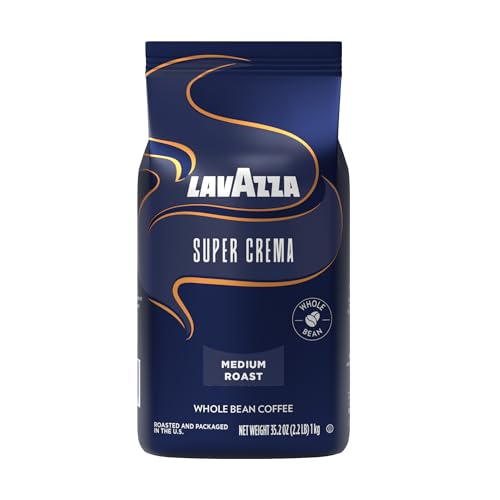
Lavazza
Super Crema
$26.99Live Amazon price · as of 10/09/2026 7:11 PM
Taste what the species section says robusta contributes - body and crema in a traditional Italian-style espresso blend. Also on our 10-best roster. Listing states a medium espresso roast blend of arabica and robusta beans from 15 coffee-growing countries, 2.2 lb whole bean.
$25.99Live Amazon price · as of 10/09/2026 7:11 PM
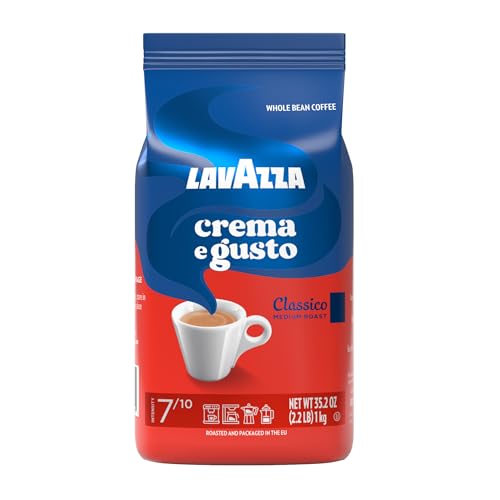
The robusta case in one bag: a full-bodied blend the listing positions for espresso first. Listing states a medium roast arabica and robusta blend at 7/10 intensity, sourced from South America and Southeast Asia, ideal for espresso machines, moka pot, drip or French press, in a 2.2 lb bag.
$29.96Live Amazon price · as of 10/09/2026 7:11 PM
The standard AeroPress every recipe on this page is written for. Listing states an all-in-one manual coffee maker - French press, pour-over and espresso style - with a 2-minute brew.
$39.69Live Amazon price · as of 10/09/2026 7:11 PM
The design icon of the category - the same glass brewing in the classic steel frame. Listing states the Bodum 34 oz Chambord French press in high-heat borosilicate glass with polished stainless steel, made in Portugal.
By concentration, yes and not narrowly — 212 mg per 100 g against 40 mg for brewed coffee. By serving, no: a single 1 fl oz espresso is about 63 mg while an 8 fl oz mug of drip is about 95 mg. A double shot, at about 127 mg, puts espresso back in front.
Which bean has the most caffeine, arabica or robusta?
Robusta. The National Coffee Association states that robusta <q>Contains 50-60% more caffeine than arabica</q> — a real difference, though smaller than the frequently repeated claim that it holds twice as much.
Does dark roast have more caffeine than light roast?
Barely, in either direction. Caffeine largely survives roasting; what changes is that darker beans weigh less and take up more space. Measure by scoop and dark roast gives you slightly less caffeine. Measure by weight and the difference nearly vanishes.
Does instant coffee have more caffeine?
Less, prepared. USDA figures put instant prepared with water at 26 mg per 100 g against 40 for brewed. The confusion comes from the powder figure of 3,140 mg per 100 g, which is dry granules rather than a drink.
What coffee drink has the most caffeine overall?
Whichever one is biggest. A 12 oz drip at roughly 142 mg beats a double espresso at about 127 mg, which beats an 8 oz mug at about 95 mg. Serving size outranks bean, roast and method.
How much caffeine is in a cup of coffee?
About 95 mg for a standard 8 fl oz mug of brewed coffee, derived from the USDA figure of 40 mg per 100 g. Our caffeine chart has the full table by drink.
Sources for this page:
Caffeine values per 100 g for brewed espresso (212 mg, FDC 171891), brewed coffee prepared with tap water (40 mg, FDC 171890), instant coffee prepared with water (26 mg, FDC 174130) and instant coffee regular powder (3,140 mg, FDC 171893): USDA FoodData Central, SR Legacy, queried 2026-10-09, fdc.nal.usda.gov · The robusta figure (“Contains 50-60% more caffeine than arabica”), the arabica and robusta growing descriptions, and the 57% / 43% share of global production attributed to the International Coffee Organization's August 2026 Coffee Market Report: the National Coffee Association's own coffee basics pages, aboutcoffee.org, read 2026-10-09 · Serving conversions are arithmetic on the USDA per-100 g figures at 1 fl oz ≈ 30 g and 8 fl oz ≈ 237 g, and are presented as approximate because a real shot varies with dose and extraction · The roast-level section deliberately carries no figure: we found no measurement we judged solid enough to publish, and say so rather than repeat one We have not lab-tested brewers; where a figure is a manufacturer's, the page names the manufacturer, and machine capabilities come from our own published review records.