Home › Espresso Machines › How to clean a steam wand
🔧 Owner's Guides · 2026
How to Clean a Steam Wand, and Why the Timing Matters More Than the Method
Purge, wipe, and do it now rather than later — the routine Breville publishes, what to do when the tip has blocked, and why milk is a deadline.
Written and reviewed by the CoffeeLabAdvisor editorial team · Published 30 September 2026
6 facts, each with a source below
5 questions answered
5 verified products
Purge it and wipe it, every single time, within seconds rather than minutes. Breville’s instruction is to purge after every use — point the wand into the drip tray and run steam for a few seconds to clear milk from inside — and to wipe the wand with a damp cloth after each use. The order matters: wipe first while the milk is still wet, then purge. Milk that has dried onto or inside a wand does not wipe off, and a blocked tip is a soak-and-pin job rather than a cloth job.
After every usePurge, then wipe
PurgeSteam into the drip tray, a few seconds
WipeDamp cloth, while the milk is still wet
The deadlineSeconds, not minutes
Blocked tipSoak, then clear the holes
NeverSoak the whole wand or use abrasives
The routine, and the order to do it in
Breville publishes this for machine after machine, and the wording barely changes because the job does not:
- Wipe the wand with a damp cloth, immediately, while the milk on the outside is still liquid.
- Purge into the drip tray — point the wand down and run steam for a few seconds. This clears the milk that got drawn up inside the wand, which is the part you cannot see and cannot wipe.
Some guides give the reverse order. Wiping first is better in practice: purging first blasts hot steam through milk that is still on the outside of the wand and bakes it on, which is precisely the deposit you are trying to avoid.
Both steps take about four seconds together. Nearly every steam wand problem people bring to a forum is this routine not happening.
Why milk is a deadline, not a chore
Milk behaves differently from coffee. Coffee oil goes stale slowly and tastes bad. Milk proteins dry onto hot stainless steel in under a minute and then need soaking rather than wiping, and inside a warm enclosed tube milk residue is a hygiene problem rather than a flavour one.
That is why every manufacturer that publishes a milk routine gives it a frequency of daily at minimum and usually after each use — JURA states the fine foam frother must be cleaned daily whenever milk has been prepared, and Philips builds the carafe so it comes apart and goes in the dishwasher. Different machines, same deadline.
If you take one thing from this page: the difference between a wand that stays clean for years and one that blocks in a month is measured in seconds, not in products.
When the tip has already blocked
A wand that steams weakly, spits, or pushes steam sideways has blocked holes in the tip. Breville publishes a clean-and-unblock procedure for each of its machines, and the shape is consistent:
- Soak the tip in hot water, or in a milk-system cleaning solution for anything worse than light build-up. Soaking softens dried protein; scrubbing does not.
- Clear the holes with the pin supplied with most machines, or a straightened paperclip. Gently — the holes are sized deliberately and enlarging one changes how the wand textures.
- Purge immediately afterwards to push anything loosened out rather than further in.
Do not submerge the whole wand or the machine body, and do not take abrasives to stainless steel you want to keep. Gaggia’s general line — never scrubbing powders or harsh cleaners — applies here as much as anywhere.
Automatic frothers and carafes
A machine that froths automatically has moved the problem rather than removed it: there is still a milk path, and it is now one you cannot reach with a cloth.
- Carafe systems — most run a rinse cycle at the end of a drink and a deeper clean on a prompt. Run the rinse; it is not optional, and it is not the same as the weekly clean.
- Tube-free systems such as Philips LatteGo come apart into two pieces and go in the dishwasher, which is genuinely the easiest version of this job — the routine is here.
- Tube-fed carafes need the machine’s own cleaning programme with a proper milk cleaner. JURA’s is the clearest example of a maker specifying its own product for the purpose.
Plant milks make it worse
Worth a note because so many people have switched. Oat and other plant milks carry sugars and stabilisers that caramelise onto a hot wand faster than dairy protein does, and barista editions — formulated to foam well — tend to be the stickiest of the lot.
Nothing about the routine changes. It just becomes less forgiving of delay: the window between wiping easily and needing to soak is shorter. Our frothing guide covers the texturing side.
Verified products for this page
ℹ️
Affiliate disclosure: CoffeeLabAdvisor is an Amazon Associate and may earn a commission from these links, at no extra cost to you. Commissions play no part in what appears here — every product traces to a verified catalog entry or a published review.
A dedicated milk-system cleaner, backflush powder, and three reviewed machines with steam wands. Each product fact is the listing’s own statement.
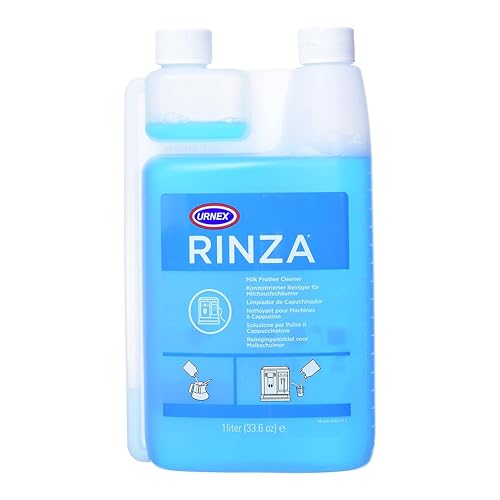
Cleaning powderUrnex
Rinza milk frother cleaner, alkaline formula, 33.6 oz
$19.75Live Amazon price · as of 10/06/2026 4:34 PM
The milk cleaner: for the wand, the pitcher and the auto-frother. Listing states a milk-system cleaner that breaks down milk protein buildup, cleans traditional steam wands and steel pitchers, cycles through automatic frothers, and comes in a dual-chamber bottle with a built-in measure for over 30 uses.
Check price on Amazon → 
Cleaning powderUrnex
Cafiza espresso machine cleaning powder, 566 g
$19.99Live Amazon price · as of 10/06/2026 2:18 PM
The cafe-standard backflush powder in the tub that lasts a home machine years. Listing states a powder that eliminates coffee residue and oils from group heads, valves and lines, formulated for heavily soiled equipment, recommended as part of a daily backflush regimen, easy to dose, OMRI listed and NSF certified.
Check price on Amazon → 
🏆 2026 Best Overall Espresso Machine winner$399.95Live Amazon price · as of 10/06/2026 2:07 PM
Semi-Automatic · Automatic milk The best entry-level espresso machine with an automatic steam wand: 3-second heat-up, 54mm group and excellent plant-milk support in a compact footprint. The ideal pick for milk-forward home drinkers.
Check price on Amazon → 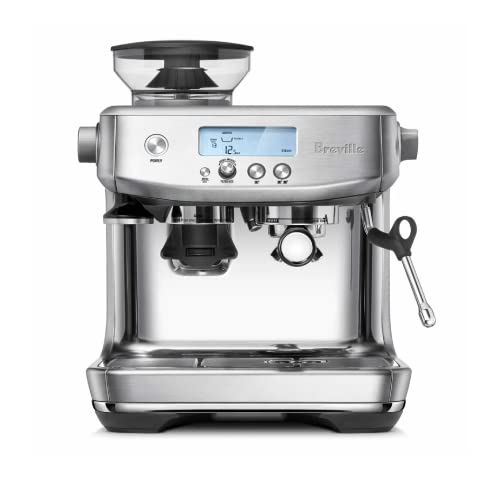
⭐ Honorable mention$629.95Live Amazon price · as of 10/06/2026 2:07 PM
Semi-Automatic · Manual milk The Breville Barista Pro is the best all-in-one espresso machine for most home buyers: 3-second heat-up, a capable built-in grinder, and reliable 54mm extractions. Its ceiling is raised further with a dedicated grinder, which is how our pairing award uses it.
Check price on Amazon → 
Reviewed$508.01Live Amazon price · as of 10/06/2026 2:07 PM
Semi-Automatic · Manual milk A compact machine with a 58mm group and no built-in grinder, so the grinder and accessories remain separate choices. It has no PID and no automatic milk system.
Check price on Amazon →
Frequently asked questions
How do I clean a steam wand after each use?
Wipe it with a damp cloth while the milk is still wet, then purge — point the wand into the drip tray and run steam for a few seconds to clear the milk drawn up inside. Breville publishes both steps; together they take about four seconds.
Should I purge before or after wiping?
Wipe first, then purge. Purging first blasts steam through milk still sitting on the outside of the wand and bakes it on, which is the deposit you are trying to avoid.
How do I unblock a steam wand?
Soak the tip in hot water or a milk-system cleaner to soften the dried protein, clear the holes gently with the pin supplied or a straightened paperclip, then purge immediately. Do not enlarge the holes — they are sized deliberately and it changes how the wand textures.
Can I soak the whole steam wand?
No. Soak the tip only. Submerging the wand or the machine body is not what the procedure asks for, and abrasives on stainless steel do lasting cosmetic damage.
Does an automatic milk system still need cleaning?
Yes — it has moved the milk path somewhere you cannot wipe. Run the rinse cycle after drinks and the full cleaning programme when the machine asks, with the cleaner the maker specifies.
Sources for this page:
Breville, A steam wand purge, the Barista Express Impress cleaning guides, breville.com, read 2026-09-30 · Breville, How to clean and unblock the steam wand, the Barista Pro / Barista Touch / Oracle cleaning guides, breville.com, read 2026-09-30 · Breville, How to Clean an Espresso Machine, breville.com/us/en/blog, read 2026-09-30 · Urnex, Steam Wand Cleaning Guide, urnex.com/blog/steam-wand-cleaning-guide, read 2026-09-30 · JURA US, milk system cleaning guidance, us.jura.com, read 2026-09-29; Philips US, LatteGo cleaning, usa.philips.com, read 2026-09-29 · Product facts: each item's own Amazon listing, read on the date shown on its card We have not lab-tested brewers; where a figure is a manufacturer's, the page names the manufacturer, and machine capabilities come from our own published review records.
Keep going