There is no such thing as an espresso bean. Espresso is a brewing method — hot water forced through a compacted puck of finely ground coffee — not a species, a grade or a plant. The word on a bag describes how the roaster expects you to grind and brew it, and the clearest proof of that sits in our own verified catalog: illy sells one Classico blend ground for drip and ground for espresso, both medium roast, both in the same 8.8 oz can. The coffee is the same. The grind is not. What does tend to differ between a bag marked espresso and one that is not: the grind is finer, the roast often goes darker — though not always, since Intelligentsia’s Black Cat is a light roast sold explicitly for espresso — and espresso blends more often carry robusta for body and crema.
The beanIdentical — arabica or robusta either way. Espresso is not a species
What the label meansA grind and roast recommendation, not a bean type
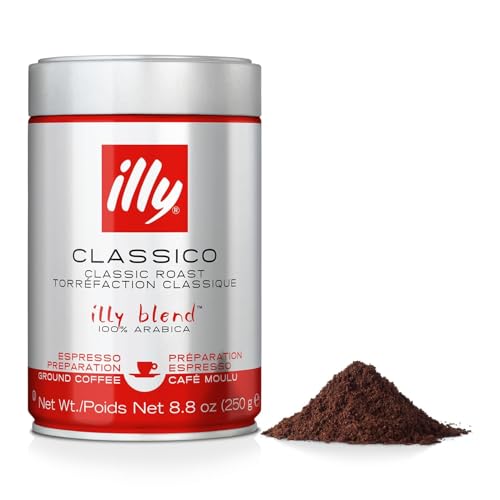
The proofilly Classico is sold ground for drip and ground for espresso — same medium roast, same 8.8 oz can
GrindEspresso needs a fine grind, drip a medium one. This is the real constraint
RoastEspresso bags trend darker, but light-roast espresso is sold as such
RobustaMore common in espresso blends, for crema and body
SwappingOne Lavazza bag names espresso, drip, moka pot, Chemex and pour-over
The one thing you cannot swapThe grind. A drip grind will not make espresso
There is no such thing as an espresso bean
Commercially, coffee comes from two species that matter: Coffea arabica and Coffea canephora, the latter sold as robusta. Neither of them is “espresso”. Espresso is what you do to the coffee afterwards — grind it fine, pack it into a basket, and push hot water through it under pressure.
So a bag labelled espresso holds the same species as a bag labelled breakfast blend. The label is the roaster telling you what they built the roast for, in the same way “baking potatoes” are not a separate vegetable. If you want the species question rather than the label question, our 100% arabica guide covers what the two species actually are and where each is used.
The proof: one blend, sold three ways
These are three listings for the same illy blend, carded above. Read across: the roast level and the can are the same on all three. What the listings describe differently is the grind.
| Listing | What the listing states | Grind |
|---|
| Classico Whole Bean | Medium roast, 100% arabica, notes of caramel, orange blossom and jasmine, 8.8 oz can | You grind it |
| Classico Ground Drip | Medium roast ground coffee for drip, lingering sweetness, same tasting notes, 8.8 oz can | Medium, for drip |
| Classico Ground Espresso | Medium roast, 100% sustainably grown arabica, ground for espresso, 8.8 oz can | Fine, for espresso |
Each cell is the listing’s own stated contents, as recorded on our catalog entry for that product. Prices are not written into this page — each card above resolves the current price when the page loads.
What “espresso” on a bag actually tells you
Three things, in descending order of how much they matter to the cup:
- The grind, if it is pre-ground. This is the only one that can stop the coffee working at all. Espresso needs a fine grind; drip needs a medium one. Our espresso grind size guide covers how fine, and what goes wrong either side of it.
- The roast the roaster chose. Espresso bags trend darker, because a darker roast is more soluble and more forgiving of small errors in dose and grind. That is a tendency, not a rule.
- Sometimes, robusta in the blend. The one place the bean itself, rather than what was done to it, genuinely differs.
Notice what is not on that list: the plant, the country, the grade, or anything about the green coffee before it was roasted.
Dark roast is a convention, not a rule
The quickest way to settle “espresso roast means dark roast” is a counter-example, and there is one in the cards above. Intelligentsia’s Black Cat Classic Espresso listing states a light roast whole bean espresso blend, Direct Trade sourced, with a fine grind recommended for espresso and a finished shot weighing 2.5 times the dose of coffee.
A light roast, sold explicitly for espresso, with a published brew ratio. Darker roasts are common in espresso because they are easier to pull well, not because espresso requires them. If you want the other end of the range, our light roast guide covers why it is the demanding option.
Can you use espresso beans for drip, or drip beans for espresso?
On the coffee, yes, in both directions. On the grind, only if you are grinding it yourself.
Buy whole bean and the question disappears — you grind to whatever you are brewing that morning, and the bag’s label becomes a flavour suggestion rather than a constraint. Buy pre-ground and you have bought a grind as much as a coffee: a drip grind will not make espresso, and an espresso grind will over-extract and choke most filter brewers.
Some roasters say so outright. The Lavazza Super Crema Ground listing carded above names espresso, drip, moka pot, Chemex and pour-over on the same bag, with a brewing guide of 0.5 oz of coffee per 8 oz of water. One grind, five brewers, according to the people who made it.
Where a real difference does show up: robusta
If you want one place where an espresso blend genuinely differs at the bean, it is this. Espresso blends carry robusta more often than filter blends do, because robusta brings body and a thicker, longer lasting crema.
The Lavazza Super Crema listing states a medium espresso roast blending arabica and robusta from 15 coffee-growing countries. That is a bean-level choice, not a roast or grind one — and it is the honest answer to “is there any difference?”. It also carries a caffeine consequence: robusta holds roughly twice the caffeine of arabica, so a blend containing it is stronger per gram before anything reaches a basket.
Verified products for this page
ℹ️
Affiliate disclosure: CoffeeLabAdvisor is an Amazon Associate and may earn a commission from these links, at no extra cost to you. Commissions play no part in what appears here — every product traces to a verified catalog entry or a published review.
The three illy Classico listings are the argument on this page: one blend, sold whole, ground for drip and ground for espresso. Beside them, a light-roast espresso and a blend carrying robusta. Every product fact is the listing’s own statement — we have not tasted these coffees.
Espresso grind, pre-groundilly
Classico Ground Espresso
$11.05Live Amazon price · as of 10/06/2026 2:34 PM
The Italian benchmark pre-ground for espresso - the same Classico blend as the whole bean, ground for a machine. Listing states a medium roast of 100 percent sustainably grown arabica, ground for espresso, in an 8.8 oz can.
Check price on Amazon → 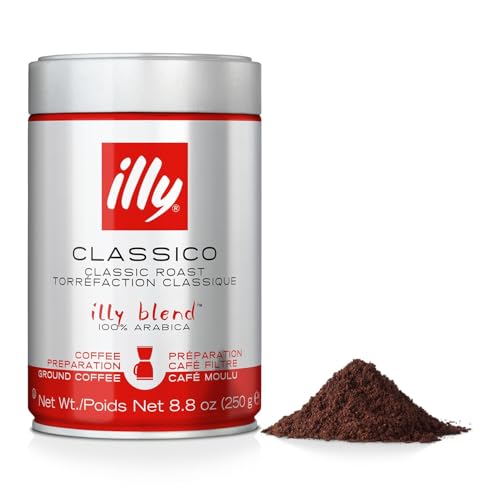
Medium grind, pre-groundilly
Classico Ground Drip
$11.99Live Amazon price · as of 10/06/2026 2:16 PM
The same illy blend ground for drip, which is what a medium grind is for. Listing states a medium roast ground coffee for drip, with a lingering sweetness and notes of caramel, orange blossom and jasmine, in an 8.8 oz can.
Check price on Amazon → 
Italian espresso blendilly
Classico Whole Bean
$12.81Live Amazon price · as of 10/06/2026 2:18 PM
The reference Italian espresso can: a single signature blend, medium roast, 100% arabica. Listing states a medium roast, 100% arabica whole bean coffee with notes of caramel, orange blossom and jasmine, no preservatives, in an 8.8 oz can.
Check price on Amazon → 
Light-roast espressoIntelligentsia
Black Cat Classic Espresso
$13.05Live Amazon price · as of 10/06/2026 2:18 PM
The counter-example to dark-roast espresso: a specialty espresso blend the listing labels light roast, with a published brew ratio. Listing states a light roast whole bean espresso blend, Direct Trade sourced, with a fine grind recommended for espresso and a finished shot weighing 2.5 times the coffee dose, in a 12 oz bag.
Check price on Amazon → 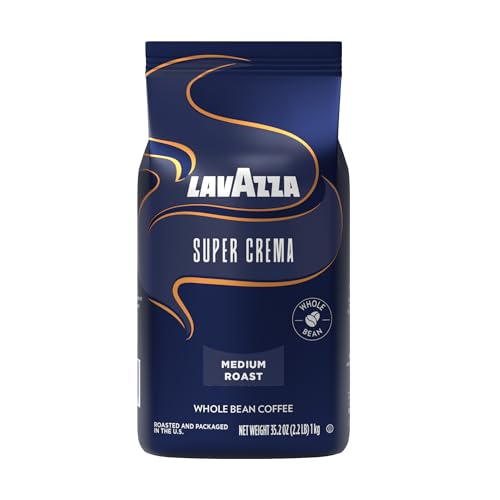
Robusta in the blendLavazza
Super Crema
$21.49Live Amazon price · as of 10/06/2026 2:18 PM
Taste what the species section says robusta contributes - body and crema in a traditional Italian-style espresso blend. Also on our 10-best roster. Listing states a medium espresso roast blend of arabica and robusta beans from 15 coffee-growing countries, 2.2 lb whole bean.
Check price on Amazon → 
Espresso grind, pre-groundLavazza
Super Crema Ground, 32 oz
$19.49Live Amazon price · as of 10/06/2026 2:28 PM
The robusta-blend crema favourite, pre-ground in the big bag. Listing states a 32 oz bag of full-bodied medium roast arabica and robusta ground coffee from 15 growing countries, described as ideal for espresso or drip, moka pot, Chemex and pour-over, with a brewing guide of 0.5 oz of coffee per 8 oz of water.
Check price on Amazon →
Frequently asked questions
Are espresso beans and coffee beans the same thing?
Yes. Espresso is a brewing method, not a species or a grade of bean, so a bag labelled espresso holds the same coffee as one labelled anything else. illy sells its Classico blend ground for drip and ground for espresso at the same medium roast in the same size can; the stated difference between them is the grind.
Can I use espresso beans in a drip coffee maker?
Yes, if they are whole bean — grind them to a medium grind and brew as normal. The coffee will taste of whatever roast the roaster chose, which for an espresso bag often means darker and less acidic. If the bag is already ground for espresso, it is too fine for most filter brewers and will over-extract.
Can I use regular coffee beans to make espresso?
Yes. Any whole bean coffee can be ground fine and pulled as espresso. Lighter and more acidic roasts are harder to pull well and less forgiving of small errors in dose and grind, which is why espresso bags tend to be roasted darker, but nothing stops you.
Is espresso roast always dark?
No. It is a convention rather than a definition. Intelligentsia’s Black Cat Classic Espresso listing states a light roast whole bean espresso blend with a fine grind recommended for espresso and a shot weighing 2.5 times the coffee dose.
Why do espresso blends often contain robusta?
For body and crema. Robusta produces a thicker, longer lasting crema and a heavier mouthfeel than arabica alone. Lavazza’s Super Crema listing states a medium espresso roast blending arabica and robusta from 15 coffee-growing countries.
Do espresso beans have more caffeine than coffee beans?
Not because of the label. The bean is the same, so a bag marked espresso is not inherently stronger. Robusta does carry roughly twice the caffeine of arabica, so an espresso blend containing robusta is stronger per gram than a pure arabica one. What ends up in your cup depends far more on dose and serving size than on the bag.
Does the grind matter more than which beans I buy?
For whether the brew works at all, yes. The wrong grind will ruin good coffee in either direction, while a bag roasted for the other method will still produce a drinkable cup. Buying whole bean removes the problem entirely.
What should I buy if I want one bag for both espresso and filter?
Buy it whole bean and grind to the brewer. If you need it pre-ground, look for a listing that names both methods: the Lavazza Super Crema Ground bag carded above names espresso, drip, moka pot, Chemex and pour-over, with a published brewing ratio.
Sources for this page:
illy Classico sold three ways (whole bean B00112IMUQ, ground for drip B000SEMLWS, ground for espresso B00DTR9R9Q): each listing’s own stated contents, as recorded on our verified catalog entries · Light-roast espresso, Direct Trade sourcing and the 2.5:1 shot ratio: Intelligentsia’s own copy on the verified Black Cat Classic Espresso listing B0055ZRUOO · Arabica and robusta in an espresso blend, 15 growing countries, and the five brewers named on one bag: Lavazza’s copy on the verified Super Crema listings B000SDKDM4 and B0DV1Q3BN4 · Robusta carrying roughly twice the caffeine of arabica, and the two commercial species: our 100% arabica guide’s sources (USDA and Wikipedia’s Coffea entries), read for that page 2026-08-27 We have not lab-tested brewers; where a figure is a manufacturer's, the page names the manufacturer, and machine capabilities come from our own published review records.
Keep going