Burr vs Blade Coffee Grinder: What Actually Changes in the Cup
A blade grinder chops; a burr grinder mills to a set size. Why that one difference decides whether your coffee tastes bitter and sour at the same time, and when upgrading is worth it.
8 facts, each with a source below8 questions answered6 verified products
A blade grinder chops coffee; a burr grinder mills it to a size you choose. A blade spins like a blender and hits whatever is in its path, so you end up with dust and boulders in the same batch. A burr grinder passes the beans between two abrasive surfaces set a fixed distance apart, and nothing leaves until it is small enough to fit through that gap — so the grounds come out one size. That single difference decides how your coffee tastes, because particle size controls how fast water pulls flavour out. Dust over-extracts into bitterness while boulders under-extract into sourness, and a blade grinder gives you both in the same cup. If you buy one thing to improve your coffee, this is it — and a burr grinder matters more than the machine you brew with.
BladeChops with a spinning propeller — closer to a blender than a mill
BurrMills between two surfaces set a fixed distance apart
The resultBlade: dust and boulders together. Burr: one size, chosen
Why it mattersParticle size sets extraction speed — fines over-extract, boulders under-extract
The tasteA blade cup can be bitter and sour at once; that combination is the tell
SettingsA blade has none — only how long you hold the button
EspressoA blade grinder cannot do it at all, at any price
Entry costA burr grinder that beats every blade starts well under $100 by hand
The same beans, two machines. A blade chops until you stop it, leaving dust beside boulders. A burr mills everything to the gap between two surfaces, so the pile is one size.
The mechanical difference, in one minute
A blade grinder is a small propeller in a chamber. Press the button and the blade spins, smashing whatever it collides with. Beans it hits early get hit again and again and turn to powder; beans that bounce to the edge may barely be touched. Manufacturers describe the action as closer to a blender or food processor than to a mill, and that is exactly right. Nothing in the design decides how big the pieces end up — only how long you hold the button down, which is why two batches from the same machine never match.
A burr grinder works the opposite way. Two abrasive surfaces, the burrs, sit a set distance apart, and the beans are drawn through the gap. A bean too large to pass through simply stays and gets milled again. Nothing escapes until it is small enough to fit, so the gap between the burrs — which is what the grind dial moves — sets the size of everything that comes out. Grinder makers put it plainly: burrs grind with pressure rather than by chopping, which produces far fewer of the tiny fragments known as fines.
That is the whole difference, and everything else on this page follows from it.
Why it changes the taste
Brewing is water dissolving flavour out of coffee, and how fast that happens depends on particle size. A small particle has a lot of surface for its volume, so water strips it quickly. A large one gives up its flavour slowly from the outside in.
Now put both in the same brew. Give it four minutes and the dust is long past the point of tasting good — over-extracted, which reads as bitter, harsh and drying. Meanwhile the boulders have barely started — under-extracted, which reads as sour, thin and salty. You cannot fix this by brewing longer or shorter, because the two problems move in opposite directions: brew longer and the boulders improve while the dust gets worse; brew shorter and the reverse.
This is why a blade grinder produces a cup that tastes bitter and sour at the same time, a combination that confuses people because it seems contradictory. It is not. It is two extractions in one cup. When grounds are all one size, they all extract at the same rate, and you can dial the whole brew to the point where it tastes right.
If that is the taste you are currently fighting, our brew troubleshooter will tell you which single change to make next, and it will say plainly when the grinder is the thing holding you back.
For espresso, a blade grinder is not an option
This deserves its own section because it is not a matter of degree. You cannot make espresso with a blade grinder, at any price, with any technique.
Espresso forces water through a compressed bed of coffee under roughly nine bars of pressure in around thirty seconds. That only works if the bed resists the water evenly. A blade grinder's mixture of dust and boulders cannot do that: the water carves a channel through the loose, coarse areas and races out, while the packed dust blocks other parts of the puck entirely. The shot gushes, tastes sour and thin, and no amount of tamping fixes it, because the problem is in the grounds rather than the technique.
Espresso also needs a much finer grind than anything else, and needs it adjustable in very small steps — the difference between a good shot and an undrinkable one can be one notch. A blade grinder has no steps at all.
Honesty is worth more than an upsell here, so: there are cases where a blade grinder is a reasonable thing to own.
You are grinding spices. A blade grinder is a good spice grinder, and dedicating an old one to that is better than throwing it out.
You brew drip, you drink it with milk and sugar, and you are content. Milk and sugar mask a great deal, and if the cup you make already tastes good to you, no chart on this page should talk you out of it.
You are travelling and it is what is in the cupboard. Freshly ground on a blade still beats stale pre-ground on flavour, because staleness is a bigger problem than unevenness.
You genuinely cannot spend anything right now. There is a real technique that helps: grind in short pulses and shake the grinder between them, which redistributes the beans and narrows the spread a little. It does not turn a blade into a burr, but it is measurably better than holding the button.
What a blade cannot do is espresso, moka pot, or any brew where you want to taste the origin of the coffee rather than just coffee.
What to buy instead, and what it costs
The encouraging part of this comparison is how cheap the fix is. A hand grinder with real burrs costs less than most blade grinders and outperforms all of them, because the burrs are the expensive part and you are supplying the motor yourself. The trade is about a minute of cranking per cup.
Above that, an entry-level electric burr grinder gets you settings you can return to and no effort at the counter. Two things to know before you spend:
Buy for your brewer. A grinder that excels at coarse filter grinds is not automatically good at espresso, and the reverse is more true still. Espresso demands fine adjustment that cheaper grinders do not have.
Burr size and type matter less than the fact that they are burrs. The jump from blade to any burr is enormous. The jump between a good 40 mm conical and an 80 mm flat is real but much smaller, and it is the kind of thing to worry about later. Our single-dose guide covers the tier above this one.
The grinders below are from our own catalog, ordered from the least expensive upward. The reviewed ones link to their review; the hand grinders are documented from published specifications and carry no score, because we have not scored them.
Keeping a burr grinder working
One thing a blade grinder never needed: maintenance. Burrs collect coffee oil and old grounds, and a grinder that has never been cleaned will taste stale no matter how fresh the beans are, because every fresh dose mixes with rancid residue on the way out.
Cleaning tablets are the low-effort route — you run them through like beans and they pick up the oils — and a brush through the chamber every few weeks covers the rest. Burrs themselves last years in home use before they dull; if your grind suddenly needs a much finer setting than it used to for the same result, that is the sign they are wearing.
Our how to grind coffee beans guide covers what setting each brewer wants once you have a grinder that can hold one.
Verified products for this page
ℹ️Affiliate disclosure: CoffeeLabAdvisor is an Amazon Associate and may earn a commission from these links, at no extra cost to you. Commissions play no part in what appears here — every product traces to a verified catalog entry or a published review.
Burr grinders from our catalog, cheapest first — two hand grinders that beat any blade grinder for less money, two entry-level electrics, and two that step up to flat burrs. Reviewed models link to their review; the hand grinders are documented from published specifications and carry no score.
Documented specs
TIMEMORE
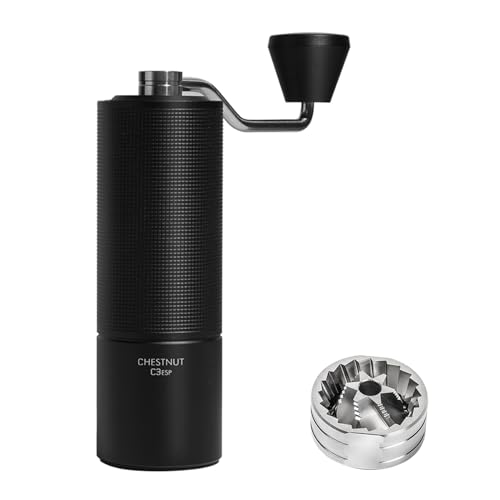
TIMEMORE Chestnut C3 ESP
$68.00Live Amazon price · as of 09/25/2026 12:33 AM
Conical Burr The lowest-priced of the four here, and a burr grinder rather than a blade. Its retail listing describes a stainless steel conical burr set of TIMEMORE's S2C design — S2C names the burr family rather than the material, and this is a listing claim we have not verified against a manufacturer datasheet. At this price the meaningful comparison is often against a blade grinder, and moving to a burr grinder is the more consequential change in grinding method.
$139.00Live Amazon price · as of 09/25/2026 12:33 AM
48 mm burrs · Conical Burr 1Zpresso publishes a 48 mm conical burr, a 30-click system per rotation, a 30–35 g capacity and a 705 g body. That burr diameter is part of what a manual grinder can offer at this price; what it is worth in the cup depends on geometry and alignment, which we do not measure.
$199.95Live Amazon price · as of 09/25/2026 12:33 AM
40 mm burrs · Conical Burr The best espresso grinder under $200: a repairable 40mm conical with 40 steps that pairs well with entry-level machines. Reliable and consistent, if not the clearest or most premium-feeling option.
$199.95Live Amazon price · as of 09/25/2026 12:33 AM
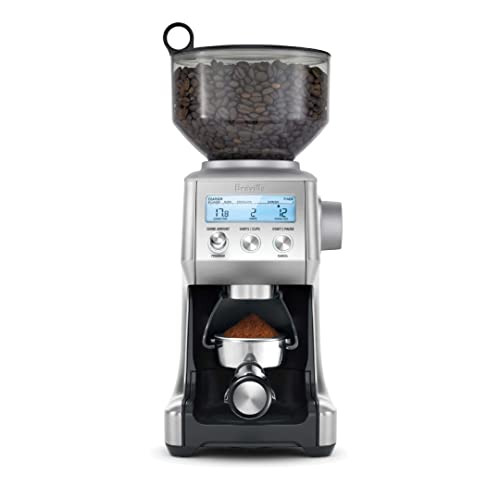
40 mm burrs · Conical Burr The Breville Smart Grinder Pro is the long-selling $200 conical with 60 settings and Dosing iQ timed dosing — a breadth-first grinder whose record is carried by usability and value rather than by outright grind performance.
$399.95Live Amazon price · as of 09/25/2026 12:33 AM
64 mm burrs · Flat Burr The definitive brew-only grinder: 64mm flat burrs, quiet operation and beautiful design for pour-over and drip. It cannot grind espresso, so it is a poor buy for espresso drinkers — and endgame for brew-only purists.
$389.00Live Amazon price · as of 09/25/2026 12:32 AM
64 mm burrs · Flat Burr The flat-burr value king: 64mm burrs, stepless single-dose workflow and SSP upgrade potential at roughly $389. Exceptional price-to-performance; expect minor out-of-box tuning and a less premium finish.
What is the difference between a burr and blade grinder?
A blade grinder chops the beans with a spinning propeller, so the grounds come out as a mixture of dust and large chunks. A burr grinder mills the beans between two surfaces set a fixed distance apart, so nothing leaves until it is small enough to pass through that gap and the grounds come out one size.
Is a burr grinder really worth it?
For most people it is the single biggest improvement available for the money, and it matters more than the brewer. Even grounds extract at the same rate, which is what lets a brew taste balanced rather than bitter and sour at once.
Can you make espresso with a blade grinder?
No. Espresso forces water through a compressed bed of coffee under pressure, which needs an even grind so the bed resists the water evenly. A blade grinder's mix of dust and boulders lets water channel through the loose areas while blocking others, and no technique fixes it.
Why does my coffee taste bitter and sour at the same time?
That combination is the signature of an uneven grind. The fine particles over-extract into bitterness while the coarse ones under-extract into sourness, in the same cup. It is the most reliable sign that a grinder is the problem rather than the recipe.
Are hand grinders better than cheap electric grinders?
Often yes, at the same price. The burrs are the expensive part of a grinder, and a hand grinder spends its budget there instead of on a motor. The trade is about a minute of effort per cup.
Does grinder burr size matter?
Less than whether it has burrs at all. The jump from a blade grinder to any burr grinder is enormous; the difference between a good small conical and a large flat burr is real but far smaller, and is worth worrying about only after the first jump.
Can I improve results with the blade grinder I already own?
A little. Grinding in short pulses and shaking the grinder between them redistributes the beans and narrows the spread slightly. It does not make a blade grinder even, but it beats holding the button down.
How often should a burr grinder be cleaned?
A brush through the chamber every few weeks, and cleaning tablets when the grind starts tasting stale. Coffee oils build up on burrs and mix into every fresh dose, which no amount of fresh beans can overcome.
Sources for this page:
How blade grinders chop rather than slice and leave a mixture of coarse chunks and fine dust, how burrs grind between two surfaces set closer or farther apart to control particle size, and that burr grinders deliver a consistent particle distribution leading to more uniform extraction: Mahlkoenig's published guide to coffee grinders, read 2026-09-24 · The blade grinder described as operating like a blender or food processor, its grounds not uniform with some fine and some relatively large, and burr grinders producing a more consistent grind size for a more balanced extraction: Breville's published burr versus blade explainer, read 2026-09-24 · That burrs grind with pressure rather than chopping and so produce fewer fines than a blade grinder, and how flat and conical burr geometries differ: Perfect Daily Grind's conical versus flat burr article, read 2026-09-24 · Grinder specifications, burr type and burr diameter are each maker's own published figures as recorded in our grinder catalog, with the listing read date on every card; scores, where shown, are our own published review verdicts We have not lab-tested brewers; where a figure is a manufacturer's, the page names the manufacturer, and machine capabilities come from our own published review records.