6 facts, each with a source below6 questions answered5 verified products
Two claims get muddled on a pod box, and they are independent. Organic certification covers the coffee inside; whether the cup is compostable is a separate claim about the packaging, and only some of those are themselves certified. A pod can be certified organic in a plastic cup, or uncertified coffee in a compostable one. Buying well means reading both.
CompatibilityStated per listing, K-Cup style brewers
Three different things a pod can claim about its own afterlife, and none of them is what the organic certification covers.
Pods buy convenience and consistency. What they cost is money per cup and a packaging decision every other format lets you ignore. Photo: Ronan Furuta / Unsplash
Two claims, and they are not the same claim
This is the whole page, so it goes first. Organic certification applies to the coffee. The USDA's requirements are about certifying agents, prohibited methods and allowed substances, and they concern what went into growing and handling the beans. Nothing in that is about the cup the coffee is packed into.
Compostable is a claim about the cup, made by the packaging manufacturer or the brand, and it varies in how checkable it is. One of the pods we card states USDA Organic Certified, Non-GMO Project Verified, and BPI Compostable Certified — three separate certifications, from three separate schemes, and the third is the one about the cup.
Third-party compostableVermont Coffee Company Organic Medium Roast compostable pods, 10 count
The one whose compostable claim is itself certified rather than asserted, and the cheapest way to try pods before committing to a box of eighty.
Others describe the pod as compostable without naming who certified that. And at least one major brand's pods are plastic with a mail-back recycling scheme, which recycles only if you actually post them back. None of that changes whether the coffee is organic.
What to buy, by how many you will get through
Pods are the format where box size moves the price per cup most, because the coffee is a small fraction of what you are paying for.
Ten, to try. The smallest certified organic box we card is ten pods, which is the sensible way to find out whether you like a roast before buying eighty of them.
Thirty-odd, for a normal household. The mid-size boxes are where most people land — enough to last, not enough to go stale in the cupboard.
Certified organic podsNewman's Own Organics Special Blend K-Cup pods, 32 count
The same certification as its bagged coffee, in the format most people actually brew at home.
Eighty, if pods are your everyday coffee. This is where the price per pod drops sharply, and it is the only way pods stop being an expensive way to drink coffee.
Bulk, lowest cost per podAmazon Fresh Organic Fair Trade Peru K-Cups, 80 count
Bought by the eighty, which is where pods stop being expensive per cup.
Compatibility, and the thing listings are careful about
Almost every organic pod sold in the US is made for Keurig-style brewers, and the listings are specific about it because they have to be. One states compatibility with most Keurig K-Cup 1.0 & 2.0 brewers, Cuisinart, Bunn and other single serve brewers.
Note the word most. Third-party pods and Keurig's own machines have a long history of compatibility friction, and a listing that says most rather than all is being accurate rather than evasive. If you have an unusual brewer, check the listing's own compatibility line rather than assuming.
Two honest answers, depending on which question you are asking.
Against non-organic pods, the premium is small and the certification is real and audited. If organic matters to you in a bag, there is no reason it should stop mattering in a pod.
Against loose coffee, pods are expensive per cup in every format and certification does not change that. What they buy is that nobody has to grind, dose or clean anything. That is a genuine benefit and it is worth money to plenty of households — it is just not a coffee-quality argument, and this page is not going to make it into one.
If the cost per cup is the deciding factor and convenience is the reason you are here, organic instant is dramatically cheaper per cup and needs no machine at all.
Where this page stops
We have not tasted these coffees or tested any packaging claim. Every product fact is its own listing's statement, read on Amazon, and the compostability claims are reported as the claims they are — including which of them name a certifier and which do not.
One deliberate omission: a certified organic pod range was found whose listing sells healthy coffee rules and discusses health risks. It is not carded here, on the same basis as the mushroom instant coffees excluded from our instant page. Our editorial standards set out where our evidence stops.
Verified products for this page
ℹ️
Affiliate disclosure: CoffeeLabAdvisor is an Amazon Associate and may earn a commission from these links, at no extra cost to you. Commissions play no part in what appears here — every product traces to a verified catalog entry or a published review.
Five certified organic pod options, each carded only because its own listing states the organic certification. Where a listing also makes a packaging claim, that claim is reported separately and attributed — the two are not the same certification.
Third-party compostable
Vermont Coffee Company
Organic Medium Roast compostable pods, 10 count
$14.02Live Amazon price · as of 10/27/2026 1:15 AM
The one whose compostable claim is itself certified rather than asserted, and the cheapest way to try pods before committing to a box of eighty. Listing states USDA Organic Certified, Non-GMO Project Verified, and BPI Compostable Certified single-serve pods, medium roast, made in the USA and compatible with most K-Cup brewing systems, 10 count.
$23.99Live Amazon price · as of 10/27/2026 12:07 AM
The same certification as its bagged coffee, in the format most people actually brew at home. Listing states Keurig single-serve K-Cup pods of a medium roast blend of Central American and darker-roasted Indonesian coffees, 100% USDA Certified Organic and Certified Orthodox Union Kosher, 32 count.
$29.49Live Amazon price · as of 10/27/2026 1:15 AM
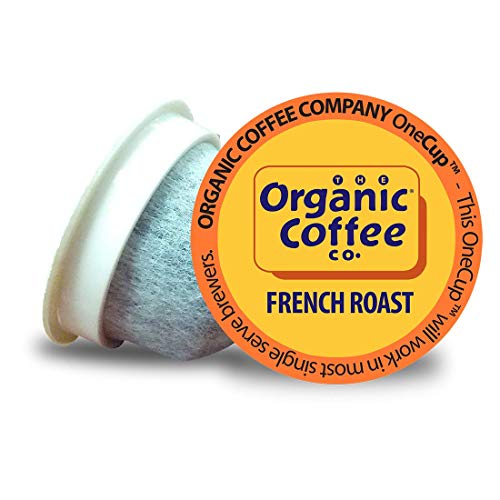
The answer to the objection people raise about pods, which is the waste rather than the coffee. Listing states USDA Organic dark French roast pods made from a blend of coffees from Central and South America, described as compostable and compatible with most Keurig K-Cup 1.0 and 2.0 brewers as well as Cuisinart and Bunn single serve brewers, 36 count.
$41.24Live Amazon price · as of 10/27/2026 1:15 AM
Bought by the eighty, which is where pods stop being expensive per cup. Listing states 80 single serving pods of medium roast Peruvian coffee, USDA Organic and Fair Trade arabica, roasted and packed in the USA, compatible with Keurig brewing machines.
$43.99Live Amazon price · as of 10/27/2026 1:15 AM
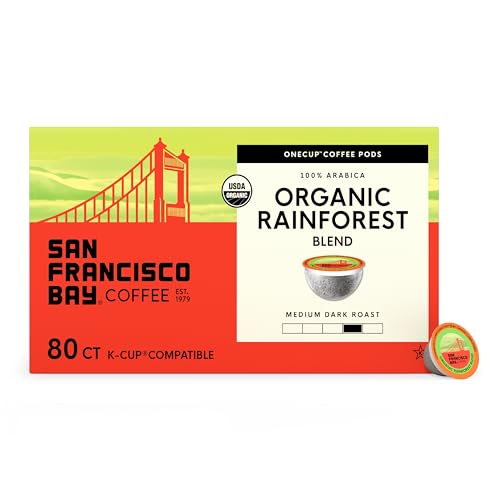
A second bulk option, from a roaster whose bagged organic blend is carded elsewhere on this site. Listing states USDA Certified Organic Rainforest Blend K-Cup compatible pods with notes of creamy cocoa and brown sugar named in its own description, 80 count.
Yes, and there is a reasonable choice of them. We card five whose listings state USDA organic certification, from ten-pod boxes to eighty. The certification works exactly as it does for bagged coffee: it audits how the coffee was grown and handled, and says nothing about the cup the coffee is packed into.
Does organic certification mean the pod is compostable?
No, and this is the most common confusion on pod boxes. Organic certification covers the coffee; compostability is a separate claim about the packaging. One pod we card states USDA Organic Certified, Non-GMO Project Verified and BPI Compostable Certified — three schemes, of which only the last concerns the cup. A pod can be certified organic in a plastic cup.
What is the difference between compostable and certified compostable pods?
Whether anyone independent checked. A listing that names a certifier, such as BPI Compostable Certified, has had the claim assessed by a third party. A listing that simply describes the pod as compostable is making the seller's own statement. Both may be true; only one is verifiable from the label.
Are organic coffee pods worth the money?
Against other pods, yes — the premium is small and the certification is audited. Against loose coffee, pods are expensive per cup whatever is in them, and certification does not change that. What pods buy is that nobody grinds, doses or cleans anything, which is worth real money to some households but is not a coffee-quality argument.
Which organic pods are cheapest per cup?
The eighty-count boxes, by a wide margin. Pod pricing is dominated by box size because the coffee is a small share of what you pay for, so the same coffee can cost very differently per pod depending on how many you buy at once. The ten-count boxes are for finding out whether you like a roast, not for everyday drinking.
Do organic pods fit all Keurig machines?
The listings say most, not all, and that wording is doing real work. Third-party pods and Keurig brewers have a history of compatibility friction, so a listing that claims compatibility with most K-Cup 1.0 and 2.0 brewers plus Cuisinart and Bunn is being accurate. If your brewer is unusual, read that line on the listing rather than assuming.
Sources for this page:
Certification requirements, and the fact that they concern growing and handling rather than packaging: USDA Agricultural Marketing Service, Organic Labeling page, ams.usda.gov/rules-regulations/organic/labeling, read 2026-09-10 · Compostability, compatibility and certification claims: each product's own Amazon listing, read on Amazon and attributed to the seller. We have not tested any packaging claim · Product facts on the cards: each listing's own statement, read on Amazon. A coffee is called organic here only where its own listing states it · A certified organic pod range whose listing sells health rules and discusses health risks was found and deliberately excluded · We have not tasted, brewed or laboratory-tested any coffee on this page, and this page makes no health claims We have not lab-tested brewers; where a figure is a manufacturer's, the page names the manufacturer, and machine capabilities come from our own published review records.