Keurig Tea and Hot Chocolate Pods: Which Work, and the Clean Keurig Says to Do First
Tea pods taste of coffee for a documented reason: Keurig's own guide says to clean both needles and run two cleansing brews when switching from coffee to a non-coffee pod. What works, what leaves residue, and the routine worth keeping.
8 facts, each with a source below6 questions answered3 verified products
Tea and cocoa pods work in any Keurig that takes a K-Cup, but there is a step most owners miss. Keurig's K-Express guide states that When transitioning from brewing a coffee pod to a non-coffee pod (i.e. tea or cocoa), clean the exit and entrance needle per the instructions provided and perform 2 cleansing brews. That is why a tea pod so often tastes of the coffee before it. Sweetened pods need attention on the way out too — Keurig recommends a rinse pod or cleansing brew immediately after brewing hot cocoa or other sweetened pods to keep the needles clean.
Not covered hereEspresso pods — see Nespresso vs Keurig
The answer to the most common complaint about Keurig tea, printed in Keurig's own guide and almost never followed.
Why your tea tastes of coffee, and the fix Keurig prints
This is the complaint that brings most people to this page, and it has a documented answer rather than a folk one. The K-Express Use & Care Guide says: When transitioning from brewing a coffee pod to a non-coffee pod (i.e. tea or cocoa), clean the exit and entrance needle per the instructions provided and perform 2 cleansing brews.
Read that carefully, because it asks for more than most owners assume. Not a rinse. Not one flush. Both needles cleaned by hand, and then two pod-free brews. Keurig is describing a machine that holds on to coffee at the puncture points, and tea is simply the drink delicate enough to reveal it.
The needle cleaning itself is a paper-clip job on both the entrance needle under the lid and the exit needle in the bottom of the pod holder. One caution comes with it, from the same family of guides: CAUTION: There are sharp needles that puncture the K-Cup® pod above the K-Cup® pod holder and in the bottom of the K-Cup® pod holder. To avoid risk of injury, do not put your fingers in the K-Cup® pod holder.
Which pods leave the most behind
It is worth being precise about what dirties a brewer, because the intuitive answer is wrong. Tea is not the problem. Sugar is.
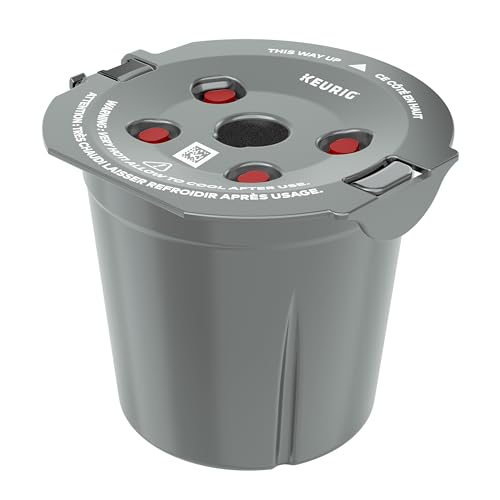
Keurig singles out sweetened pods for immediate attention: We recommend using a Keurig® Rinse Pod or running a cleansing brew immediately after brewing hot cocoa or other sweetened pods to keep the needles clean. Note the word immediately — this is the one cleaning instruction in the guides with urgency attached, because sugar sets.
Plain tea, by contrast, leaves very little. Its problem is the opposite one: it picks up whatever the last pod left. That asymmetry is the whole shape of living with both drinks in one machine — cocoa dirties it, and tea reports on it.
The temperature question nobody mentions
A Keurig brews at a temperature chosen for coffee, and it is not adjustable on most models. On the K-Elite, where it is adjustable, the guide describes the range narrowly: Temperature Control allows you to adjust the temperature from 187 to 192 degrees.
That sits comfortably within the conventional range for black tea and well above the range green tea is usually given. If you brew green tea pods and find them harsh, the brewer is a plausible explanation rather than the pod — it is hotter than a kettle-and-timer approach would be, and it is not asking your permission.
For black tea, chai and cocoa, the fixed temperature is a non-issue. This matters only at the delicate end, and it is the main reason a tea drinker with real standards keeps a kettle alongside.
A routine you will actually keep
The full switching procedure is correct and almost nobody runs it between every cup. That is worth acknowledging rather than repeating the instruction louder.
The practical answer is to batch. Brew the coffee the household wants, clean once, then brew the tea. One needle clean per switch instead of per cup, which turns a procedure into something that happens on a Sunday rather than six times a day.
The lighter alternative is a pod-free cleansing brew between drink types. It helps with what is in the water path and does nothing for the needles, so it reduces the problem without solving it. If your tea still tastes faintly of coffee after a cleansing brew, that is the needles telling you which job was skipped.
Is a Keurig a good way to make tea at all?
For black tea, chai and cocoa in a house that already owns one: yes, straightforwardly. The convenience is the point, the temperature is appropriate, and the only real discipline is cleaning between drink types.
For delicate tea: less so, and it is better to say that than to sell the machine as universal. A fixed brew temperature near 190°F, a fixed contact time and a sealed pod are the opposite of what a good green tea wants.
And if the machine brews coffee all day in a busy household, be honest about whether the switching procedure will ever happen. A brewer that is never cleaned between drinks makes tea that tastes of coffee, no matter which pod goes in.
What this page does not cover
Espresso pods are a different question with a different answer, and it belongs on the page that already handles it rather than being duplicated here — a Keurig does not brew espresso under pressure, and the comparison with Nespresso is linked below.
Nor does this page rank individual tea brands. Pod ranges change constantly and a ranking written today ages badly; the mechanics of brewing them well do not.
Verified products for this page
ℹ️Affiliate disclosure: CoffeeLabAdvisor is an Amazon Associate and may earn a commission from these links, at no extra cost to you. Commissions play no part in what appears here — every product traces to a verified catalog entry or a published review.
What this page actually calls for: something to clean between drink types, and a reusable pod if you would rather use your own loose leaf. Every product fact is the listing's own statement, read on the date shown on the card.
Cleaning tablets
Quick & Clean
Keurig Cleaning Pods, 6 pack
$9.99Live Amazon price · as of 10/08/2026 10:23 AM
Runs through the pod holder and exit needle; not a descaler. Listing states a non-toxic, biodegradable cleaning pod compatible with Keurig 1.0 and 2.0 brewers, used by brewing one large cycle with the pod and then one large water-only cycle, and states plainly that it is an aftermarket product with no affiliation with or endorsement from the manufacturers named.
$12.99Live Amazon price · as of 10/08/2026 10:23 AM
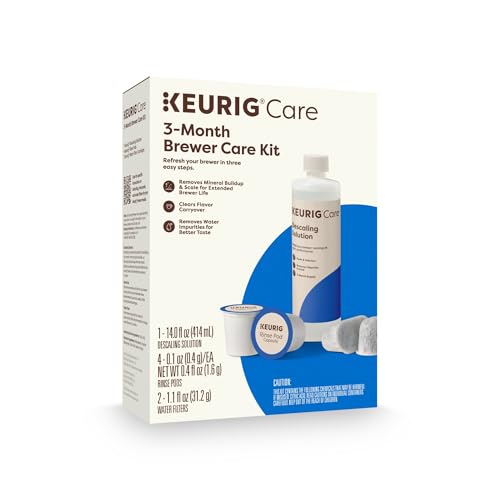
Keurig's own bundle of the three things this page asks for. Listing states the kit contains 4 Keurig rinse pods, 1 descaling solution and 2 water filter cartridge refills, is compatible with Classic/1.0 and 2.0 K-Cup coffee makers, and says to use the descaling solution every 3 months to remove mineral deposits.
Because the needles still hold coffee. Keurig's guide states that when transitioning from a coffee pod to a non-coffee pod such as tea or cocoa, you should <q>clean the exit and entrance needle per the instructions provided and perform 2 cleansing brews.</q> A single rinse does not do it.
Can you use tea pods in any Keurig?
Any brewer that takes a standard K-Cup pod will brew a tea pod. The constraint is not compatibility, it is the cleaning between drink types and a brew temperature chosen for coffee.
Do I need to clean after hot chocolate?
Keurig says so, and with unusual urgency: use a rinse pod or cleansing brew <q>immediately after brewing hot cocoa or other sweetened pods to keep the needles clean.</q> Sugar sets, and the needles are where it sets.
What temperature does a Keurig brew tea at?
The same temperature it brews coffee at. On the K-Elite, which exposes the setting, the guide describes a range of roughly 187 to 192 degrees Fahrenheit. That suits black tea and is hotter than green tea is usually given.
Is a cleansing brew enough between coffee and tea?
It helps and it is not what Keurig asks for. A cleansing brew flushes the water path; the needles are cleaned by hand. If the tea still carries coffee flavour afterwards, the needles are the part that was missed.
Can I use my own loose leaf tea instead of pods?
Yes, with a reusable pod. It also sidesteps the brand question entirely, though it does not change the brew temperature or the need to clean between drink types.
Sources for this page:
Keurig K-Express Use & Care Guide, 7pp, PDF, troubleshooting and pod-transition sections read 2026-10-07, dam.keurig.com/content/dam/public-assets/kcom_support/K-Express Use and Care Guide.pdf · Keurig K-Duo Essentials Gen 2 Use & Care Guide, 8pp, PDF, care and sweetened-pod guidance read 2026-10-07, dam.keurig.com/content/dam/public-assets/kcom_support/K-Duo Essentials Gen 2 UCG.pdf · Keurig K-Elite Use & Care Guide, 7pp, PDF, temperature control and needle care read 2026-10-07, dam.keurig.com/content/dam/public-assets/kcom_support/7297_KEUR_KElite_UCG_Digital.pdf · Keurig K-Slim Use & Care Guide, 6pp, PDF, read 2026-10-07, dam.keurig.com/content/dam/public-assets/kcom_support/J10690_KGM_KSlim_UCGuide_401.pdf We have not lab-tested brewers; where a figure is a manufacturer's, the page names the manufacturer, and machine capabilities come from our own published review records.