Home › Care › How to clean a Breville espresso machine
☕ Care & Cleaning · 2026
How to Clean a Breville Espresso Machine: The Routine, From Breville's Own Manuals
The hand-cleaning routine for a Breville espresso machine, from Breville's own Care and Cleaning pages: steam wand, portafilter, shower screen, burrs, drip tray and water filter, and what must never go in the dishwasher.
8 facts, each with a source below9 questions answered4 verified products
Cleaning a Breville is three separate rhythms, and the machine only prompts you about one of them. After every drink: purge and wipe the steam wand, and rinse the portafilter and basket under hot water while the oils are still soft. Weekly: wipe the group head and shower screen, purge water through an empty basket, empty and wash the drip tray, and run the grinder cleaning cycle if your model has a grinder. Every two months: replace the water filter. The two cycles the machine does prompt you for — the backflush cleaning cycle and descaling — are a different job with different instructions, and they live on our Breville descaling guide. Everything on this page is the hand cleaning that no light ever asks for, quoted from Breville's own Care and Cleaning pages.
After every drinkPurge and wipe the steam wand; rinse the portafilter and basket under hot water
WeeklyWipe the group head and shower screen; purge with an empty basket; wash the drip tray
Grinder modelsRun the burr cleaning cycle to clear oil build-up on the burrs
Every two monthsReplace the water filter — sooner in hard water
Blocked basket holesDissolve a cleaning tablet in hot water and soak about 20 minutes
NeverThe dishwasher. Breville's manual says all parts are washed by hand
Also neverAbrasive cleansers, pads or cloths — they scratch the surfaces
Not on this pageThe backflush cycle and descaling — both on our descaling guide
Three rhythms, not one job. Some of this is seconds after every drink; some is a few minutes each week; the water filter is a diary entry every two months.
What this page covers, and what the descaling guide covers
Owners conflate three different maintenance jobs, so it is worth separating them before any instructions.
1. The hand-cleaning routine — this page. The wiping, rinsing, purging and washing that keeps coffee oils and milk residue out of the machine. Nothing prompts you to do it. It is the single largest influence on how your coffee tastes over time, and it is what people mean when they search for how to clean a Breville.
2. The cleaning cycle, also called a backflush — the descaling guide. A cleaning tablet on a blanking disc in the portafilter, and the machine pushes solution back through the shower screen to strip oils from inside the group head. The machine prompts you for this. Breville's own manual is explicit that this cycle is a back-flushing cycle and is separate from descaling.
3. Descaling — the same guide. A chemical pass through the whole water path to dissolve mineral scale. Also prompted, and completely different from both of the above.
We keep the two prompted cycles together on one page because owners confuse the alerts with each other, and that page walks through the button sequences for the Barista Express, Barista Pro and Bambino Plus. This page does not repeat them. What follows is the routine, taken from the Care and Cleaning sections of Breville's own instruction books.
The steam wand, after every single drink
If you do only one thing on this page, do this one. Milk left inside a steam wand dries into a residue that no later cleaning easily reaches, and a partly blocked tip is the most common cause of a machine that has stopped texturing milk properly.
Breville's instruction is specific and takes about five seconds. The steam wand should always be cleaned after texturing milk. Wipe it with a damp cloth, then, with the tip pointed down over the drip tray, briefly turn the steam on for a couple of seconds. That purge clears the milk that is still sitting inside the wand, which the wipe cannot touch.
Do it immediately, while the wand is still hot and the milk has not set. A wand wiped ten minutes later is already harder to clean, and one wiped the next morning usually needs the tip removed.
If the tip holes block anyway: make sure the steam dial is in the standby position, switch the machine off and let it cool, then use the pin on the end of the cleaning tool Breville supplies to clear the holes. If it is still blocked: the same tool has an integrated spanner for unscrewing the tip. Take the tip off, soak it in hot water, clear the holes with the pin again, and screw it back on with the tool.
Reduced frothing performance is almost always this, and almost never a fault with the machine.
The portafilter and filter baskets
Breville's instruction here is also about timing: the baskets and portafilter should be rinsed under hot water immediately after use to remove residual coffee oils. Immediately matters, because coffee oil is easy to rinse away while it is warm and stubborn once it has cooled and oxidised on the metal.
Knock the puck out, rinse the basket and the portafilter under hot water, wipe them dry. That is the whole routine and it takes a few seconds.
When basket holes block — which shows up as water coming through unevenly, or a shot that sprays to one side — use the pin on the end of the supplied cleaning tool to clear the holes.
When the pin is not enough, Breville's escalation is to dissolve a cleaning tablet in hot water and soak the filter basket and portafilter in the solution for approximately twenty minutes, then rinse thoroughly. This works well and is worth doing every month or two on a machine in daily use, whether or not anything is obviously blocked.
One caution from the manual that applies to every part on this page: do not put any of it in the dishwasher, and do not use abrasive cleansers, pads or cloths, which scratch the surfaces.
The group head and shower screen
The shower screen is the perforated disc the water comes through, and it collects grounds and oil in a way that is easy to ignore because you have to look upward to see it.
Breville's routine has two parts. First, the group head interior and shower screen should be wiped with a damp cloth to remove any ground coffee particles — the Barista Pro manual says to do this after use. Second, periodically purge the machine: put an empty filter basket and the portafilter into the group head, press the 1 CUP button and run a short flow of water through to rinse out any residual coffee, then stop it, remove the portafilter and rinse it.
The purge is worth building into your routine at the end of a session rather than saving for a weekly clean, because it takes a few seconds and it flushes grounds out of the screen before they have time to bake on.
If the screen is visibly caked and wiping does not shift it, that is what the backflush cleaning cycle exists for, and it is covered on the descaling guide along with the button sequence for each model.
The built-in grinder, on models that have one
The Barista Express, Barista Pro and the other grind-and-brew models carry a conical burr grinder, and Breville publishes a cleaning cycle for it. Its purpose, in the manual's words, is that it removes oil build-up on the burrs which can impede performance. Skip it long enough and the symptoms are a grinder that delivers less coffee than it should, grinds inconsistently, or sounds laboured.
The routine cycle runs without tools: unlock and remove the hopper, empty the beans out of it, replace and lock the hopper, run the grinder empty to clear what is inside, then unlock and remove the hopper again, unlock and lift out the top burr, and brush the top burr, the lower burr and the chute clean. Breville supplies the brush. This is worth doing every few months in daily use, and immediately if the grinder starts under-delivering.
The advanced clean is a full strip-down, and the manual is clear that it is only required if there is a blockage between the grinding burrs and the grinder outlet. It involves setting the grind size to its finest position, loosening a nut with a 10 mm socket, removing the lower burr, washers and grind fan with long-nose pliers, clearing the chute, and reassembling in order. If you do this, note the manual's warning first: care should be taken as the grinder burrs are extremely sharp.
Two model details worth having right, because the numbers differ: on the Barista Express the strip-down uses grind size 1 as finest and 16 as coarsest, resetting to 5; on the Barista Pro the range runs to 30, resetting to 15. Use your own machine's manual for the model you own.
Moisture is the other enemy here. If water gets into the grinder chamber, Breville's troubleshooting says to clean and clear the chamber and chute and to ensure the burrs are thoroughly dry before reassembling. Never put wet beans or anything damp into a hopper.
The drip tray, storage tray and housing
Unglamorous, and the part most likely to produce a smell if neglected.
The drip tray should be removed, emptied and cleaned at regular intervals, and particularly when the drip tray full indicator is showing EMPTY ME!. On the Barista Express, take the grid off the tray, lift out the coffee grind separator and dispose of the grounds, and note that the EMPTY ME! indicator itself pulls upward out of the tray to release its side latches so you can wash it. Wash all the parts in warm soapy water with a soft cloth, rinse, and dry thoroughly.
The storage tray, which sits behind the drip tray and holds the cleaning tool and spare baskets, can be removed and wiped with a soft, damp cloth.
For all of it, the manual's standing instruction applies: all parts should be cleaned by hand using warm water and a gentle dish washing liquid. Do not use abrasive cleansers, pads or cloths which can scratch the surface. Do not clean any of the parts or accessories in the dishwasher. That last sentence is worth reading twice, because a dishwasher will dull and pit the stainless parts and is one of the more common ways an otherwise well-kept machine ends up looking old.
The water filter, every two months
This is the one job on a calendar rather than a rhythm, and it is the one that quietly saves you the most work, because the filter's purpose is to stop scale forming in the first place. Breville's own framing: the provided water filter helps prevent scale build-up in and on many of the inner functioning components, and replacing the water filter every two months will reduce the need to descale the machine.
The procedure, from the manual:
Take the new filter out of its plastic bag and soak it in a cup of water for 5 minutes, then rinse it under cold running water.
Wash the filter holder with cold water, taking specific care to rinse the stainless steel mesh.
Insert the new filter into the two parts of the holder.
Set the date dial two months ahead — this is the reminder, and it only works if you set it.
Align the base of the holder with the adapter inside the water tank and push down to lock it into place.
Slide the tank back into position, pushing down fully to lock.
Two notes from Breville worth knowing. In a hard water area, change the filter more often than every two months. And the water filter should be removed if you are using filtered or bottled water — filtering already-filtered water achieves nothing.
The routine, as a schedule
Everything above, arranged by how often it needs doing.
When
What
Takes
After every milk drink
Wipe the steam wand and purge it over the drip tray
5 seconds
After every shot
Knock out the puck, rinse basket and portafilter under hot water
10 seconds
End of a session
Wipe the group head and shower screen; purge with an empty basket
30 seconds
Weekly
Empty and wash the drip tray; wipe the housing and storage tray
5 minutes
Monthly or so
Soak baskets and portafilter in dissolved cleaning tablet, 20 minutes
Mostly waiting
Every few months
Grinder burr cleaning cycle, on models with a grinder
10 minutes
Every 2 months
Replace the water filter, and set the date dial
10 minutes
When prompted
Backflush cleaning cycle, then descaling — see the descaling guide
5–30 minutes
If you are starting from a machine that has never had any of this done, work from the top of that table downward rather than attempting everything at once. The steam wand and the portafilter rinse are the two habits that change the taste of your coffee soonest, and both cost seconds.
Verified products for this page
ℹ️Affiliate disclosure: CoffeeLabAdvisor is an Amazon Associate and may earn a commission from these links, at no extra cost to you. Commissions play no part in what appears here — every product traces to a verified catalog entry or a published review.
The consumables this routine needs, as listed by Breville for these machines: cleaning tablets for the basket soak and the backflush cycle, the two water filter types, and the descaler for when the machine asks for that instead. Product facts are each listing's own statements.
$11.98Live Amazon price · as of 09/25/2026 12:33 AM
For the flashing CLEAN light and the FLUSH alert - the backflush cycle, which is not descaling. Listing states official Breville tablets that remove coffee oils and residue from the shower screen and filter baskets, suitable for all Breville espresso machines, with a non-corrosive formulation.
$26.95Live Amazon price · as of 09/25/2026 12:33 AM
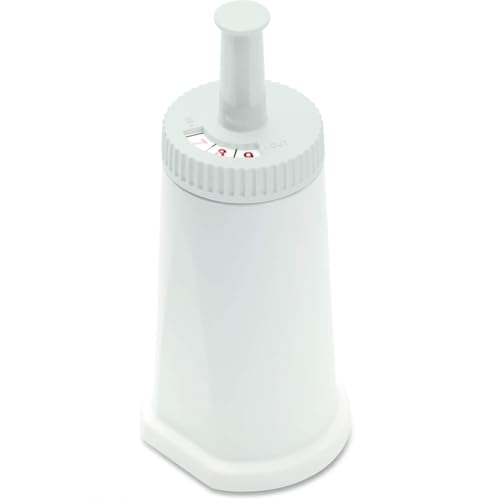
The two-month filter the manuals credit with reducing how often you descale; six is a year. Listing states the filters fit the Barista Pro BES878, Barista Express BES870, Infuser BES840 and Duo-Temp Pro BES810, plus earlier batches of the Oracle, Oracle Touch and Dual Boiler, with a recommended change every 2 months.
$16.99Live Amazon price · as of 09/25/2026 4:44 AM
The other Breville filter format - for the Touch, Impress, Oracle and Dual Boiler families, not the Express or Pro. Listing states the filter is designed for the Oracle Dual Boiler BES995, Oracle Touch BES990, Oracle BES980, Dual Boiler BES920, Barista Touch Impress BES881 and Barista Touch BES880, replaced every 90 days.
The descaling agent the instruction books assume you are using; one sachet per descale cycle on the Express. Listing states the official Breville descaler, formulated for Breville espresso machines, coffee makers and kettles, and names the Barista Express BES870 and Bambino Plus BES500 among the machines it is for.
In three rhythms. After every drink, purge and wipe the steam wand and rinse the portafilter and basket under hot water. Weekly, wipe the group head and shower screen, purge with an empty basket, and wash the drip tray. Every two months, replace the water filter. The prompted backflush and descale cycles are separate jobs.
Can Breville parts go in the dishwasher?
No. Breville's manual states that all parts should be cleaned by hand using warm water and gentle dish washing liquid, that abrasive cleansers, pads and cloths must not be used because they scratch the surface, and that no parts or accessories should be cleaned in the dishwasher.
How often should I clean the steam wand?
After every single milk drink. Breville's instruction is that the steam wand should always be cleaned after texturing milk: wipe it with a damp cloth, then purge steam for a couple of seconds over the drip tray to clear the milk left inside it.
Why is my Breville steam wand not frothing?
A blocked tip hole is the usual cause. With the steam dial in standby and the machine off and cool, use the pin on the supplied cleaning tool to clear the holes. If it stays blocked, unscrew the tip with the spanner in the same tool, soak it in hot water, clear it again and refit it.
How do I clean the Breville grinder burrs?
Run the grinder cleaning cycle: remove and empty the hopper, refit and lock it, run the grinder empty, then remove the hopper again, unlock and lift out the top burr, and brush the top burr, lower burr and chute. A full strip-down is only needed if there is a blockage between the burrs and the outlet, and the burrs are extremely sharp.
What is the difference between cleaning and descaling a Breville?
Cleaning removes coffee oils and milk residue; descaling removes mineral scale from the water path. They are separate jobs with separate alerts, and Breville's manual says explicitly that the cleaning cycle is a back-flushing cycle and is separate from descaling.
How often should the water filter be replaced?
Every two months, and sooner in a hard water area. Breville states that replacing it on that schedule reduces the need to descale. The filter should be removed altogether if you are using filtered or bottled water.
My filter basket holes are blocked. What do I do?
Use the pin on the end of the supplied cleaning tool to clear them. If they stay blocked, dissolve a cleaning tablet in hot water and soak the basket and portafilter in the solution for about twenty minutes, then rinse thoroughly.
Does this apply to the Bambino, Barista Express and Barista Pro?
The routine is the same across the range, and the steps here are quoted from the Barista Express and Barista Pro manuals. Details differ by model, most obviously that the Bambino has no grinder and that grind-size numbers differ between the Express and the Pro. Check your own model's Care and Cleaning pages.
Sources for this page:
Barista Express cleaning steps quoted from Breville's own manual - the steam wand wiped after texturing and purged over the drip tray, the cleaning tool pin for blocked tip holes and the integrated spanner for removing the tip, baskets and portafilter rinsed under hot water immediately after use and soaked about 20 minutes in dissolved cleaning tablet if blocked, the group head interior and shower screen wiped with a damp cloth and the machine purged periodically with an empty basket, the drip tray emptied at the EMPTY ME! indicator, the conical burr grinder cleaning cycle and its advanced burr strip-down with the warning that the burrs are extremely sharp, the water filter soaked five minutes and replaced every two months or sooner in hard water, and the instruction that all parts are washed by hand with warm water and gentle dish washing liquid, never with abrasives and never in a dishwasher: Breville BES870XL/A instruction book, Care & Cleaning pp. 24-27, breville.com/content/dam/breville/us/assets/miscellaneous/instruction-manual/espresso/BES870-instruction-manual.pdf, read 2026-09-24 · Barista Pro equivalents of the same steps, including purging the steam wand for a couple of seconds over the drip tray, the same basket and portafilter soak, wiping the group head and shower screen after use, and the conical burr grinder cleaning cycle with its grind-size positions for the strip-down: Breville BES878 US/CA instruction book, Care & Cleaning pp. 21-22, assets.breville.com/BES878/BES878_USCM_IB_I22_LR.pdf, read 2026-09-24 · Product fitment for the cleaning tablets, descaler and water filters: each product's own Amazon listing, as recorded in our catalog with its read date We have not lab-tested brewers; where a figure is a manufacturer's, the page names the manufacturer, and machine capabilities come from our own published review records.