Home › Guides › Honey Process Coffee
☕ Processing Explained
Honey Process Coffee: No Honey Involved
It is the most misleadingly named method in coffee. Honey processing has nothing to do with honey, nothing added to the bean and nothing to do with how the cup tastes of honey — it describes a sticky layer of the fruit's own sugar, deliberately left on while the coffee dries.
Written and reviewed by the CoffeeLabAdvisor editorial team · Published 5 October 2026
5 honey-processed coffees in our pool
0g of honey in any of them
0 tasted by us
Strip the skin and flesh off a coffee cherry and you are left with a seed wearing a slippery, sugary coat called mucilage. A washed coffee ferments that coat off and rinses it away. A natural leaves the whole fruit on. Honey processing splits the difference: the skin comes off, the mucilage stays, and the bean dries inside it. It looks and feels like honey on the drying bed. That is the entire reason for the name.
Say it once more, because the name does real damage: no honey is added to honey-processed coffee at any point. It is not flavoured, not sweetened, and not a dessert coffee. And “notes of honey” on a bag is a tasting note — a description of the cup — which tells you nothing about how the coffee was processed.
We are emphatic about this because our own catalogue got it wrong. One bag sat misfiled as honey-processed on the strength of a honey body named in its own tasting notes. It took a guard in our reading of labels to catch it. If a system built to read labels carefully can make that mistake, a shopper reading quickly certainly can.
What actually happens
The method
- Pulping. The cherries are de-pulped soon after picking, as in a washed coffee — skin and flesh off.
- No washing. Here the routes diverge. The mucilage is not fermented off and rinsed away. It stays on the parchment.
- Drying, sticky. The coated beans go onto patios or raised beds. They are turned frequently, because mucilage-covered beans clump and a clump dries unevenly.
- Hulling. Once dry, the parchment and the hardened mucilage are milled off together.
Needs far less water than washed processing, and far more attention during drying than either neighbour.
Why a producer chooses it
- Sweetness and body without giving up all the clarity a washed coffee has. The retained sugars ferment slowly against the seed as it dries.
- Water. Washed processing needs a lot of it, reliably. Honey processing does not.
- Control. Unlike a natural, the producer sets how much fruit stays on — so the method has a dial, which is what the colour names describe.
- Price. It is labour-intensive and riskier than washing, and it is usually sold at a premium that reflects that.
White, yellow, red and black honey
The colour names are the dial. They describe how much mucilage was left on and how slowly the coffee was allowed to dry — and the colour the drying beans actually take on as a result.
| Name | Mucilage left on | Drying | Generally associated with |
|---|
| White honey | Least | Fastest, full sun | Closest to a washed coffee; cleanest of the four |
| Yellow honey | Some | Fairly quick, full sun | A little more sweetness and body than washed |
| Red honey | More | Slower, often partly shaded | Noticeably heavier and sweeter; more fruit |
| Black honey | Most | Slowest, often covered or shaded for weeks | Heaviest and most fermented; closest to a natural |
Treat these as a spectrum rather than four defined grades. There is no governing body certifying what counts as red rather than black honey, and usage varies between producers and between countries. A label naming a colour is telling you where on the dial the producer believes they sat.
What it does to the cup
What we can say: honey processing is associated, as a class, with more perceived sweetness and a fuller body than a washed coffee from the same farm, while holding more of the origin's clarity than a natural. That middle position is the reason the method exists and the reason producers accept its extra risk and labour.
What we cannot say: what any particular bag on this page tastes like. CoffeeLabAdvisor has not tasted these coffees. Each appears because its own label documents honey processing — not because we cupped it and agreed. And as on every page in this set, the roast level and the freshness of what you buy will move your cup further than the processing will.
How we read it off a label
We do not taste coffees to decide which group they belong to — we read the words on the listing and group those words. That grouping is a claim about language, so here is the rule in full, with the phrases our own pool actually uses.
| Checked | Read as | Phrases that match | Why the rule sits here | In our pool |
|---|
| 2 |
Honey |
honey |
Covers 'honey', 'honey process' and 'honey-processed'. |
Black Honey; honey-processed; Honey Process; honey processed; Red Honey |
A single rule catches “honey”, “honey process”, “honey processed” and the colour variants, because they are one method written several ways. What the rule will not do is read a honey tasting note as a process — that distinction is a separate check, and it exists because we needed it.
What this list is, and what it is not
This is not a ranking and nothing here is scored. These are the coffees in our pool whose own labels document honey processing. A coffee whose label says nothing about processing is not here, and that is the normal case: 73 of the 100 coffees we have read name no process at all.
So this is not a list of the honey-processed coffees that exist — it is a list of the ones that say enough about themselves to be placed. For each, we state what its label leaves out as well as what it claims.
Honey-processed coffees in our pool (5)
In catalogue order — not ranked, not numbered, not tasted.

Honey — as its own label states itKwiso Coffee
Honey Process Tarrazu, Single Origin
Medium Roast · Honey Process · Costa Rica
Check price →
Its label says Honey Process. It also documents the origin, the roast and the species, which few labels do.
Buy on Amazon → 
Honey — as its own label states itGold Star Coffee
Costa Rica Black Honey, Whole Beans
Black Honey · Costa Rica
Check price →
Its label says Black Honey. It does not say the roast, nor the species.
Buy on Amazon → 
Honey — as its own label states itRoblesabana Coffee
Red Honey, Las Lajas farm
Red Honey · Costa Rica
Check price →
Its label says Red Honey. It does not say the roast.
Buy on Amazon → 
Honey — as its own label states itBetter Buzz
Costa Rica Whole Bean, Medium Roast
Medium Roast · honey processed · Costa Rica
Check price →
Its label says honey processed. It also documents the origin, the roast and the species, which few labels do.
Buy on Amazon → 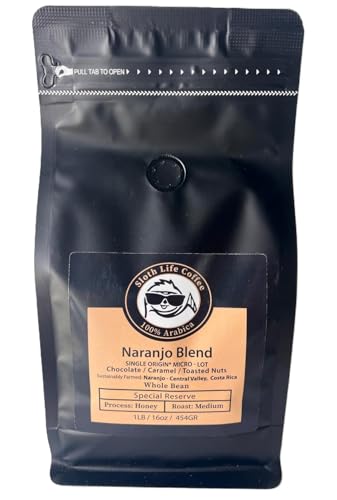
Honey — as its own label states itSloth Life Coffee
Costa Rica Naranjo, Medium Roast
medium roast · honey-processed · Costa Rica
Check price →
Its label says honey-processed. It does not say the species.
Buy on Amazon →
Affiliate links — CoffeeLabAdvisor may earn a commission at no extra cost to you. Commissions never influence reviews or awards; a coffee appears here because of what its label documents, and for no other reason. Product images courtesy of Amazon.
What this means when you are buying
- Expect to pay more, and know what for. The premium is for labour and risk during drying, not for a rarer bean.
- If a colour is named, it is a useful signal. White and yellow lean toward washed; red and black lean toward natural. Pick the end you already know you like.
- Buy light-to-medium. The sweetness and body the method produces live in the range a dark roast overwrites.
- Do not buy it for honey flavour. That is not what the name means, and a bag promising honey notes may well be washed.
- Costa Rica is the obvious starting point — it is where the colour-graded approach became standard practice, and it is well represented at retail.
Honey processing is one point on a spectrum. The ends of that spectrum are covered in natural vs washed, and the sealed-tank fermentation that can be layered on top of any of them in anaerobic coffee. If you would rather start from the cup you want, our coffee flavour profiles tool reads the same labels from the other direction.
Processing is one of the signals our flavour grouping reads: natural, honey and anaerobic are the process values the Fruit-associated group is built from. That is a statement about what the rule reads, not about how any of these coffees taste.
Frequently asked questions
Is there honey in honey process coffee?
No. Not a drop. The name describes the sticky, honey-like mucilage that is deliberately left clinging to the bean while it dries — a layer of fruit sugar, not a sweetener added by anyone. No honey touches the coffee at any stage, and the method says nothing about whether the cup tastes of honey.
What is honey process coffee?
A middle route between washed and natural processing. The skin and flesh of the cherry are pulped off, as in a washed coffee, but the mucilage — the slippery sugar layer underneath — is left on, and the bean dries with it still attached. So the fruit is partly removed and partly kept, which is the whole point of the method.
What do white, yellow, red and black honey mean?
How much mucilage was left on, and therefore how slowly the coffee dried. White honey keeps the least and dries fastest; black honey keeps the most and dries slowest, sometimes under shade or cover for weeks. Yellow and red sit in between. The names come from the colour the drying beans take on. More mucilage and slower drying generally mean more fermentation character, and more risk for the producer.
Does honey processed coffee taste sweeter?
It is associated with more perceived sweetness and a heavier body than a washed coffee from the same farm, while keeping more clarity than a natural — that is the reason producers do it. But association is not a measurement of any particular bag, and we have not tasted the coffees on this page. Roast level and freshness will still change your cup more than the processing will.
Is honey process the same as pulped natural?
They are close relatives and the terms are sometimes used loosely for one another. Both pulp the cherry and dry the bean with mucilage still attached. In practice "pulped natural" is the older Brazilian term and tends to describe less mucilage retention, while "honey" — associated with Costa Rica in particular — is used where the amount left on is controlled deliberately and graded by colour.
How can I tell if a coffee is honey processed?
The bag has to say so, and most bags say nothing about processing at all: 73 of the 100 coffees we have read name no process. When a label does say it, it usually says it plainly — "honey process", "honey processed", or a colour such as "red honey". Be careful not to read a tasting note as a process: "notes of honey" is a description of the cup and tells you nothing about how the coffee was dried.