Home › Guides › Anaerobic Coffee
☕ Processing Explained
Anaerobic Coffee: Fermentation With the Air Shut Out
Seal coffee in a tank, exclude the oxygen, and you change which microbes get to work on it. The result is the most polarising category in specialty coffee — and the one most often mislabelled, because “anaerobic” answers a different question from “natural” or “washed”.
Written and reviewed by the CoffeeLabAdvisor editorial team · Published 5 October 2026
5 anaerobic coffees in our pool
100 coffees read in total
0 tasted by us
Every coffee is fermented. Removing the fruit from the seed is a microbial job, and it happens in open tanks, on patios, inside drying cherries — wherever there is sugar and air. Anaerobic processing takes the air away. The coffee ferments sealed in, and that single change rewrites which microbes can work, what they produce, and what ends up in the cup.
The distinction that catches almost everyone: “washed”, “natural” and “honey” answer how much of the fruit stayed on the bean while it dried. “Anaerobic” answers what the fermentation happened inside. Those are different questions, so the answers stack: an anaerobic natural is a real and coherent thing, and so is an anaerobic washed.
This is also why, in our own reading of labels, anaerobic is checked before natural. A bag reading “Anaerobic Natural” would otherwise be filed as an ordinary natural, and the most specific thing the label said about itself would be thrown away.
What actually happens
The method
- Loading. Cherries — whole, or de-pulped, depending on what the producer is making — go into a sealed vessel: a stainless tank, or a food-grade barrel.
- Sealing. The vessel is closed, usually with a one-way valve. Carbon dioxide from the fermentation can escape; outside air cannot get back in. Some producers flush with CO₂ first, which is where “carbonic maceration” comes from.
- Fermenting, watched. Oxygen-tolerant microbes drop out and others take over. Temperature, pH and time are monitored, often for a stated number of hours — which is why labels frequently print a figure such as a 72-hour fermentation.
- Drying. The coffee is then dried as a washed, honey or natural coffee would be. The anaerobic step is layered on top of that choice, not a replacement for it.
Why a producer chooses it
- Flavours nothing else reaches. The point is not a better version of a familiar cup — it is a different cup.
- Control. A sealed vessel with a valve is far more measurable than an open tank or a drying patio.
- Value from an ordinary lot. Processing can make a commercially unremarkable coffee commercially interesting, which matters a great deal to a smallholder.
- The risk is real. Push the fermentation too far and the result tastes of vinegar, solvent or rot. There is no rescuing it afterwards.
What it does to the cup
What we can say: anaerobic fermentation is associated, as a class, with high intensity and with flavours well outside the ordinary coffee range — heavy tropical fruit, wine and spirit notes, cinnamon and baking spice, and sometimes a savoury or funky character. It is the most deliberately transformative processing choice in common use.
What we cannot say: that you will like it. This is the one category in coffee where the honest consumer advice is that it divides opinion sharply, including among people who do this professionally. Some find it thrilling; others find it tastes less of coffee and more of the process. CoffeeLabAdvisor has not tasted the coffees on this page — each appears because its own label documents the method.
One practical note: because the character is so pronounced, anaerobic coffees are usually sold as light roasts and are usually brewed as filter. A dark roast would compete with exactly the flavours the producer spent the effort creating.
How we read it off a label
We do not taste coffees to decide which group they belong to — we read the words on the listing and group those words. Here is the rule, with the phrases our own pool actually uses.
| Checked | Read as | Phrases that match | Why the rule sits here | In our pool |
|---|
| 1 |
Anaerobic |
anaerobic |
Checked first: 'anaerobic natural' names a sealed fermentation and is not the same as a natural, so the general term must not claim it. |
anaerobic fermentation and natural drying; Anaerobic Natural; anaerobic natural, 72-hour fermentation; Anaerobic Process; Anaerobic processing |
Being checked first is the whole point of this rule. Several of the phrases in our pool contain the word “natural” as well — a label reading anaerobic natural is naming both the fermentation and the drying. The more specific claim wins, so the label's own precision survives.
What this list is, and what it is not
This is not a ranking and nothing here is scored. These are the coffees in our pool whose own labels document anaerobic fermentation. A coffee whose label says nothing about processing is not here, and that is the normal case: 73 of the 100 coffees we have read name no process at all.
So this is not a list of the anaerobic coffees that exist — it is a list of the ones that say enough about themselves to be placed. For each, we state what its label leaves out as well as what it claims.
Anaerobic coffees in our pool (5)
In catalogue order — not ranked, not numbered, not tasted.
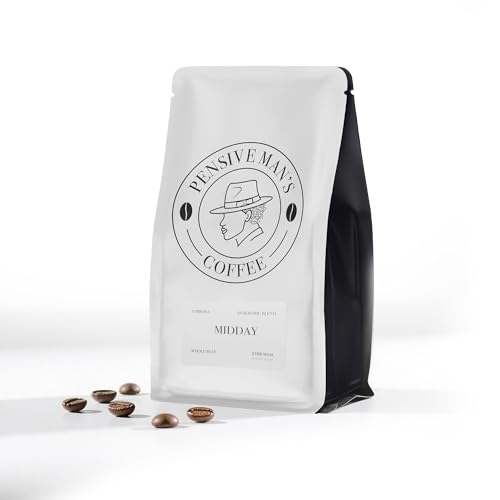
Anaerobic — as its own label states itA Pensive Man's Coffee
Ethiopian Whole Bean, Midday Medium Roast
Medium Roast · Anaerobic processing · Ethiopia
Check price →
Its label says Anaerobic processing. It also documents the origin, the roast and the species, which few labels do.
Buy on Amazon → 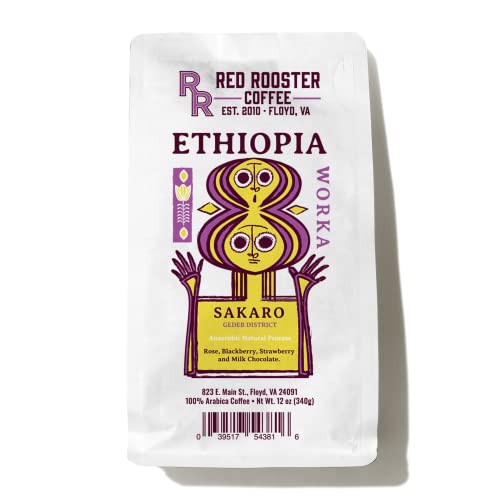
Anaerobic — as its own label states itRed Rooster Coffee
Ethiopia Worka Sakaro Anaerobic Natural, Whole Bean
Light Roast · Anaerobic Natural · Ethiopia
Check price →
Its label says Anaerobic Natural. It does not say the species.
Buy on Amazon → 
Anaerobic — as its own label states itFoxen Coffee
Ethiopia Guji Wush Wush Anaerobic Natural
light roast · anaerobic natural, 72-hour fermentation · Ethiopia
Check price →
Its label says anaerobic natural, 72-hour fermentation. It does not say the species.
Buy on Amazon → 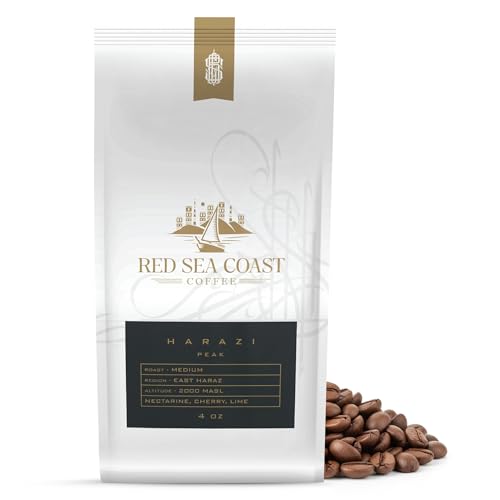
Anaerobic — as its own label states itRed Sea Coast
Harazi Peak, Yemeni Specialty Micro-Lot
Light Roast · Anaerobic Process · Yemen
Check price →
Its label says Anaerobic Process. It does not say the species.
Buy on Amazon → 
Anaerobic — as its own label states itMadre Selva
Geisha, Single Origin Colombian
Medium Roast · anaerobic fermentation and natural drying · Colombia
Check price →
Its label says anaerobic fermentation and natural drying. It also documents the origin, the roast and the species, which few labels do.
Buy on Amazon →
Affiliate links — CoffeeLabAdvisor may earn a commission at no extra cost to you. Commissions never influence reviews or awards; a coffee appears here because of what its label documents, and for no other reason. Product images courtesy of Amazon.
What this means when you are buying
- Buy a small bag first. This is the category most likely to be not for you, and the bags are not cheap.
- Brew it as filter before espresso. Pour-over or drip gives the clearest view of what the processing did; espresso concentrates the intensity, which can be a lot.
- Read the second word. “Anaerobic natural” and “anaerobic washed” are meaningfully different coffees — the first stacks sealed fermentation on top of weeks of drying in fruit, the second does not.
- A stated fermentation time is a good sign. It does not tell you the coffee is good, but it tells you someone was measuring.
- Do not start here. If you are still working out what you like in coffee, a clean washed coffee and a good natural will teach you more, faster.
For the drying-side choices this method gets layered on top of, see natural vs washed and honey process coffee. If you would rather start from the cup you want than from the method, our coffee flavour profiles tool reads the same labels from the other direction.
Processing is one of the signals our flavour grouping reads: natural, honey and anaerobic are the process values the Fruit-associated group is built from. That is a statement about what the rule reads, not about how any of these coffees taste.
Frequently asked questions
What is anaerobic coffee?
Coffee fermented in a sealed container with the oxygen excluded — usually a stainless tank or a lined barrel, often fitted with a valve that lets carbon dioxide escape without letting air back in. Shutting out oxygen changes which microbes can work and which by-products build up, and producers use it to push the cup toward flavours that ordinary open fermentation does not reach.
Is anaerobic the same as natural processing?
No, and this is the most common confusion about it. Natural describes whether the fruit stays on the bean while it dries. Anaerobic describes the environment the fermentation happens in. They are answers to different questions, so a coffee can be both — "anaerobic natural" is a common and perfectly coherent label — and a coffee can equally be an anaerobic washed or an anaerobic honey.
What does anaerobic coffee taste like?
It is associated as a class with intensity and unusual, often divisive flavours: heavy tropical fruit, booze and wine notes, cinnamon and spice, sometimes a distinctly savoury or funky edge. The method is chosen precisely because it produces something you would not get otherwise. Whether you enjoy that is a genuine matter of taste, and plenty of experienced coffee drinkers do not. We have not tasted the coffees on this page.
What is carbonic maceration coffee?
A borrowed winemaking term for much the same idea: the sealed vessel is flushed with carbon dioxide before fermentation, so the oxygen is displaced rather than merely used up. In coffee it is generally treated as a variety of anaerobic processing, and labels use the two terms with considerable overlap.
Is anaerobic coffee safe?
Yes — it is a controlled fermentation of a food product, and the coffee is then dried, hulled and roasted like any other. The roast alone is well past the point where fermentation microbes survive. The risk anaerobic processing carries is to flavour and to the producer's crop value, not to the drinker: a fermentation that runs too far produces coffee that tastes of vinegar or solvent and is hard to sell.
Why is anaerobic coffee expensive?
Equipment, time and risk. Sealed tanks with airlocks cost money, the fermentation has to be monitored rather than left alone, batches are small, and a batch that overshoots is close to worthless. It is a deliberate specialty product, and across our own pool it remains uncommon: 5 of the 100 coffees we have read document it.