Nearly all of it is scale, the group gasket, or a shower screen nobody has taken off. Gaggia's own descaling method is unusual and worth following exactly: mix the Decalcifier in a separate container, fill the reservoir with it, then dispense about 2 oz from the steam arm and 2 oz from the group head, let it stand for the time on the packaging — typically two to five minutes — and repeat until the solution has drained, then flush with fresh water. A group that leaks around the portafilter usually needs a new gasket, and a slow or uneven shot often just needs the shower screen off and cleaned.
Descale every2 to 3 months
DescalerGaggia Decalcifier — the only one Gaggia approves
MethodAlternate steam arm and group head
Stand timeTypically 2 to 5 minutes per pass
Leaking at the groupUsually a worn group gasket
Never useScrubbing powders or harsh cleaners
WaterPurified or bottled, for taste
Descaling, the way Gaggia describes it
Gaggia's published method for its semi-automatics is not the single unattended cycle a bean-to-cup runs. It is manual, and it alternates between the two outlets so that both circuits get solution:
- Mix the Gaggia Decalcifier according to its directions, in a separate container rather than in the machine.
- Fill the water reservoir with the mixed solution.
- Dispense about 2 oz from the steam arm, then about 2 oz from the group head.
- Let the machine stand for the time given on the cleaner packaging — typically two to five minutes.
- Repeat until all the solution has drained through.
- Flush with fresh water. Refill the reservoir with clean water and run it through both outlets the same way.
Gaggia recommends descaling every two to three months. If you are on hard water and have never done it, do not be surprised by how long the flush takes to run clear.
Which descaler, and what not to use
Gaggia describes its Decalcifier as the only descaler approved for its machines, tested to be safe for them, and suitable for both its semi-automatic and super-automatic ranges. It is sold in 250 ml bottles, which is the dose the instructions above are written around.
On cleaning generally, Gaggia's line is to never use scrubbing powders or harsh cleaners. The Classic Pro's brightwork marks easily and the internals like acid even less. If you want the machine to look new in five years, the answer is a damp cloth and frequency, not abrasives.
Gaggia also suggests purified or bottled water for the taste of the coffee. That has a maintenance benefit as well — less mineral content going in means less scale to take out later.
The shower screen, and the shot that went wrong
If shots have gone slow, uneven or bitter and the grind has not changed, the shower screen is the first thing to look at, and on a Classic Pro it comes off with a screwdriver. Gaggia's guidance is to remove the shower screen and its holding plate, then use a stiff brush and some descaler to clean off the build-up.
What accumulates there is coffee oil and fines baked on by heat, and it is invisible until the screen is out and in the light. A screen that looks clean from below is often not. This is also the moment to look at the gasket above it, because you are already there.
Backflushing with a blind insert and a suitable powder does the same job for the three-way valve and the group's internals without dismantling anything, and is worth doing on a schedule rather than in response to a symptom.
Leaking around the portafilter
A Classic Pro that drips or sprays from the edge of the portafilter during a shot, rather than through the spouts, is usually telling you the group gasket is worn. Gaggia publishes the removal and installation procedure for exactly this, because it is a wear part and a common one.
The gasket hardens and compresses over time, and the symptom arrives gradually: first the portafilter starts going in further round the handle than it used to, then it starts weeping. If yours now locks past the centre line when it used to stop before it, that is the same message.
Rule out the simple causes first, though. An over-full basket, or grounds left on the rim of the basket, will break the seal on a perfectly good gasket. Wipe the rim before locking in and see whether the leak persists.
When it is not the machine
The Classic Pro is a manual machine, which means it gives you more ways to be disappointed than an automatic does. Before concluding it is faulty, separate machine problems from technique problems: a sour, fast shot is a grind and dose question, not a hardware one, and it will follow you to a new machine.
The Classic Pro also has no built-in grinder, so the grinder is doing more to the cup than the machine is. Our grinder pairing page for the Classic Pro ranks the candidates, and the review covers what the machine can and cannot do as it comes.
Verified products for this page
ℹ️
Affiliate disclosure: CoffeeLabAdvisor is an Amazon Associate and may earn a commission from these links, at no extra cost to you. Commissions play no part in what appears here — every product traces to a verified catalog entry or a published review.
The descaler Gaggia approves, a blind insert and group brush for the group head, backflush powder, and the machine itself. Each product fact is the listing’s own statement.
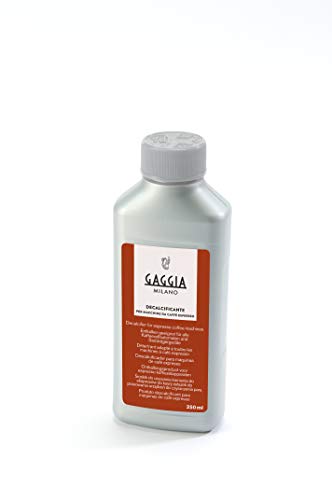
DescalerGaggia
Decalcifier Descaler Solution, 250 ml
$9.20Live Amazon price · as of 10/06/2026 4:32 PM
The descaler Gaggia approves for its own machines, in the 250 ml bottle its instructions are dosed against. Listing states a 250 ml bottle, for use with Gaggia espresso machines, and that it can be used to rid super-automatic and semi-automatic machines of scale build-up.
Check price on Amazon → 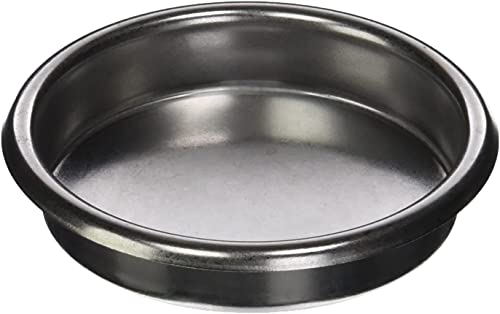
Cleaning accessoryEspresso Supply
58 mm backflush insert (blind basket)
$4.39Live Amazon price · as of 10/06/2026 4:32 PM
The blank basket that makes a backflush possible - a few dollars, lasts forever. Listing states a metal 58 mm backflush insert that is placed into the portafilter to backflush the machine.
Check price on Amazon → 
Cleaning accessorywatchget
58 mm group head cleaning brush with scoop
$15.99Live Amazon price · as of 10/06/2026 4:32 PM
The brush for the gasket groove and the screen, with the powder scoop on the handle. Listing states a 26 cm brush for 58 mm group heads with a soft inner nylon head for the shower screen, an outer 360-degree ring brush for the gasket, a water deflector to keep hands dry, and a scoop on the other end for cleaning powder.
Check price on Amazon → 
Cleaning powderUrnex
Cafiza espresso machine cleaning powder, 566 g
$19.99Live Amazon price · as of 10/06/2026 2:18 PM
The cafe-standard backflush powder in the tub that lasts a home machine years. Listing states a powder that eliminates coffee residue and oils from group heads, valves and lines, formulated for heavily soiled equipment, recommended as part of a daily backflush regimen, easy to dose, OMRI listed and NSF certified.
Check price on Amazon → 
Reviewed$508.01Live Amazon price · as of 10/06/2026 2:07 PM
Semi-Automatic · Manual milk A compact machine with a 58mm group and no built-in grinder, so the grinder and accessories remain separate choices. It has no PID and no automatic milk system.
Check price on Amazon →
Frequently asked questions
How often should I descale a Gaggia Classic Pro?
Gaggia recommends descaling every two to three months. Hard water shortens that; filtered or bottled water lengthens it.
What descaler should I use in a Gaggia?
Gaggia Decalcifier. Gaggia describes it as the only descaler it approves, tested as safe for its machines, and it is sold in the 250 ml bottle its instructions are dosed against.
Why is my Gaggia Classic Pro leaking around the portafilter?
Usually a worn group gasket, which is a wear part — Gaggia publishes the replacement procedure. First rule out an over-full basket or grounds on the basket rim, both of which break the seal on a good gasket.
Why are my shots suddenly slow or bitter?
If the grind has not changed, take off the shower screen and holding plate and clean the build-up with a stiff brush and descaler. Baked-on coffee oil there is invisible until the screen is out.
Can I use vinegar or a household cleaner on a Gaggia?
Gaggia says never to clean with scrubbing powders or harsh cleaners, and approves only its own Decalcifier for descaling.
Sources for this page:
Gaggia North America, Semi Automatic Maintenance, gaggia-na.com/pages/semi-automatic-maintenance, read 2026-09-29 · Gaggia, Classic Pro RI9380 (SIN035R) Operating instructions, gaggia.com, read 2026-09-29 · Gaggia North America, Gaggia Decalcifier Liquid Descaler product page, gaggia-na.com, read 2026-09-29 · Gaggia, GAGGIA DECALCIFIER accessory page, gaggia.com/accessories/gaggia-decalcifier/, read 2026-09-29 · Gaggia North America, Gaggia Classic Manuals, gaggia-na.com/pages/gaggia-classic-manuals, read 2026-09-29 · Product facts: each item's own Amazon listing, read on the date shown on its card We have not lab-tested brewers; where a figure is a manufacturer's, the page names the manufacturer, and machine capabilities come from our own published review records.
Keep going