Why Is Coffee So Expensive in 2026? The Market Already Recovered — The Shelf Did Not
Coffee hit $9.72 a pound in April 2026, a record since 1980. But arabica futures have fallen about 23% and Brazil is delivering a record crop. Why the shelf has not followed, and what to do about it.
8 facts, each with a source below8 questions answered6 verified products
Because the shelf is still charging for a crisis that is largely over. In April 2026 the average American pound of ground coffee reached $9.72, the highest in a series the Bureau of Labor Statistics has kept since 1980, and it was still $9.32 in July. Yet the things that caused the spike have unwound: arabica futures set an all-time record of 440.85 cents in February 2025 and now trade near 296 cents, down roughly a fifth on the year; Brazil is harvesting a record crop; and green coffee currently enters the United States duty-free from every origin after five tariff regimes in fifteen months. Upstream, the emergency has passed. Retail has given back only about 4% of a 52% climb. Coffee is expensive today because retail prices fall slowly, not because green coffee is still scarce — and that means the interesting question is no longer why prices rose, but whether they will come back down.
The shelf, April 2026$9.72 a pound — the highest since BLS records began in 1980
The shelf, July 2026$9.32 a pound — down a little, still near the record
Against the grocery billCoffee up 18.5% in the year to April 2026; food at home up 2.9%
Green coffee, Feb 2025440.85 cents a pound — arabica's all-time record
Green coffee, Sep 2026About 296 cents — down roughly a fifth year on year
SupplyA record Brazilian crop; world production 189.7m bags against 179.7m consumed
Tariffs on green coffeeNone today — after five regimes in fifteen months
The open questionWhether retail follows the market down, or has re-based its margin
The two prices that matter, and the gap between them. Green coffee peaked in February 2025 and has given back most of the spike. Retail peaked fourteen months later and has barely moved since.
What you are actually paying
The feeling is not imaginary and the size of it is documented. The Bureau of Labor Statistics has tracked the average American retail price of 100% ground roast coffee since 1980. In April 2026 that figure hit $9.72 a pound — the highest in the history of the series. It edged past March's $9.60, and it sat roughly 105% above where the same pound stood in April 2021.
It has come down since, but barely. July 2026 came in at $9.32, still around 11% above the previous July. Put plainly: the peak is behind us, and almost none of the increase has been returned.
What makes coffee conspicuous is how far it has moved against everything else in the trolley. In the year to April 2026 the coffee index rose 18.5% while food at home rose 2.9% and the overall Consumer Price Index rose 3.8%. Coffee did not go up with inflation. It went up roughly six times faster than the rest of the food you buy, which is exactly why it is the line on the receipt people notice.
The strange part: the market already recovered
Here is the thing most coverage of coffee prices misses, and it is the reason this page exists.
The shortage that caused all this is over. Arabica futures — the price the world actually trades green coffee at — set an all-time record of 440.85 cents a pound in February 2025, the first time the contract had ever settled above four dollars. By early September 2026 arabica was trading near 296 cents, down somewhere between a fifth and a quarter year on year depending on the day you measure.
The reason is supply. Brazil, which grows around a third of the coffee America drinks, is delivering a record 2026/27 crop — StoneX puts it at 77.2 million bags, Conab lower, and the two houses disagree by enough that we name them separately rather than split the difference. Globally, the USDA now forecasts 189.7 million bags produced against 179.7 million consumed. That is a surplus, and surpluses are what end price spikes.
One genuine caveat, because it cuts the other way: certified arabica stocks held against the exchange fell to 223,976 bags on 31 August 2026, a 27-year low. The world has plenty of coffee coming; the buffer sitting in exchange warehouses right now is unusually thin. That is a reason prices could still twitch on bad news, not a reason the shelf should be at a record.
Five tariff regimes in fifteen months
If you followed the news and concluded that tariffs are why your coffee costs more, that was true for part of the period and is not true today. Coffee passed through more trade-policy states than any other American grocery staple, and it is worth laying them out because the whipsaw itself cost money even where the duty did not survive.
When
What happened
April 2025
A 10% baseline tariff lands on goods from most major coffee origins.
July 2025
A 40% additional duty on Brazilian goods stacks on the baseline, taking Brazil to 50%. Brazilian coffee exports to the US fall 46%.
November 2025
Both layers come off: the baseline is lifted from crops not grown in the US, and the Brazil surcharge is struck for coffee, cocoa, beef and fruit.
February 2026
The Supreme Court holds that the emergency-powers statute does not authorise tariffs at all, voiding the regime.
Feb–July 2026
A replacement 10% global tariff runs under a different statute, capped at 150 days. Green coffee is on the exemption list. It expires on schedule.
July 2026
A 25% duty on Brazilian goods takes effect with coffee explicitly carved out, and a separate action across 60 economies excludes crops not grown domestically in sufficient quantity.
Where that leaves things: green coffee enters the United States duty-free from every origin. Tariffs are a historical contributor to the price you are paying, not a current one. Anyone still citing them as the reason for today's shelf price is working from an old script.
So why has the shelf price not fallen?
Four reasons, none of them conspiratorial and only one of them comfortable.
1. Roasters buy forward. The bag on the shelf today was bought as green coffee months ago, often a year ago, frequently hedged at the prices of the moment. A roaster who locked in supply during the 2025 spike is still working through that cost. This is real and it is the honest part of the lag — but it is also finite, and by late 2026 most of it should have washed through.
2. The price of coffee is not mostly the price of coffee. For a supermarket bag, the green bean is a minority of what you pay. Roasting, packaging, freight, shelf space, marketing and retail margin make up the rest, and those costs rose with general inflation and did not fall when arabica did. A 30% drop in the green price does not produce a 30% drop on the shelf even in a perfectly competitive market.
3. Prices are sticky upward. Retailers and brands raise prices quickly when costs rise, because they can point at the news, and lower them slowly, because nobody has to explain a price that stays the same. This is well documented across groceries and it is not unique to coffee.
4. The uncomfortable possibility: the margin has been re-based. If input costs have fallen this far and shelf prices have given back only 4%, one explanation is that the industry has quietly discovered consumers will pay the new number. If that is what happened, prices do not come back — the crisis becomes the new baseline. We do not yet know which explanation is right, and anybody telling you confidently either way in September 2026 is guessing.
And why the café cup went up too
A café latte follows an even weaker relationship to the green price, because the coffee in it is a small fraction of the cost. The dominant inputs are labour, rent, milk and energy, and all four rose over the same period. A twelve-ounce latte contains perhaps eighteen grams of coffee — at even $15 a pound wholesale, that is well under a dollar of bean in a drink priced at five or six.
Which means two things. A café raising prices in 2025 could genuinely point at green coffee; a café holding those prices in 2027 will be pointing at wages and rent, and will be telling the truth about that too. And it means the lever that actually changes what you spend on coffee is not waiting for the market. It is where you make it.
The arithmetic that actually changes your bill
This is the part you can act on, and it is worth doing the sums yourself rather than taking anyone's word for it, including ours.
Start from the sourced number. At the July 2026 average of $9.32 a pound, a pound is 454 grams. A generous mug takes about 18 grams of coffee. That is roughly 25 cups a pound, or about 37 cents of coffee per cup — at the record-high price, from the supermarket, with no bargain hunting at all.
Now price your own habit against that:
Pods. Take what you pay for a box, divide by the number of pods. A pod holds roughly 10 to 12 grams. Work out the cost per pound of the coffee inside and compare it with $9.32. For most brands this is the single most expensive way to buy coffee that exists, and it is usually not close.
Pre-ground versus whole bean. Compare the per-pound prices in front of you. Whole bean is frequently cheaper for the same coffee, and it is always fresher, because grinding is what starts the clock on staleness.
The café cup. Divide what you spend a week by the cups you got. The gap between that and 37 cents is what you are paying for somebody else's labour, rent and milk — which may well be worth it, but should be a decision rather than a default.
Where the savings actually are, in order: switching off pods to whole bean saves the most by a wide margin; grinding at home costs you a grinder once and pays back in both price and quality; and storing the beans properly stops you throwing money away, since coffee you do not drink before it goes flat is the most expensive coffee of all. Our ratio calculator will tell you how much coffee a given brew actually needs, which is the other half of not wasting it.
Will coffee prices come down?
The honest answer is that the conditions for it are already in place and the follow-through has not happened yet.
What argues for falling prices: arabica is down roughly a fifth on the year, Brazil is delivering a record crop, world production exceeds consumption by around ten million bags, and there is no tariff on green coffee entering the United States. Forward-bought inventory from the spike should be largely worked through by the end of 2026. Every input that pushed the shelf to $9.72 has reversed.
What argues against: retail has already had months to respond and has returned about 4% of a 52% increase. Exchange stocks are at a 27-year low, so the market is thin enough to jump on weather news. And the stickiness of grocery prices is a well-observed phenomenon, not a theory.
Our position: we think the most likely outcome is a slow drift down through 2027 rather than a sharp correction, and we think the risk that the industry has permanently re-based its margin is real rather than rhetorical. We would rather say that plainly than predict a number. This page carries the date it was written, and we will update it when the answer becomes visible rather than quietly leaving a stale forecast in place.
If you want the fuller picture — what happened to café traffic, how the equipment market absorbed the shock, and which machines and beans came out of 2026 well — that is what our annual report covers, and the CoffeeLab Awards are where the evaluation behind it is published.
Verified products for this page
ℹ️Affiliate disclosure: CoffeeLabAdvisor is an Amazon Associate and may earn a commission from these links, at no extra cost to you. Commissions play no part in what appears here — every product traces to a verified catalog entry or a published review.
The three things that actually lower a cost per cup, from our own catalog: a burr grinder so you can buy whole bean rather than pods or pre-ground, a sealed canister so what you buy does not go flat before you drink it, and whole-bean coffee bought by the pound. Prices on these cards are live, so you can do the per-pound arithmetic above against today's numbers rather than ours.
$199.95Live Amazon price · as of 09/25/2026 11:01 PM
40 mm burrs · Conical Burr The best espresso grinder under $200: a repairable 40mm conical with 40 steps that pairs well with entry-level machines. Reliable and consistent, if not the clearest or most premium-feeling option.
$44.00Live Amazon price · as of 09/25/2026 11:01 PM
The plunger lid removes the headspace instead of just sealing it, which is the whole problem with a jar. Listing states a patented inner lid that pushes the air out of the canister as it is pressed down, a medium size holding approximately 1 lb (500 g) of whole-bean coffee at 5 inches wide by 7 inches high, in stainless steel.
$15.97Live Amazon price · as of 09/25/2026 11:00 PM
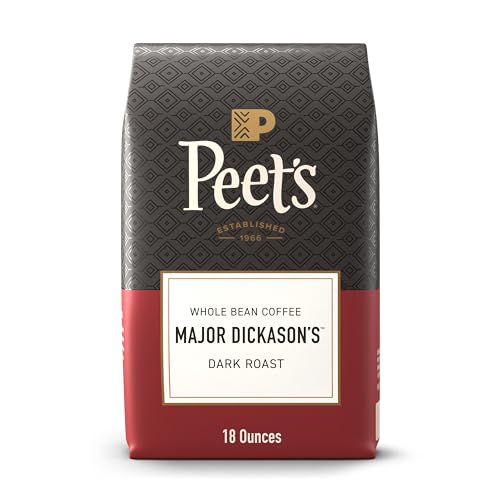
The dark-roast icon: roast-derived body and low acidity in place of origin character - also on our 10-best roster, where its standing is documented. Listing states dark roast, 100% arabica, 18 oz whole bean.
$24.18Live Amazon price · as of 09/25/2026 11:00 PM
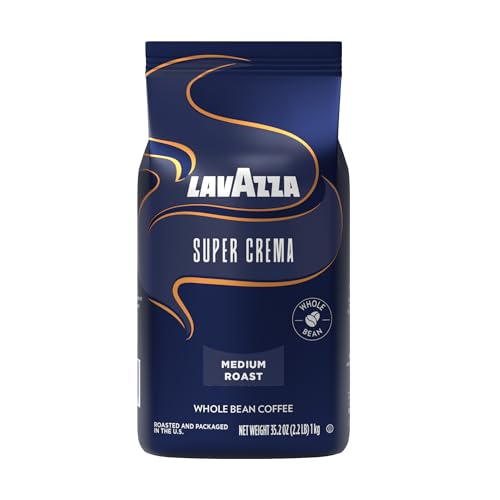
Taste what the species section says robusta contributes - body and crema in a traditional Italian-style espresso blend. Also on our 10-best roster. Listing states a medium espresso roast blend of arabica and robusta beans from 15 coffee-growing countries, 2.2 lb whole bean.
$36.99Live Amazon price · as of 09/25/2026 11:00 PM
A certified organic, Fairtrade espresso roast in the large bag that makes daily espresso economical. Listing states a medium roast whole bean espresso, certified organic, Fairtrade and kosher, shade grown arabica from Indonesia and Central and South America, in a 2.2 lb bag.
$13.99Live Amazon price · as of 09/25/2026 11:00 PM
The reference Italian espresso can: a single signature blend, medium roast, 100% arabica. Listing states a medium roast, 100% arabica whole bean coffee with notes of caramel, orange blossom and jasmine, no preservatives, in an 8.8 oz can.
Because retail prices have not followed the market down. Green coffee peaked in February 2025 and has fallen roughly a fifth over the past year, Brazil is delivering a record crop and there is no tariff on green coffee entering the United States, but the average American pound still cost $9.32 in July 2026 against a record $9.72 in April.
How much does a pound of coffee cost in 2026?
The US average for 100% ground roast was $9.72 in April 2026, the highest since the Bureau of Labor Statistics began the series in 1980, easing to $9.32 by July. That is roughly double what the same pound cost in April 2021.
Did tariffs make coffee more expensive?
They did for part of 2025 and early 2026, when a baseline duty and a 50% rate on Brazil were in force. They are not a factor now: green coffee currently enters the United States duty-free from every origin, after the emergency-powers tariffs were voided and later actions carved coffee out.
Are coffee prices coming down?
Upstream they already have. Arabica is down roughly a fifth year on year and world production now exceeds consumption. Retail has given back only about 4% of a 52% climb, so the question is whether the shelf follows or whether the industry has re-based its margin. Nobody honestly knows yet.
Why did coffee prices go up in the first place?
Weather damage to crops in Brazil and Vietnam cut supply while demand held, pushing arabica to an all-time record of 440.85 cents a pound in February 2025. Tariffs and higher roasting, packaging and freight costs then stacked on top of that before it reached the shelf.
Is it cheaper to make coffee at home?
Substantially, and the arithmetic is easy to check. At the July 2026 average of $9.32 a pound, an 18-gram mug costs about 37 cents of coffee. Compare that with what you pay per pod, or per cup at a cafe, using your own numbers.
Are coffee pods more expensive than ground coffee?
Usually by a wide margin. Divide what you pay for a box by the number of pods, and remember a pod holds roughly 10 to 12 grams, so a pound of coffee is about 40 pods. Working out the implied price per pound is the quickest way to see the difference.
Will coffee get cheaper in 2027?
The conditions are in place: a record Brazilian crop, a global surplus, no tariff on green coffee and forward-bought expensive inventory largely worked through. Whether that reaches the shelf is the open question. Our view is a slow drift down rather than a sharp correction.
Sources for this page:
US average retail price for 100% ground roast coffee - $9.72 a pound in April 2026, the highest in a series the Bureau of Labor Statistics has kept since 1980, easing to $9.32 by July 2026: BLS average price series APU0000717311 via FRED, read 2026-09-25, and Daily Coffee News's report on the April record, read 2026-09-25 · Coffee against the rest of the grocery bill - the coffee index up 18.5% in the year to April 2026 against 2.9% for food at home and 3.8% for all items, and coffee up 10.3% in the twelve months to July 2026 against 2.7% and 3.4%: BLS Consumer Price Index news releases, read 2026-09-25 · Arabica futures - an all-time record of 440.85 cents a pound in February 2025, the first settlement above $4.00, trading near 296 cents in early September 2026 for a fall of roughly 20-23% year on year: ICE arabica C contract data as reported by Trading Economics and CocoaIntel, read 2026-09-25 · Supply - a record 2026/27 Brazilian crop, forecast at 77.2 million bags by StoneX and lower by Conab, with world production at 189.7 million bags against consumption of 179.7 million, and ICE certified arabica stocks at a 27-year low of 223,976 bags on 31 August 2026: USDA Foreign Agricultural Service, Conab via Comunicaffe and StoneX via CocoaIntel, read 2026-09-25 · The tariff sequence - the April 2025 baseline, the 50% Brazil stack of July 2025, both layers removed in November 2025, the Supreme Court voiding the IEEPA tariffs in February 2026, the Section 122 replacement that exempted green coffee and expired on schedule in July 2026, and the Section 301 actions that carved coffee out: the executive orders, proclamations and decisions themselves, as documented in our 2026 annual report, read 2026-09-25 · Our own analysis of the gap between the green market and the shelf, and the equipment and bean records behind the cost-per-cup arithmetic: the CoffeeLab 2026 annual report and our published catalog, whose listing figures carry their own read dates on every card We have not lab-tested brewers; where a figure is a manufacturer's, the page names the manufacturer, and machine capabilities come from our own published review records.