Home › Coffees of the World › Brazil
 South America · Coffees of the World
Brazilian coffee: what it tastes like, and what to try
What Brazilian coffee tastes like, the growing regions to look for on the bag, and 4 bags whose listing documents where the coffee came from.
Written and reviewed by the CoffeeLabAdvisor editorial team
5 growing regions
4 bags whose listing names where it came from
What Brazilian coffee is known for
Known for“Clear, sweet, medium-bodied, and low-acid coffee.”
Why it grows here“Brazil’s coffee-producing regions have historically hosted near ideal growing conditions of 59–77 degrees Fahrenheit for arabica and 68–86 degrees Fahrenheit for robusta.”
Both lines are quoted from the National Coffee Association — Coffee Regions of the World, read 2026-09-21. Origin is a starting point, not a guarantee of flavour: characteristics vary by region, producer, variety, processing and roast, and we have not tasted the coffees on this page.
Brazilian coffee growing regions to look for on the bag
A bag that names one of these is telling you more than a bag that names only the country.
- Minas Gerais
- São Paulo
- Paraná
- Cerrado
- Sul de Minas
Coffees to try from Brazil
What this shelf looks like. Brazilian listings that name a place usually name Minas Gerais, the Cerrado or Sul de Minas. Santos is the export port rather than a growing region, so a bag sold as Brazilian Santos is telling you where the coffee was shipped from. Sao Paulo and Parana grow coffee, but no listing we found named either as its origin.
Each of these is here for one reason: its own listing documents where the coffee came from — a named region, producer, cooperative or lot, not just the country. We have not tasted them and we do not score them.

Fresh Roasted Coffee
Brazil Minas Gerais, Light Roast
$16.99Live Amazon price · as of 09/22/2026 7:59 PM
Listing states: Brazil; Minas Gerais; single origin; washed and patio dried; 500-1,000 masl; light roast.
Find it on Amazon →Affiliate link — we may earn a commission at no extra cost to you, and it plays no part in what is listed.
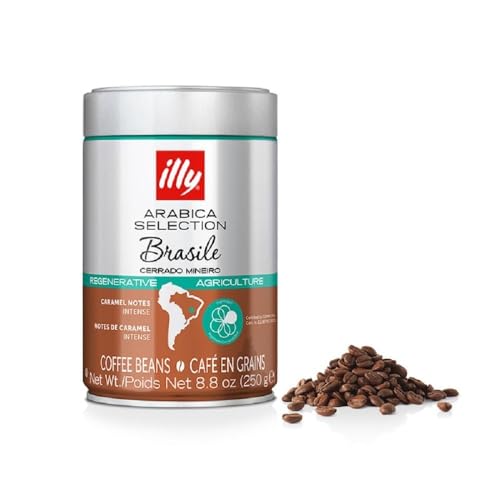
illy
Arabica Selections Brasile, Cerrado Mineiro
$16.99Live Amazon price · as of 09/22/2026 7:59 PM
Listing states: Brazil; Cerrado Mineiro; single origin Arabica; regenerative agriculture.
Find it on Amazon →Affiliate link — we may earn a commission at no extra cost to you, and it plays no part in what is listed.

Bean Box
Brazil Sul de Minas, roasted by Casa Brasil Coffees
$23.95Live Amazon price · as of 09/22/2026 7:59 PM
Listing states: Brazil; Sul de Minas; single origin; roasted by Casa Brasil Coffees; light and balanced roast.
Find it on Amazon →Affiliate link — we may earn a commission at no extra cost to you, and it plays no part in what is listed.

Volcanica Coffee
Brazil Bracosta Estate, Medium Roast
$21.99Live Amazon price · as of 09/22/2026 7:59 PM
Listing states: Brazil; Bracosta Estate; single estate; medium roast.
Find it on Amazon →Affiliate link — we may earn a commission at no extra cost to you, and it plays no part in what is listed.
Questions about Brazilian coffee
What does Brazilian coffee taste like?
The National Coffee Association describes this origin as: "Clear, sweet, medium-bodied, and low-acid coffee." Origin is a starting point, not a guarantee: characteristics vary by region, producer, variety, processing and roast, so two bags from the same country can taste very different.
Which Brazilian coffee growing regions should I look for on the bag?
The regions this origin is known for are Minas Gerais, São Paulo, Paraná, Cerrado, Sul de Minas. A bag that names one of them is telling you more than a bag that names only the country.
How do you choose which Brazilian coffees to list?
One published test: the listing itself has to document where the coffee came from — a named region, producer, cooperative or lot — and be a current, new listing. We have not tasted these coffees and we do not score them; a listing that names only the country does not qualify, however well it sells.
Why does coffee grow well in Brazil?
The National Coffee Association describes the growing conditions as: "Brazil’s coffee-producing regions have historically hosted near ideal growing conditions of 59–77 degrees Fahrenheit for arabica and 68–86 degrees Fahrenheit for robusta."